
3D-printed calculator adds and multiplies without electronics
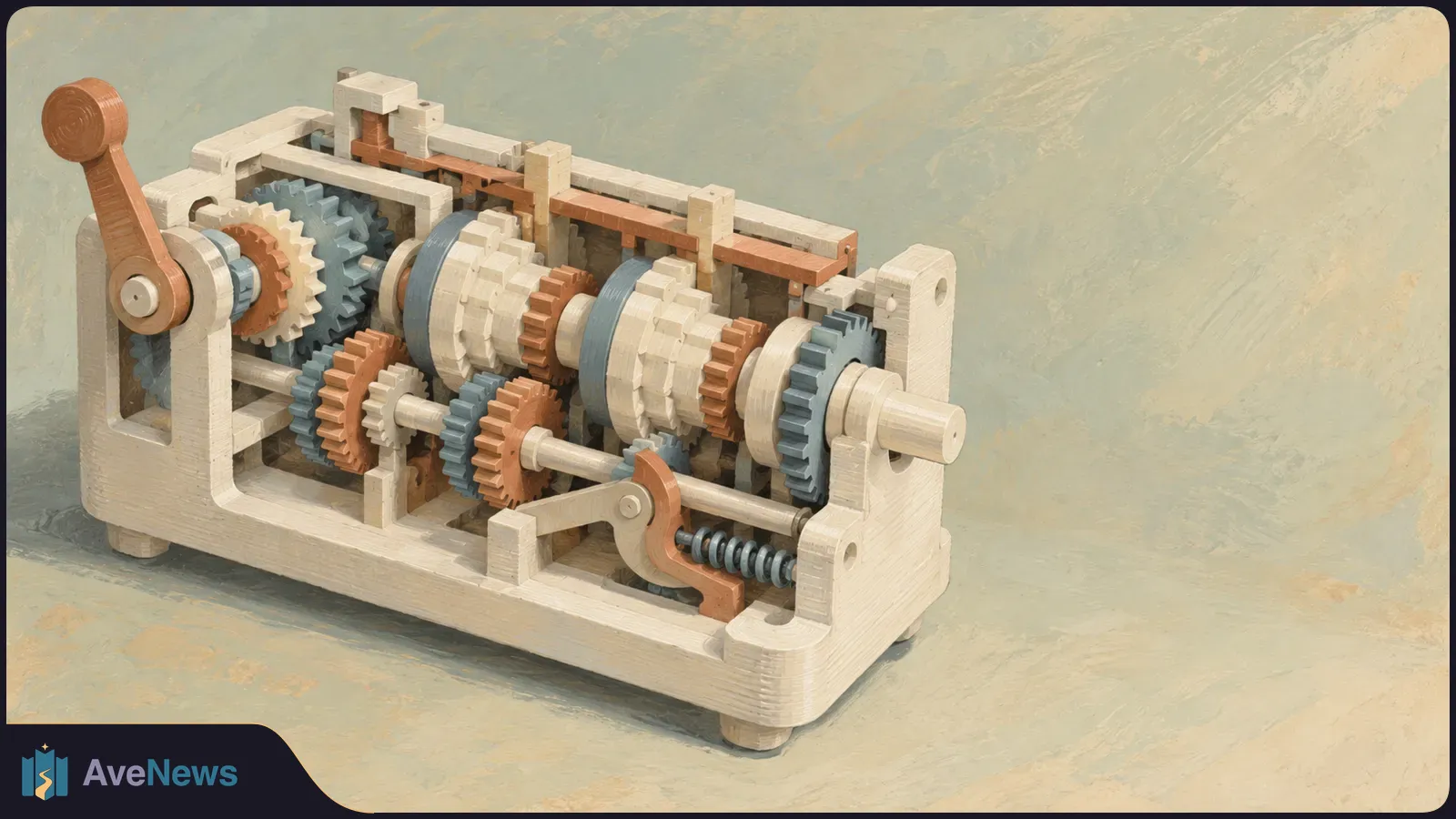
The palm-sized plastic build uses stepped drums to perform arithmetic. Making its small gears work reliably took roughly 100 design iterations, according to The Register.
The palm-sized plastic build uses stepped drums to perform arithmetic. Making its small gears work reliably took roughly 100 design iterations, according to The Register.
YouTuber 3D all Workshop has demonstrated a palm-sized mechanical calculator made from 3D-printed plastic, according to The Register’s September 30 report on the creator’s video. The machine can add and multiply without electronics, though it cannot subtract or divide. Its small size made the challenge more than a matter of printing the right shapes: the parts also had to move together accurately.
The calculator uses a Leibniz stepped drum, a mechanism more than 200 years old that also appears in the Curta, a palm-sized mechanical calculator. Each drum has nine teeth of different lengths. A lever moves a gear along the drum so that it engages only as many teeth as the selected digit requires. The zero setting engages none.
Workshop’s build accepts numbers from 1 to 999, with one drum for each digit. An additional wheel enables multiplication by repeating the same addition. For example, multiplying 12 by three means adding 12 three times: 12 + 12 + 12 = 36. The Curta also uses repeated addition for multiplication.
According to The Register, small inconsistencies in the printed parts made gears bind rather than turn freely. Backlash—the slack between mating mechanical parts—could put the drums out of sync. Parts broke during redesigns, and even vibrations from picking up and using the calculator could disturb its components.
The creator went through roughly 100 design iterations over two months. The reported fixes included custom-designed, 3D-printed springs and a ratchet mechanism, which kept backlash from putting the drums out of sync. The final build contained 109 separate pieces, required 17 print-hours and used 90 grams of filament.
Unlike the Curta, this calculator lacks subtraction and division. Its creator said there was not enough room for those mechanisms in the palm-sized design. At the time of The Register’s report, Workshop had not made the design available, despite requests to publish or sell it. Viewers could see the working build, but could not obtain its design files to print their own.
The startup says its SI agents keep hardware drawings aligned with requirements and test results. Roelof Botha also joined its board.
2 min
ARC Prize reports 97.5% with provider-specific features and 49.8% at low reasoning in its standard setup, giving users benchmark results that depend on how the model is run.

Moonshot describes a model for long-running agents, but its deployment guidance makes session continuity, operating boundaries and hardware scale important.
3 min
19 min
