
Aid groups give Trump’s Gaza plan 4 out of 26 points

Five humanitarian organizations rate the plan as failing one year after UN endorsement, citing restrictions on aid and civilian protection; the Board of Peace says Israeli decisions are needed to put the plan into effect.
In this article
Situation: War in Gaza
Five aid organizations have given President Donald Trump’s Gaza plan 4 out of 26 points in a one-year humanitarian assessment, a failing grade under their scoring system. They awarded zero points for humanitarian access and one for civilian protection.
The first phase of the ceasefire began on 10 October 2025, and the UN Security Council endorsed the plan through Resolution 2803 on 17 November 2025. The groups' April 2026 assessment gave the same measures 5 out of 26 points, including zero out of 10 for humanitarian access.
The Danish Refugee Council, Norwegian Refugee Council, Oxfam, Refugees International and Save the Children measured the plan against its own objectives for protection, aid access, reconstruction and economic development, and freedom of movement and return, rather than independent humanitarian standards. They used observations from organizations in Gaza, public data and secondary sources.
For each indicator, the groups gave 2 points for full or significant progress, 1 for partial or inconsistent implementation, and 0 for noncompliance, significant delays or backtracking. They added the scores across the assessment.
Aid and movement
The groups say the plan set a minimum of 600 UN-coordinated aid trucks entering Gaza daily, but an average of 49 entered each day in September 2026. Just 2% carried medical supplies, they say, adding that shortages of medicines and supplies have led to deaths from treatable injuries and illnesses.
Most people in Gaza cannot obtain affordable, nutritious food, and many lack enough water, sanitation, shelter or health care, the coalition says. Israel has cited restrictions on goods that can have both civilian and military uses, Al Jazeera said.
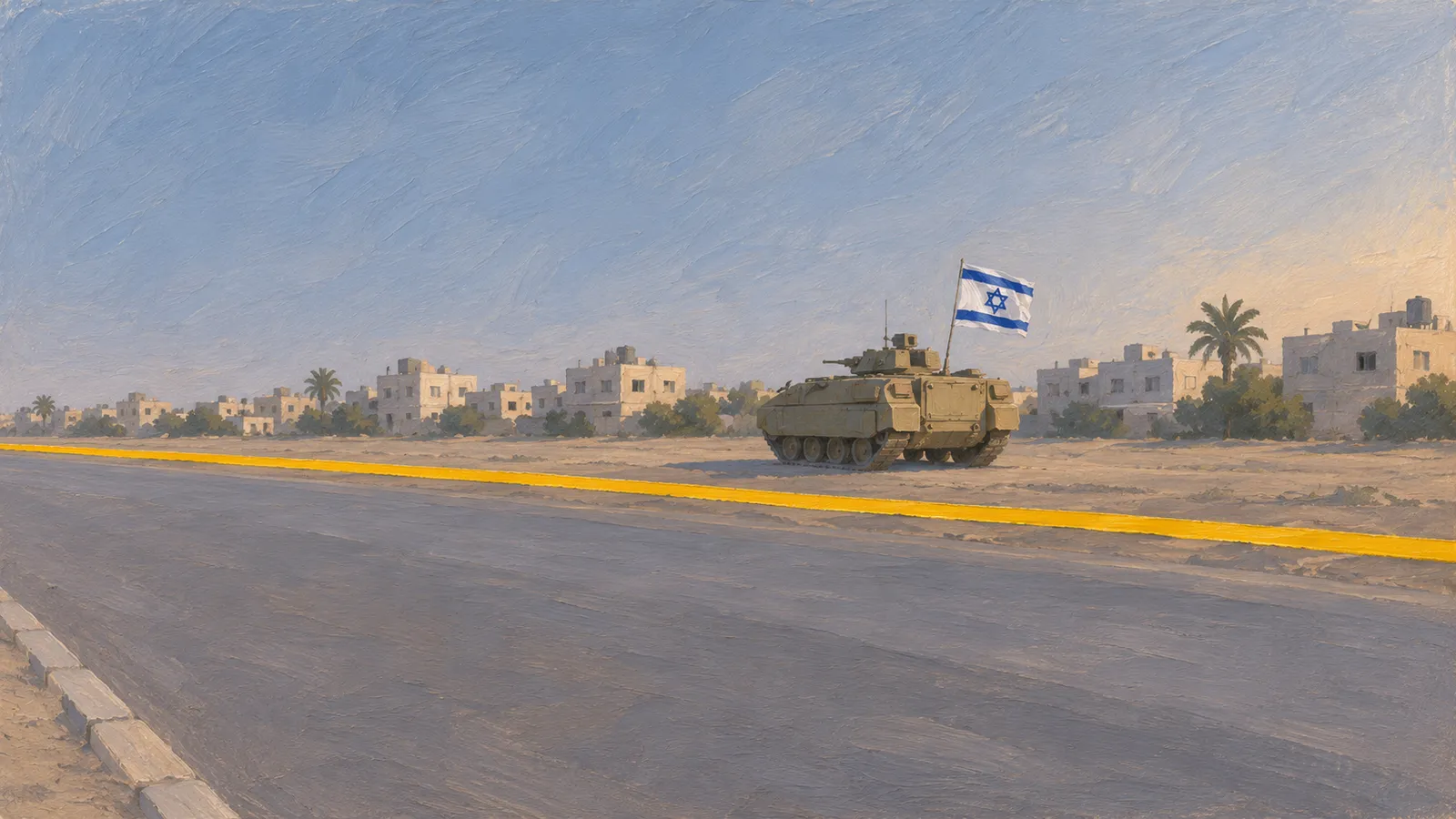
Israel’s line of control, known as the Yellow Line, has moved westward. The UN humanitarian office OCHA puts the share of Gaza under Israeli control at 65%, up from 58% at the start of the ceasefire, Al Jazeera said. The aid groups estimate that Israel controls nearly 70%. A UN official told the Security Council in June that Israel itself had said it controlled 70% of Gaza.
The coalition says at least 1,650 Palestinians were killed and 5,975 wounded between the October 2025 ceasefire and mid-November 2026. It says about 1.8 million people live in displacement sites and families near the advancing line have been forced to flee again.
This is displacement by design, and a ceasefire that allows it is a ceasefire in name only.
Board says decisions are pending
Board of Peace communications chief Brad Klapper sent Al Jazeera the Board’s latest report in response to its questions. The outlet said he did not address its specific questions about territorial expansion or permission for aid trucks to enter Gaza. When pressed for direct answers, Klapper said: “This is your reply. You have our assessment of where things stand.”
The Board’s report says implementation remains limited while decisions are pending. It urges Israel to make decisions needed to train, deploy and return civilian police, and to allow the National Committee for the Administration of Gaza and the International Stabilization Force to enter. The plan envisages the Palestinian committee, led by technocrats and supported by the Board of Peace, managing day-to-day governance and rebuilding, with the force overseeing security and helping train police.
The scorecard says Israel rejected a 15-point implementation roadmap the Board presented to the Security Council in May 2026. The Board’s report says Hamas and other Palestinian factions accepted a roadmap on 30 July to relinquish their weapons and transfer authority to a transitional administration. The Board warns that a ceasefire with no visible results cannot be sustained indefinitely.
The five groups want the Security Council, the Board and member states to press Israel to open crossings, admit shelter and other essential supplies, allow aid organizations to operate and restore medical evacuations and freedom of movement, including return. They also recommend independent verification of aid in place of Israeli approval and military inspections, as well as UN-mandated ceasefire monitoring and quarterly humanitarian reporting.
Follow AveNews
Latest in this situation
 Conflict
Israel’s military body says Gaza operation ends, road reopens
COGAT said on 19 November that the central Gaza operation had ended and Salah al-Din Road had reopened. Residents said gunfire was still keeping people away.
3 min
 Rights
Israel court extends Gaza doctor’s uncharged detention six months, lawyer says
A Beersheba court extended hospital director Hussam Abu Safia’s detention without charge by six months because he poses a threat to Israel, his lawyer said.
3 min
 Conflict
Israel launches ground operation in central Gaza, military says
The operation near refugee camps follows a warning from the Board of Peace that the Israel-Hamas ceasefire could collapse without action to implement it.
3 min


Sources
Show all 4 sourcesShow fewer
- refugeesinternational.orgOne Year On, Gaza’s ‘Peace Plan’ Has Failed, Delivering More Death, Displacement, Despair - Humanitarian Scorecard - Refugees International (opens in a new tab)
- refugeesinternational.orgCeasefire in Name, Deprivation in Practice: One Year of Gaza's Failed Peace Plan - Refugees International (opens in a new tab)
 Al Jazeera‘Displacement by design’: Trump’s Gaza peace plan a failure, aid groups say (opens in a new tab)
- en.wikipedia.orgGaza peace plan (opens in a new tab)