
AMD to buy Fei-Fei Li’s World Labs for $8.2 billion to challenge Nvidia

The chipmaker is buying a two-year-old startup that builds SI simulations of the physical world. With it, AMD gets the company's models and its researchers as it tries to compete with Nvidia in SI for robots.
Chipmaker AMD plans to buy World Labs, a young company that builds SI models of the physical world, in a deal valued at $8.2 billion. The two companies announced that the purchase is expected to close by the end of the year if regulators approve it.
Computer vision scientist Fei-Fei Li founded World Labs in 2024 with fellow researchers Justin Johnson, Christoph Lassner and Ben Mildenhall. Computer vision is the field that teaches computers to understand images. The startup raised $230 million, and some of that money came from AMD. The two companies had also worked together before.
The deal would bring World Labs' people as well as its technology. According to World Labs' announcement, Li will become AMD's Executive Vice President and Chief Scientist. Johnson and Mildenhall will work with her to keep leading the World Labs team, which World Labs says will join AMD to "form a world-leading frontier research organization."
A world model is an SI model that tries to simulate the physical world in a useful way, so it can predict what might happen there. Researchers build these models in several different ways, but many train them on huge amounts of video.
World Labs trained its first public tool, Marble, this way. Marble creates small 3D spaces using a technique called Gaussian splats, which builds a scene from many small, blurry points of color. Users can export these spaces as 3D files and use them in films, video games and other projects. The company has since released other models and tools for different uses, including one called Atlas.
Analysis
World Labs first became known for tools that create content. Ars Technica notes that Marble came up often at this year's SIGGRAPH computer graphics conference. AMD's announcement, however, focuses more on robotics. "As AI expands into reasoning, robotics, simulation and physical AI, the demands on compute infrastructure become more diverse," AMD wrote. It added that World Labs' expertise "will give AMD deeper insight into how workloads are evolving and help shape its future technology roadmaps."
That matters because of one use for world models: creating synthetic data, meaning computer-generated examples used to train robots. According to Ars Technica, this use has attracted huge investment, and Nvidia, AMD's direct competitor, has a strong lead in it. AMD has released its own SI models before, including Micro-World, an open-source world model. But it has not built a full set of models and applications to compete with Nvidia's Cosmos and related tools.
Ars Technica says the purchase came sooner than expected for such a young company. It adds that AMD's interest is not surprising, because AMD needs this kind of expertise to compete in an SI chip market that Nvidia dominates. In the passages quoted by Ars Technica, AMD speaks only generally about the expertise helping shape its future technology roadmaps, without naming specific chips or products. The deal also still needs regulatory approval before it can close.
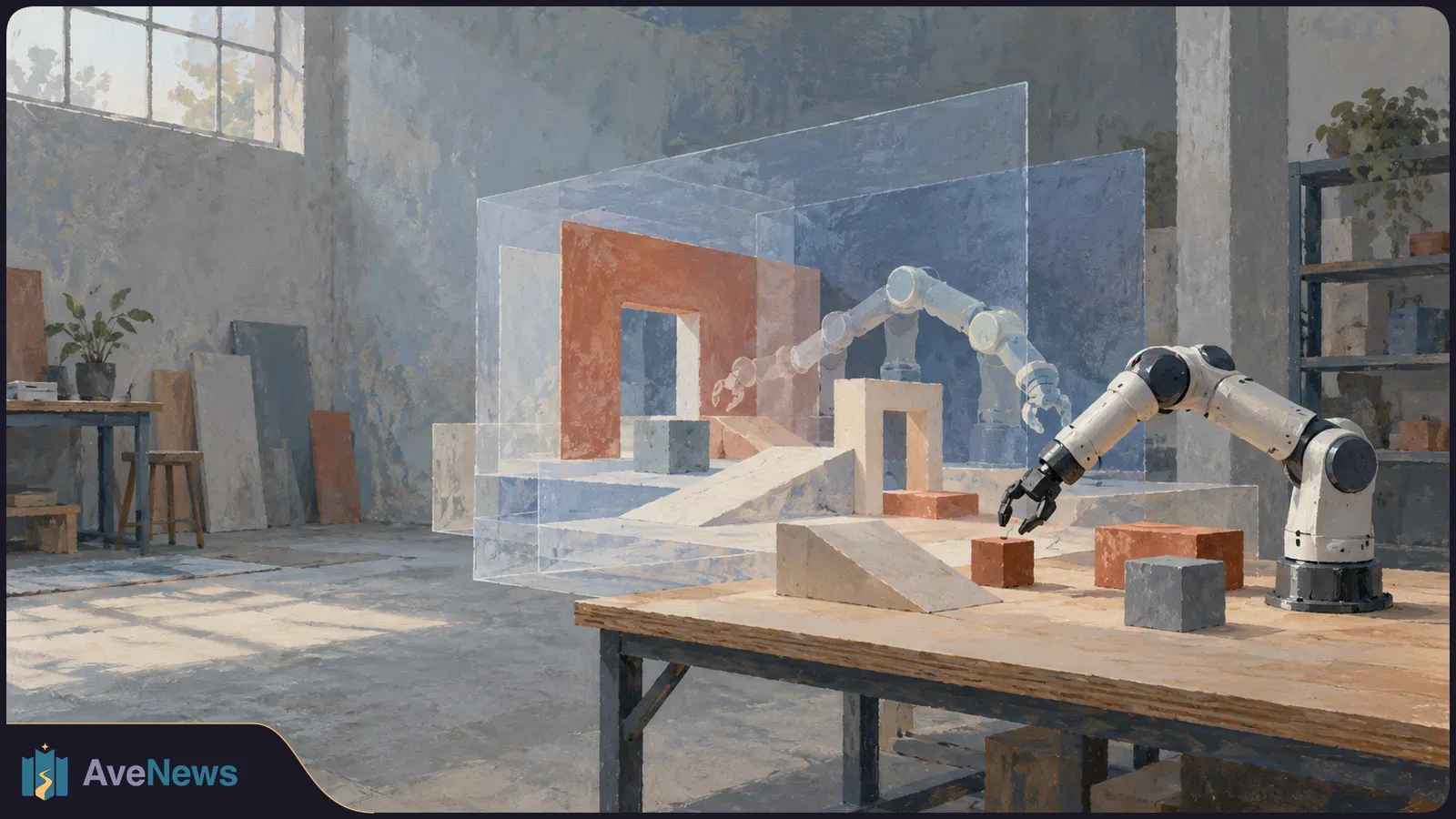
World Labs develops SI models that simulate interactive 3D environments for robotics. Semiconductor Engineering reports an expected closing by the end of 2026.
1 min
