
Ataraxos beats Stratego champion by estimating hidden pieces
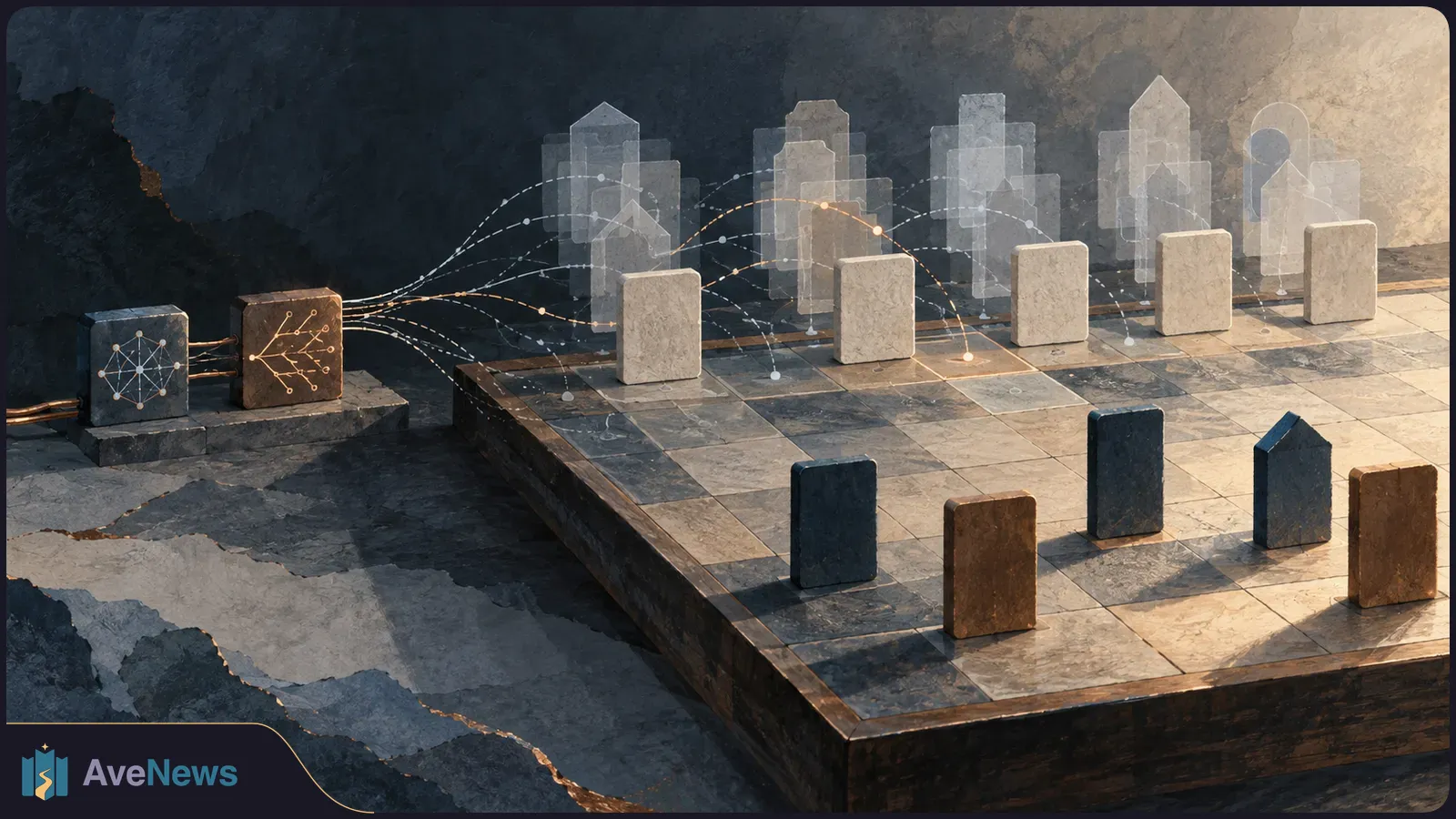
A second neural network helps the SI search ahead despite concealed pieces. Ars Technica reports training costs of a few thousand dollars, far below the researchers’ estimate for DeepNash.
A second neural network helps the SI search ahead despite concealed pieces. Ars Technica reports training costs of a few thousand dollars, far below the researchers’ estimate for DeepNash.
Ataraxos, an SI developed by researchers from Carnegie Mellon, MIT, New York University and Stanford University, recorded 15 wins, one loss and four draws against four-time Stratego world champion Pim Niemeijer. According to Ars Technica, the system made searching ahead practical in a game whose enormous amount of hidden information had prevented DeepMind’s earlier DeepNash from using that approach.
Niemeijer played the 20 online games over three weeks. He knew Ataraxos would not adapt to him during the match, giving him time to look for weaknesses. The researchers caution that randomized starting arrangements make luck a factor in individual games; co-author Eugene Vinitsky acknowledged that Ataraxos sometimes benefited from luck too.
Ataraxos uses a second neural network, a machine-learning model called a belief model, to estimate the opponent’s hidden pieces from their movement history. Rather than checking every arrangement, the system samples plausible ones. It then simulates candidate moves within those arrangements and chooses according to the outcomes. The estimates do not reveal the concealed pieces; they make it possible to search ahead despite the uncertainty.
Like DeepNash, Ataraxos learned by playing against itself, reinforcing moves associated with wins and reducing those associated with losses. It played 163 million training games. To keep learning from cycling through strategies, the team made large strategy adjustments early in training and smaller ones later. The report identifies the additional search before each move as a capability DeepNash lacked.
The approach combined search with substantially less training than DeepNash: Ataraxos played about 34 times fewer self-play games. Its training used 16 graphics processing units, or GPUs, for one week, plus four additional GPUs for four days to train the belief model. Ars Technica describes the cost as a few thousand dollars.
The savings were not attributed to the belief model alone. Farina and lead author Samuel Sokota also wrote a simulator that runs millions of moves per second on graphics cards. By comparison, DeepNash reportedly trained for two to three months on 1,024 specialized Google chips. The Ataraxos team estimates that run would cost $3 million to $4.5 million at 2025 prices; that figure is an estimate, not a reported bill.
The researchers propose using the techniques to simulate how strong opponents might respond in negotiations, financial markets or military scenarios. Those are prospective applications, not demonstrated results. Unlike board games, such situations usually lack fixed rules and clear winners, and the team’s proposed approach would depend on building simplified models of them.
Another unresolved task is making the strategies understandable. Ataraxos cannot currently explain why it chooses its moves. Farina and his colleagues want systems that produce both strong strategies and explanations people can follow, but he says they are not there yet.

The ruling recognizes potential protection against commercial exploitation, but did not decide whether SI narration on TikTok infringed voice actor Kenjiro Tsuda’s rights.
3 min

ChatGPT and Grok removed a hijab on request, while Gemini did so after a reworded prompt. The tests used SI-generated people, not photographs of real subjects.
3 min
Researchers demonstrated root-password-hash leaks on Intel-based Linux systems. They report Linux and Oracle patches, while browser and runtime experiments showed important limits.
4 min
