
Formula 1’s governing body finds cause of Malaysia power loss
The FIA says low engine speeds and sector power reductions left some cars unable to recover power. A further wet-weather software update is planned for October 25.
The FIA says low engine speeds and sector power reductions left some cars unable to recover power. A further wet-weather software update is planned for October 25.
Situation: 2026 Formula 1 season
The FIA, Formula 1’s governing body, has completed its review of the software fault that disrupted the Bahrain Grand Prix in Malaysia. In its October 8 findings, the regulator said some cars running at low engine speeds in track sectors with a 250 kW power reduction lost more power than intended and could not recover it within those sectors.
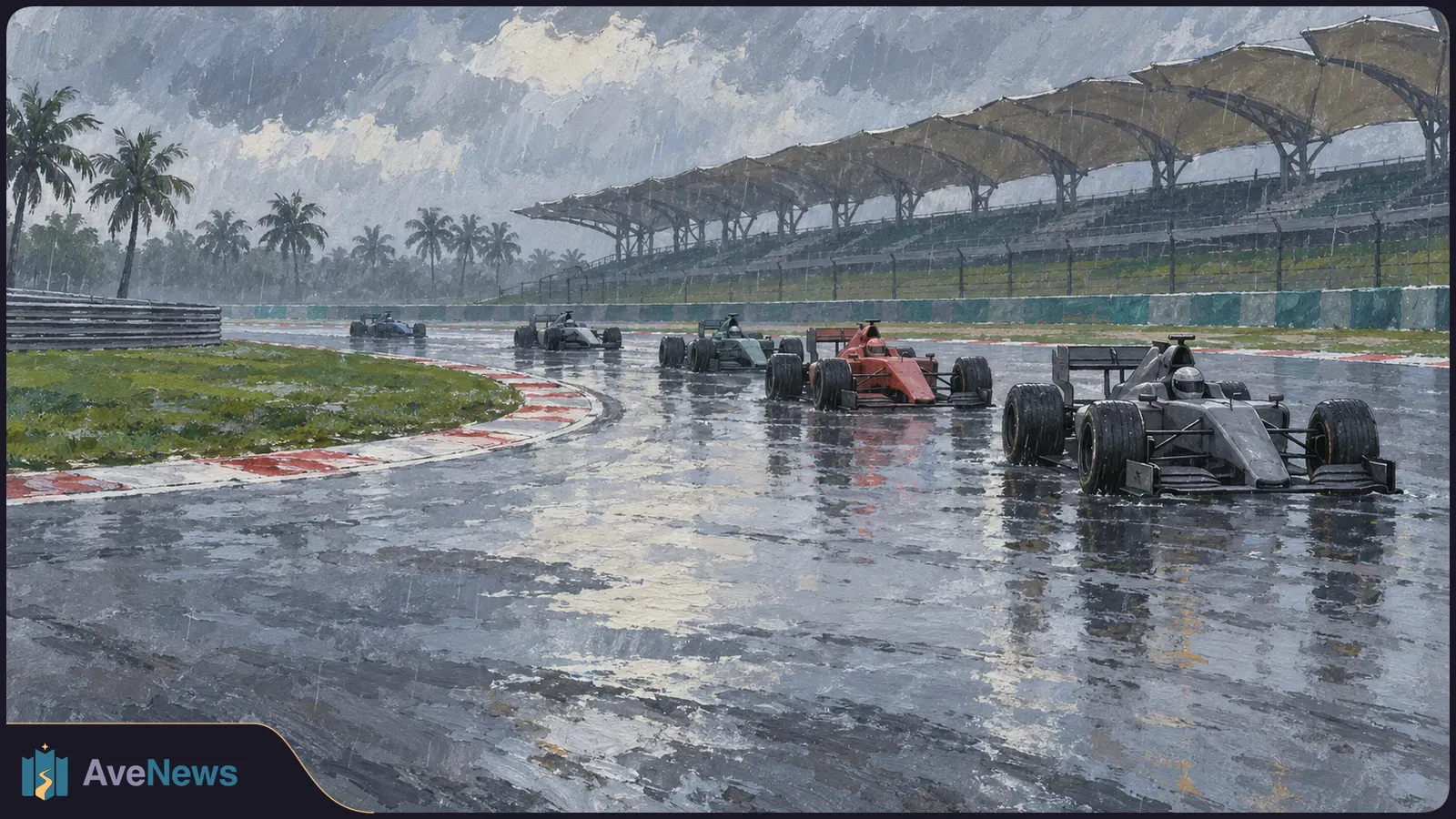
During wet formation laps before the October 4 race at Sepang, several cars crawled or stopped behind the safety car, forcing officials to abandon the start attempt. The FIA initially attributed the fault to an unprecedented combination of low engine speed, low grip, wet-weather energy settings and Sepang’s sector configuration. An emergency software change allowed the race to proceed.
The 2026 hybrid engines combine combustion and electrical power in a near-equal split. The Race’s October 4 technical explanation reported that the mandatory wet-weather engine mode allows less electrical power than the dry-weather mode.
| Conditions | Maximum electrical power |
|---|---|
| Wet | 250 kW |
| Dry | 350 kW |
Some sectors impose a further safety-related reduction of 250 kW, according to The Race. One is Sepang’s Turn 9 left-hander, where the problems occurred. There, the MGU-K—the hybrid system’s electric motor-generator—can shut off instantly rather than reduce its power gradually.
As cars slowed behind the safety car, boost pressure—the pressure of air supplied to the combustion engine—fell, with no MGU-K assistance available to help recover power. The Race reported that a bug then triggered “continuous offset”, a 60-second emergency lockdown introduced this year to prevent teams deliberately shutting down the MGU-K. That protection can also cut combustion-engine power, leaving cars unable to accelerate again.
The FIA removed the energy-limit constraint in the affected sectors and distributed revised software to every competitor before the race. Removing the sector-specific 250 kW restriction left some electrical power available, allowing teams to change their power-unit settings so cars could move through those sections at low speed.
In his October 4 post-race explanation, FIA single-seater director Nikolas Tombazis said the affected software was standard code shared by all cars. He described its development as a collaboration between the FIA, teams, power-unit manufacturers and Motion Applied, which supplies the standard electronic control unit—the computer that runs the control software. He acknowledged the FIA’s responsibility as regulator and said none of those involved had anticipated the fault.
Tombazis said he could guarantee that this specific problem would not recur, but could not guarantee there would be no other software problems.
The FIA says teams and power-unit manufacturers ran simulations to validate the original software package before implementation. It says the package subsequently underwent full-scale running during the first practice sessions at the Belgian and Dutch Grands Prix. That account concerns the original package, not pre-deployment testing of the emergency revision.
Tombazis said on October 4 that scarce wet running had limited testing, and that earlier Pirelli tyre tests did not represent the exceptionally low speeds reached during the formation laps. He also said the emergency revision was rushed and untested because the priority was to get cars running again quickly.
The completed review recommends stronger testing despite limited opportunities to run the software on track. The FIA says it will work with teams and power-unit manufacturers to strengthen testing and verification through independent assessment and shared feedback, including input from the standard electronic control unit supplier.
For the Singapore Grand Prix, the FIA says it will reinstate the configuration established at Sepang if similar weather conditions are expected. A further wet-weather software update is planned for the United States Grand Prix on October 25.

Bottas will stay alongside Sergio Pérez, who separately extended his Cadillac contract through 2029, giving the team an unchanged race lineup for another season.
2 min

James Vowles’s plan would give teams outside the top four more room to spend under the cost cap. The F1 Commission is scheduled to discuss it on 16 November; the rules have not changed.
3 min

The team has kept both race drivers after Red Bull considered promoting junior driver Nikola Tsolov in Liam Lawson’s place. The decision gives the pairing another season together.
3 min
 FIA NewsFIA concludes investigation into Bahrain GP in Malaysia formation lap “software bug” (opens in a new tab)
 The Race'Software bug' that triggered F1's Malaysia chaos explained (opens in a new tab)
 BBC Formula 1Hamilton & Verstappen bemused after glitch turns F1 into 'Lego race' (opens in a new tab)