US judge halts Big Bend border-barrier construction
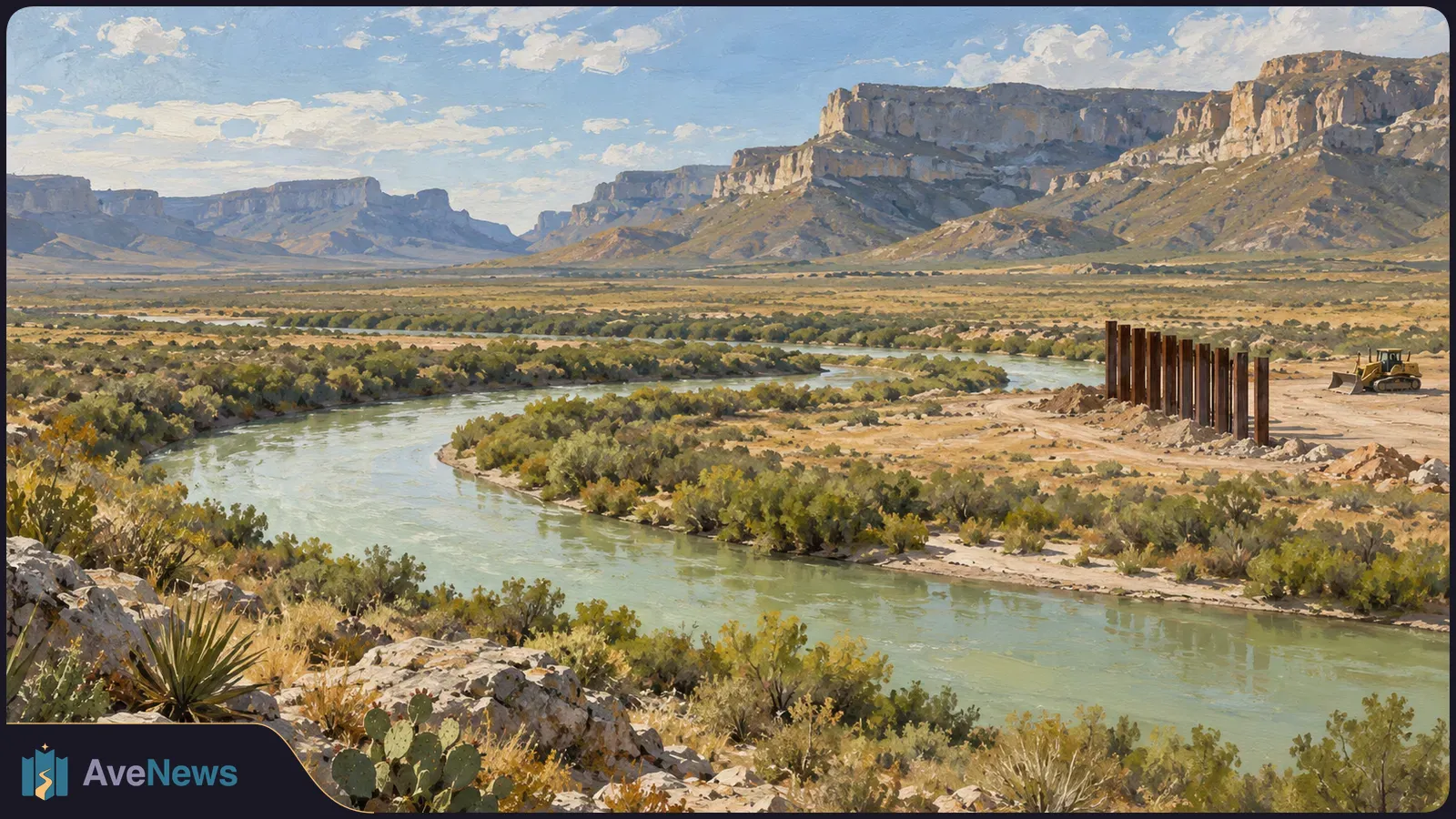
The Trump administration seeks to lift the temporary halt during its appeal, while Texas landowners resist access for surveys and construction.
US federal Judge Kathleen Cardone halted border-barrier construction throughout Texas’ Big Bend sector on 2 October, covering more than 500 miles of West Texas. Inside Climate News reported on 15 October that an April 28 letter documents regular discussions between the Texas General Land Office and US Customs and Border Protection about state land and documents needed for border infrastructure. Those access negotiations can continue despite the construction halt.
The preliminary injunction—a temporary court order—covers Big Bend National Park, Big Bend Ranch State Park and the rest of the sector’s border along the Rio Grande. It suspends federal waivers that allowed construction to bypass the National Environmental Policy Act, the Archaeological and Historic Preservation Act and other laws. Cardone ordered work stopped until the government complies with applicable laws while the court considers the lawsuit filed in April. She found that the plaintiffs were likely to succeed on at least one claim and would suffer irreparable harm if construction continued; she has not issued a final decision.
The US Supreme Court has put Judge Kathleen Cardone’s injunction on hold, allowing the Trump administration to resume border-barrier construction in Big Bend. The court declined the government’s request to reverse her ruling without further briefing or oral argument. It said the government was exceedingly likely to prevail on its argument that Cardone lacked authority to consider the plaintiffs’ claim that the homeland security secretary exceeded statutory authority in waiving legal requirements.
In putting Judge Kathleen Cardone’s injunction on hold, the US Supreme Court cited nearly $500,000 in unrecoverable government costs for each day construction was halted. Justice Ketanji Brown Jackson indicated that she would have denied the government’s request, without explaining her position. The challengers argue that Congress did not clearly authorize the homeland security secretary to waive laws across the region, including in national and state parks, and that the waivers violate the Constitution.
The Supreme Court said the government’s interest outweighed the aesthetic, recreational and environmental harm alleged by the challengers. Laiken Jordahl of the Center for Biological Diversity, one of the plaintiffs, warned that the order would allow contractors to bulldoze desert and dynamite canyon walls before courts decide whether the work is legal.
The General Land Office manages 13 million acres across Texas, including parcels along the Rio Grande. Its open government director wrote to the Texas attorney general on April 28 that officials were in “regular contact” with Customs and Border Protection. The discussions covered the location of state-owned parcels and documents the border agency might need to construct, operate and maintain infrastructure on land the office manages.
Inside Climate News obtained the letter through a public information request. The General Land Office did not answer its questions about the extent of the discussions or whether it had granted access to any state-managed land. The construction order does not prevent the border agency from negotiating access with the office or other landowners for use if construction is allowed to resume.
On land managed by the office, the Trump administration plans a border wall in Presidio and Hudspeth counties and vehicle barriers in Brewster County. Ranchers leasing state borderland rely on the Rio Grande to water cattle. Hudspeth County rancher Bill Addington warned that a wall could severely affect those operations if it blocked river access. His warning concerns a possible future loss of access, not an existing cutoff.
Texas Land Commissioner Dawn Buckingham has said she supports a “virtual wall,” using detection technology rather than a physical wall in West Texas. On 31 July, she denounced contractors she said had cleared state-managed land in Presidio County without permission. She sent cease-and-desist letters to the border agency, the contractor and the leaseholder, and demanded that the land be remediated. Buckingham said she wanted a positive relationship with the agency but would not accept breaches of the agreed access process.
Much of Texas’ border land is privately or state owned. The government must obtain owners’ authorization to survey and build, and can take them to court if they refuse. Eminent domain is the process through which the government takes private property for public use in exchange for compensation.
Fortune reported on 9 October that Dianna and Dan Burbach began receiving survey-permission requests in July, including a map showing the project behind their house. An August letter asserted an immediate need to enter and warned that the government could go to court within 90 days. The couple plan to contest access in court. They worry construction could worsen flooding and leave 15 acres, or 6 hectares, of their property behind the wall.
In Val Verde County, Bill and Patrick Zuberbueler own and lease thousands of acres on a family ranch founded in 1898. Bill recalled receiving a February letter giving him five days to respond to a construction-access request and raising the possibility of eminent domain. The brothers have refused to allow surveys or construction on their land.
Their goats and sheep roam between a network of water troughs. Bill fears construction could disrupt the livestock, especially their water supply. The planned vehicle barriers also pose a prospective herding problem: the animals could pass through them, but the cowboys herding them could not.
Inside Climate News reported on 2 October that federal plans called for vehicle barriers and access roads inside the national and state parks, rather than the 30-foot steel wall planned for private land outside them. Customs and Border Protection had changed its Big Bend plans several times since February.
Advocates documented excavators and bulldozers clearing land in the national park in mid-August, before the agency issued a construction pause on 17 August. That pause had been lifted by 2 October, according to Inside Climate News.
The Center for Biological Diversity, Friends of the Ruidosa Church and river guide Danny Miller Jr. sued the US Department of Homeland Security and Secretary Markwayne Mullin over the waiving of dozens of laws to accelerate construction. Cardone heard more than four hours of testimony from conservation groups and residents before issuing the injunction.
The plaintiffs’ attorneys challenged the evidence behind the waivers’ description of Big Bend as an area of “high illegal entry.” Adam Isaacson, an analyst at the Washington Office on Latin America, presented data placing Big Bend last in unauthorized crossings among the nine US–Mexico border sectors. The attorneys said the government had not supplied requested data separating detentions within Big Bend National Park from those across the wider sector.
Miller testified that his river-guide business depends on access to the Rio Grande and that the wall would irrevocably damage property he owns along the river.
The Trump administration asked Cardone late on 8 October to set aside the order during its appeal, Fortune reported on 9 October. Its filing argued that gaps in security infrastructure could divert illegal immigration or smuggling toward the least-fortified area, specifically Big Bend.
The administration says walls, vehicle barriers, surveillance technology and patrol roads are needed to keep illegal crossings low. Customs and Border Protection Commissioner Rodney Scott said after a landowner lawsuit that the government could not allow any region, including Big Bend, to be exploited again.
After the 2 October ruling, a Customs and Border Protection spokesperson defended the agency’s assessment and legal authority to secure the border while preserving Big Bend’s landscape, and said it was working with the Justice Department on next steps. The agency repeated that position in the 15 October report.
The agency told Fortune it was seeking voluntary access agreements while completing the project’s design and would refer disputes to the Justice Department when necessary. Landowners would receive compensation regardless of how access was obtained, it said. Those negotiations can continue, including with the General Land Office, but construction on its Big Bend land cannot proceed unless the halt is lifted.
The court stayed a judge’s injunction across the West Texas region, including Big Bend National Park, while the Trump administration seeks review of the case. The order is temporary, not a final ruling on the project’s legality.
3 min