
Canada Rocket Company targets 2028 for Ontario engine-test facility

An adjacent shop would keep engine assembly and testing together at the planned London site. The company also expects about 40 skilled jobs in the next 18 months.
An adjacent shop would keep engine assembly and testing together at the planned London site. The company also expects about 40 skilled jobs in the next 18 months.
Canada Rocket Company (CRC) expects its planned $30 million Jeremy Hansen Test Facility near London, Ontario, to be fully operational by 2028, NASASpaceflight reported. The site would provide the ground testing needed to prepare the E-1 engine for the company’s proposed reusable R-2 rocket, rather than launch rockets into orbit.
The Toronto company plans to lease 50 acres from the Greater London International Airport Authority at London International Airport. The facility, named after Canadian astronaut Jeremy Hansen, would include a 12,000-square-foot office and shop building beside the stands for engineering, assembly and test preparation. Keeping the shop and stands together is intended to avoid splitting engine assembly, the fitting of measuring equipment and testing across distant sites.
The test area would have up to three vertical and horizontal stands for static tests, which fire engines while they remain fixed in place. The stands would accommodate engines producing more than 1 meganewton of thrust, reported as 225,000 pounds of thrust. According to NASASpaceflight, vertical stands typically support firings that resemble flight conditions. Horizontal stands are often used earlier for engine development, access to the engine and the use of measuring equipment.
CRC expects to create about 40 skilled jobs at the London site in the next 18 months, covering engineering, fabrication and test preparation. The company says it is working with the airport, regulators and the local community as planning advances.
Canada Rocket Company has decided to move directly to the proposed R-2 medium-lift rocket, designed for heavier loads than the small rockets it had considered. Canada Rocket Company chief executive Hugh Kolias said the decision followed conversations with about 150 engineers. Their advice, he said, was that building a smaller rocket would not reduce the development risk of a larger one: much of the technical work and infrastructure would need to be replaced.
The proposed R-2 design uses nine methane-fueled engines. The company’s payload target is up to 12.5 metric tons to low-Earth orbit, an orbit relatively close to Earth. That is a design goal, not a demonstrated carrying capacity. Kolias said the company could be ready to launch by 2032 if all goes well.
Canada’s satellites typically reach space on American rockets. A Canadian launcher would offer a domestic alternative. Earlier in 2026, the government’s Defense Industrial Strategy identified space launch as a priority within its space capability, part of an effort to strengthen the industrial and technological base supporting defense readiness.
In spring 2026, the government announced initial Launch the North awards for light-lift rocket work by NordSpace, Reaction Dynamics and Canada Rocket Company. Ars Technica describes the initial awards as CAD $8.33 million and reports that the government has signaled larger awards in the future.
Canada Rocket Company has about 30 employees and has raised $22.5 million to date, according to Ars Technica. It is seeking a Series A investment round to raise further funding.
Kolias suggested that the Canadian government might eventually provide as much as half a billion dollars for a domestic launch capability, along with some guaranteed launch contracts. That is his expectation, not an announced government commitment. The scale of future public support remains unresolved as the company pursues its engine-testing and launch targets.

Ten eyes modeled as nearsighted reached the intended focusing power. The tissue experiment did not demonstrate restored vision or establish safety and lasting correction in living eyes.
3 min
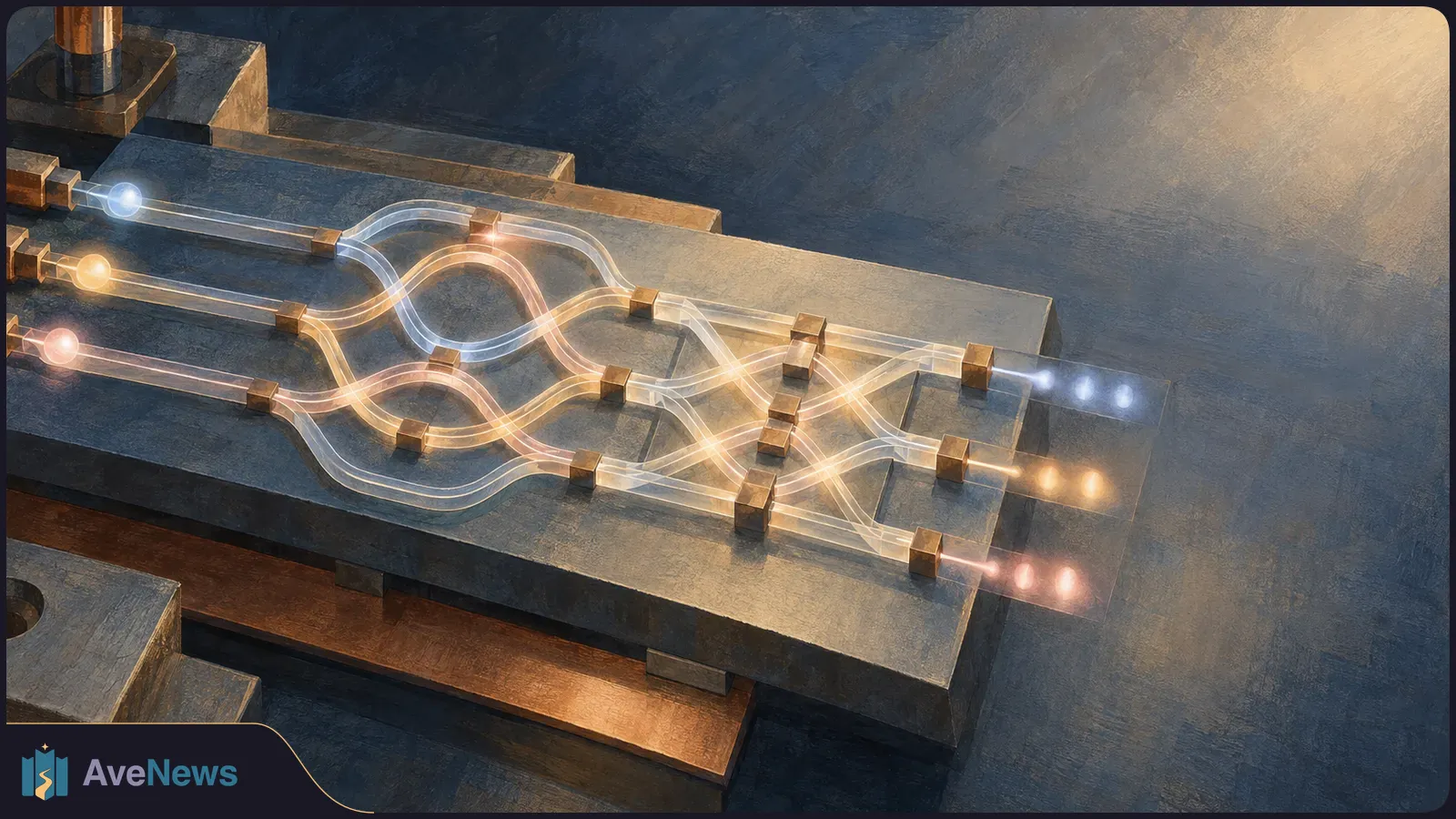
A Kyoto–Hiroshima team used symmetry and a photon-based quantum circuit to distinguish W states without reconstructing the whole state. Extending the method to larger systems remains a research goal.

Repeated scans of 1,647 adults linked closer adherence to slower structural brain changes—not proof that the diet prevents dementia.
3 min
3 min

