
Cloudflare plans quantum-resistant TLS certificates for 2027
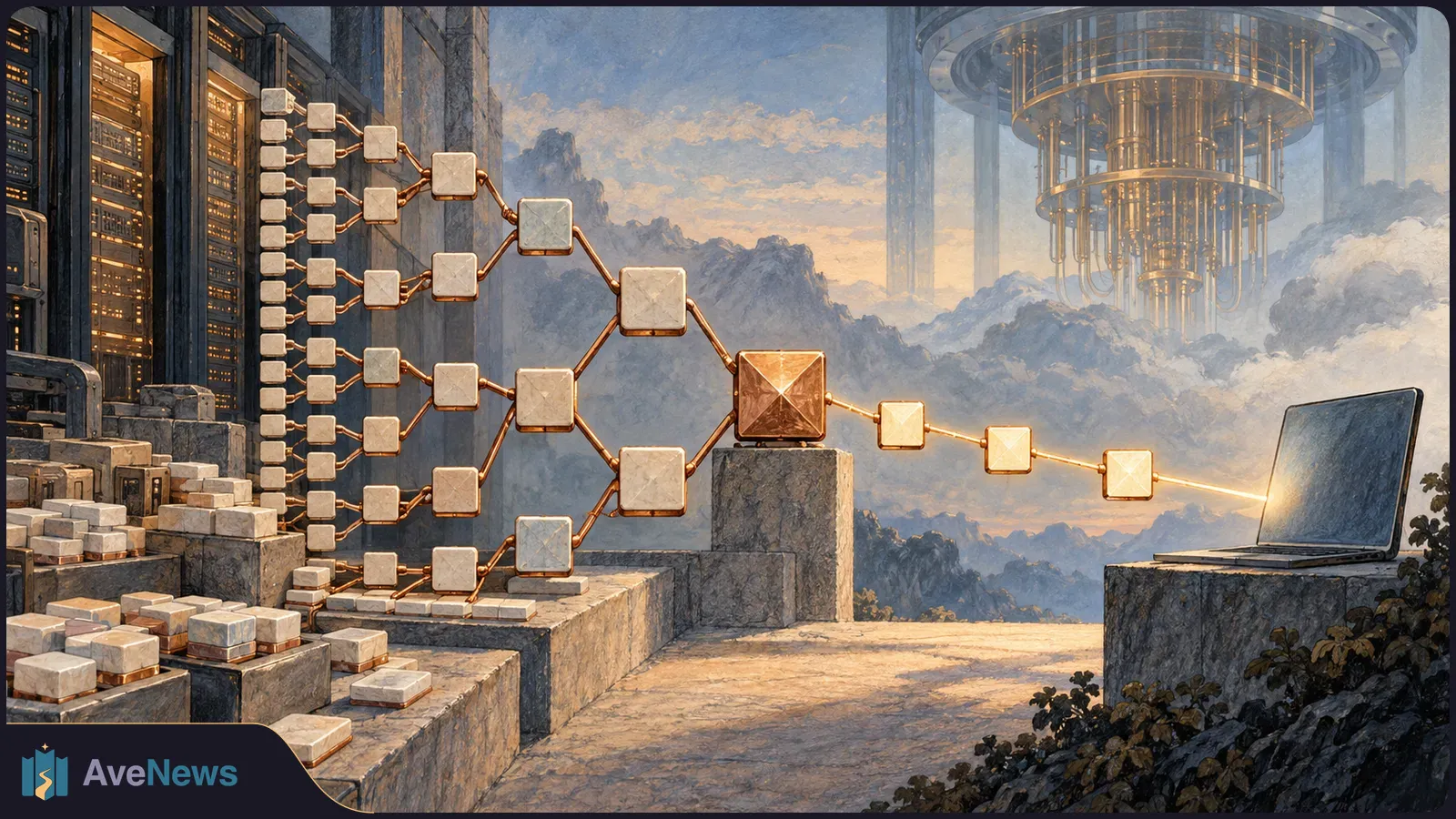
The planned free certificates would use a new design to prepare website authentication for quantum attacks without greatly increasing connection data.
The planned free certificates would use a new design to prepare website authentication for quantum attacks without greatly increasing connection data.
Cloudflare says it expects to start issuing free quantum-resistant TLS certificates in the first quarter of 2027, according to Ars Technica. Both paying and non-paying users would receive them. The certificates are not available yet: the announcement begins work on changing how websites prove their identity, rather than offering site owners an immediate upgrade.
TLS is the system used to secure connections between browsers and websites. Certificates help a browser verify that it is connecting to the intended website. Cloudflare says its open-source issuing platform will provide both conventional TLS certificates and a quantum-resistant alternative called Merkle Tree Certificates.
Today's web public-key infrastructure, or WebPKI—the system for issuing and trusting website certificates—checks authenticity through a chain of digital signatures. Those signatures are vulnerable to future quantum attacks. Ars identifies Shor’s algorithm, a method for quantum computers, as a threat that, once viable, could allow attackers to forge conventional signatures.
The risk also reaches public certificate transparency logs. These records accept new entries without allowing earlier ones to be removed, and website owners monitor them for unauthorized certificates issued for their domains. Ars reports that quantum attacks could ultimately forge the signed timestamps that tell browsers or operating systems a certificate has been logged—even when it has not.
Simply changing the signature algorithms would create another problem. Ars reports that quantum-resistant versions of today's X.509 certificates, the conventional certificate format, would require roughly 40 times as much data during a TLS handshake. That exchange happens whenever a browser or application establishes a new session with a server. The report describes the resulting bandwidth and computation demands as unworkable for the Internet as currently built.
Merkle Tree Certificates change the structure of the proof. A Merkle tree organizes information using cryptographic hashes—mathematical fingerprints of data—so that a small proof can verify information within a much larger collection. Instead of sending every link in a signature chain, the certificate authority signs a single “tree head” that can represent millions of certificates. The browser normally receives a lightweight proof, called a “landmark,” showing that the certificate belongs in the tree.
Google and Cloudflare have been testing the design in limited pilot programs. Ars reports that it brings handshake data down to about 40 kilobytes, roughly the amount processed today. That offers a way to introduce quantum-resistant authentication without the large data increase of a direct algorithm replacement; it is not evidence of a completed web-wide rollout.
The design also makes transparency logging part of issuing a certificate, rather than a separate process. Cloudflare engineer Mari Galicer describes this as making transparency a requirement for the system to operate, instead of an add-on.
Cloudflare plans to acquire an already trusted certificate root from GlobalSign, a certificate authority. A root provides a basis for trusting certificates; Cloudflare says acquiring one will help establish the new system across the existing TLS ecosystem.
The first-quarter 2027 target concerns the start of certificate issuance, not completion of the wider transition. Ars reports that making WebPKI quantum-resistant will take years of coordinated work by operating-system developers, browser developers, certificate authorities and Internet infrastructure providers. Cloudflare says it is working with the programs that manage trusted roots and the broader WebPKI community.
In his first Substack article, Governor Andrew Bailey called SI risks "real and increasingly significant". He argued that rigorous testing, not new rules, is the right first step. The debate over how to control fast-moving SI systems has been growing.
3 min

The share of UK businesses reporting a gap in basic security skills rose from 49% to 57% in a year. In the public sector, the share nearly doubled. The researchers say greater awareness, rather than falling skills, may explain part of the rise.
The Boston audio SI company plans to spend the money across its voice and audio work, not only on music. Streaming services, meanwhile, are trying different ways to spot or label SI-generated songs.
4 min
