Researchers report up to 5.4% higher superconducting transition temperature in a cavity
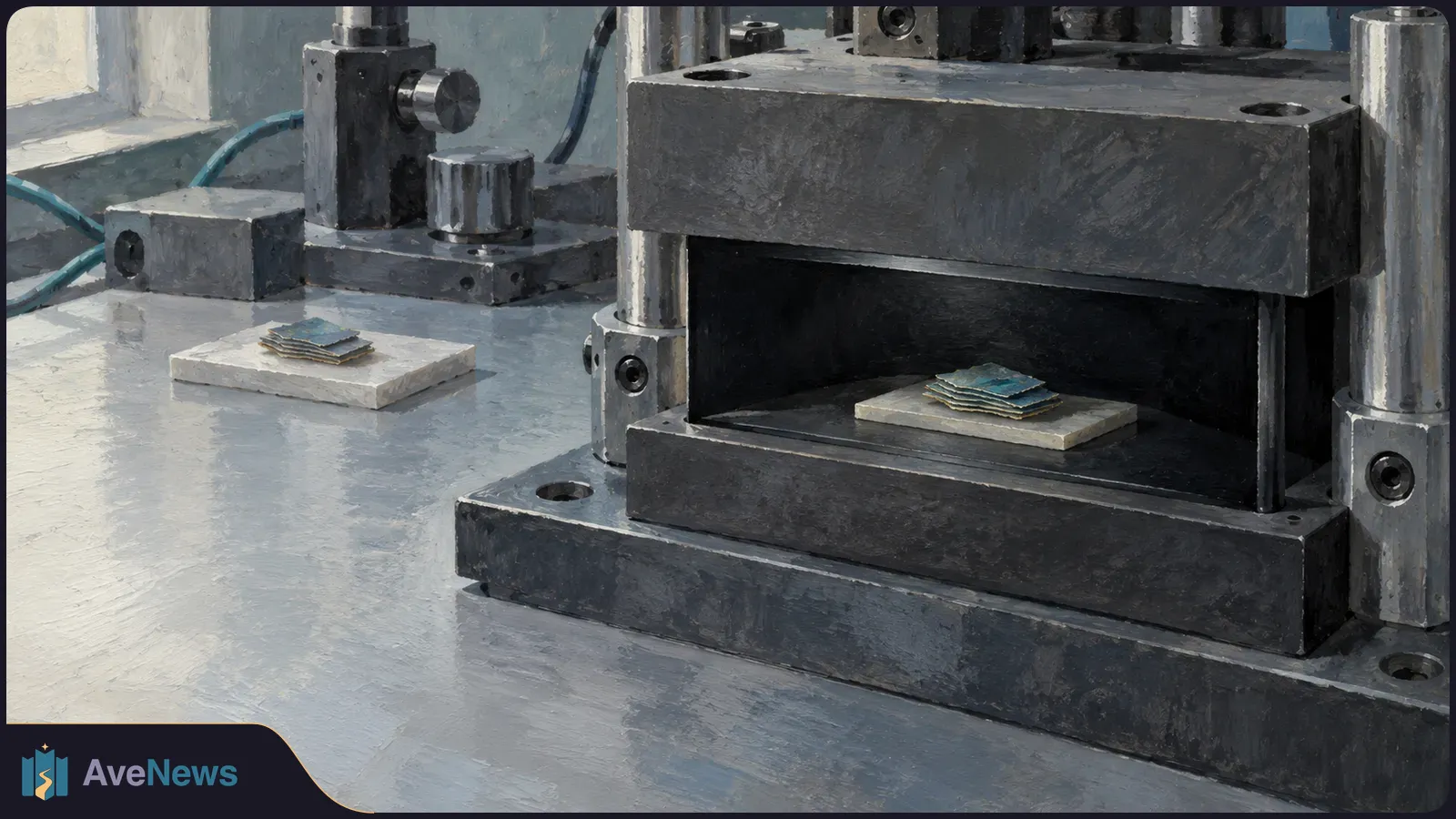
Comparisons of NbSe2 inside and outside an engineered electromagnetic cavity suggest a possible way to control superconductivity. The researchers’ vacuum-fluctuation explanation remains a proposed mechanism.
Researchers comparing the superconducting material NbSe2 inside and outside a specially designed electromagnetic cavity reported an increase of up to 5.4% in its critical temperature in a six-layer device. Critical temperature is the threshold below which a material enters its superconducting state. A higher threshold means the device can remain superconducting at a somewhat warmer temperature.
ScienceDaily described the findings on October 3, reporting that the study was published in Nature. Changgan Zeng and Guanghui Cheng of the University of Science and Technology of China, part of the Chinese Academy of Sciences, led the study.
Cheng also reported higher critical current and critical magnetic field near the superconducting transition. These are the current and magnetic-field thresholds beyond which superconductivity is lost.
In quantum physics, a vacuum is not perfectly still: fluctuations persist even in the lowest-energy state. Zeng said these vacuum fluctuations are generally too weak in free space to produce observable effects in large-scale material systems. The team therefore sought to change the electromagnetic environment around NbSe2.
The researchers used a terahertz split-ring resonator as their “dark cavity.” A resonator supports particular electromagnetic frequencies; terahertz frequencies involve trillions of oscillations per second. Zeng said this structure could reshape the electromagnetic environment and substantially amplify vacuum fluctuations. The team describes the method as changing the material’s surroundings rather than directly driving the material with an external energy source.
To test more conventional explanations, the researchers varied the cavity’s geometry and characteristic frequency, material thicknesses, dielectric materials—electrical insulators—and metallic strips. They reported that these controls ruled out explanations involving strain, material degradation, uneven material properties and metallic screening, in which metal shields electromagnetic fields.
The superconductivity enhancement did not change smoothly as the cavity frequency changed. Instead, it showed a resonance-like peak at a particular frequency. Zeng interpreted that peak as strong evidence that the superconducting state interacted with the cavity’s electromagnetic modes, or supported field patterns. This frequency dependence is a key part of the researchers’ case for their proposed mechanism.
Analysis
Qingdong Jiang’s group at Shanghai Jiao Tong University and Frank Wilczek of the Massachusetts Institute of Technology developed a theoretical model to explain the result. Their model describes electromagnetic interaction between the superconducting state and the cavity as an exchange of virtual photons. They propose that this interaction lowers the energy of the superconducting state, making it more stable.
Jiang said the resonance occurred when the characteristic energy of a cavity mode matched low-energy fluctuations in the superconducting material. That is the researchers’ explanation for the observed peak, not an independently established cause.
The 5.4% figure is a relative increase, not an absolute temperature change. The corresponding temperatures, the number of devices tested and the measurement uncertainties remain unclear. It is also not yet clear whether an independent assessment supports the vacuum-fluctuation interpretation.
The experiment points to a possible control method for superconductors and other quantum materials, rather than a demonstrated practical application. Zeng said further optimization of cavity structures and material systems may make the effect larger and more widely applicable.
The one-time benefit targets a limited group in traditional Medicare, with most direct deposits expected on or around Friday.
2 min

MI5 says more than 100 UK-linked academics contributed to CGTRI-funded research. China's embassy denies its allegations.
2 min
The September 28 flight went beyond earlier suborbital tests, but engine failures and an early return limited the mission. Lunar landings still require separate refueling work.
4 min