
ESA studies a European-led station and crew transport
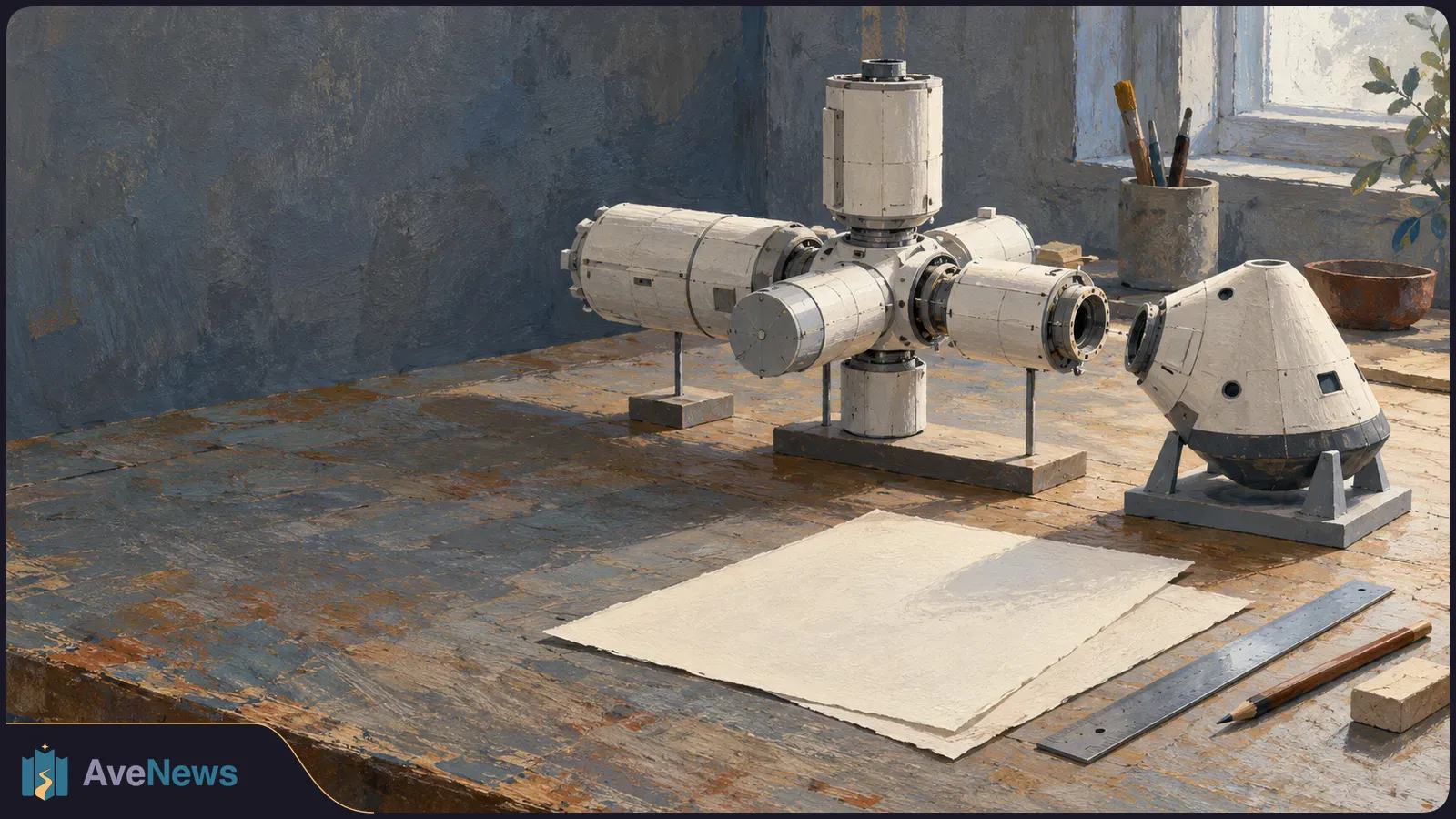
Feasibility studies and a cargo demonstration contract mark concrete steps, while ESA also explores access to future commercial stations.
Feasibility studies and a cargo demonstration contract mark concrete steps, while ESA also explores access to future commercial stations.
The European Space Agency (ESA) has announced two studies into developing and operating a European-led space station. The work accompanies a member-state-backed push for European crew transport and a September 2026 contract to demonstrate cargo delivery to the International Space Station (ISS), NASASpaceflight reported on October 3.
ISS decommissioning is currently scheduled to begin in 2030. ESA and the station’s other partners are preparing to sustain access to low-Earth orbit—the region close to Earth where the ISS operates. ESA is examining a European-led station alongside partnerships with companies developing commercial stations.
Consortia led by Airbus Defence and Space and OHB are conducting the station studies. The work began in June 2026 and is expected to last approximately nine months, drawing on Europe’s contributions to the ISS and the service module it supplies for NASA’s Orion spacecraft.
ESA Director General Josef Aschbacher told NASASpaceflight that one option under discussion was a station built by European industry, probably with some private funding. He said astronauts might occupy it only for certain periods, with automated operations continuing between visits. This is an option being studied, not an approved construction project.
The alternative is access to commercial stations. In September, ESA signed separate agreements with Axiom Space and Starlab Space. Starlab is a joint venture between U.S. company Voyager Technologies and Airbus Defence and Space. The agreements are initial steps toward European access to those companies’ future stations, not confirmation that the stations are already available.
ESA’s member states endorsed “A Call to Boost European Space Exploration,” seeking stronger human and robotic exploration capabilities in Earth orbit, on the Moon and on Mars. Their stated aim is autonomous European access to space alongside stronger international cooperation. For human spaceflight, ESA wants more than a rocket and capsule: it also needs an emergency launch-abort system, flight operations and the ability to recover returning crews.
Aschbacher estimated that launching European astronauts with European rockets and a European system would take about ten years. He compared the cost of developing that capability with buying both astronaut flights and station access in the United States.
| Option | Estimated cost |
|---|---|
| Develop Europe’s own human-spaceflight capability | About 10 billion |
| Buy flight and station access in the United States | About 5 billion |
Aschbacher argued that the additional five billion would stay in Europe and build European capacity. His timetable and cost comparison are estimates, not approved construction budgets. It is not yet clear whether ESA will commission a crew vehicle or proceed with station construction.
The more concrete step is cargo transport. In September, ESA and The Exploration Company signed a contract under ESA’s ALADDIN cargo programme for a Nyx demonstration mission to the ISS. ESA will provide €310 million for that mission within a €760 million contract; the remainder is designated for two further cargo missions to the ISS or a commercial successor.
The Exploration Company also wants to develop a version of Nyx suitable for carrying people, but the signed mission is a cargo demonstration. It is planned to launch on an Ariane 64 rocket. The company targeted a 2028 debut in 2025; the demonstration’s launch date remains unannounced.

The changes affect previously eligible refugees and other immigrants with legal status. The estimate describes people at risk, not confirmed coverage losses.
2 min
A study monitoring people at high risk has found cancers at early stages. Separate mouse experiments test treatment of precancerous growths, but neither approach has established a survival benefit in people.
3 min

Researchers compared women’s survey responses with electronic medical records, finding gaps in information about menopause status, timing and symptoms.
3 min
