
Formula 1 stakeholders unanimously agree on 2030 V8 framework

The proposed turbocharged engine would replace the current V6 a year earlier than planned, but detailed rules still need the World Motor Sport Council’s approval.
In this article
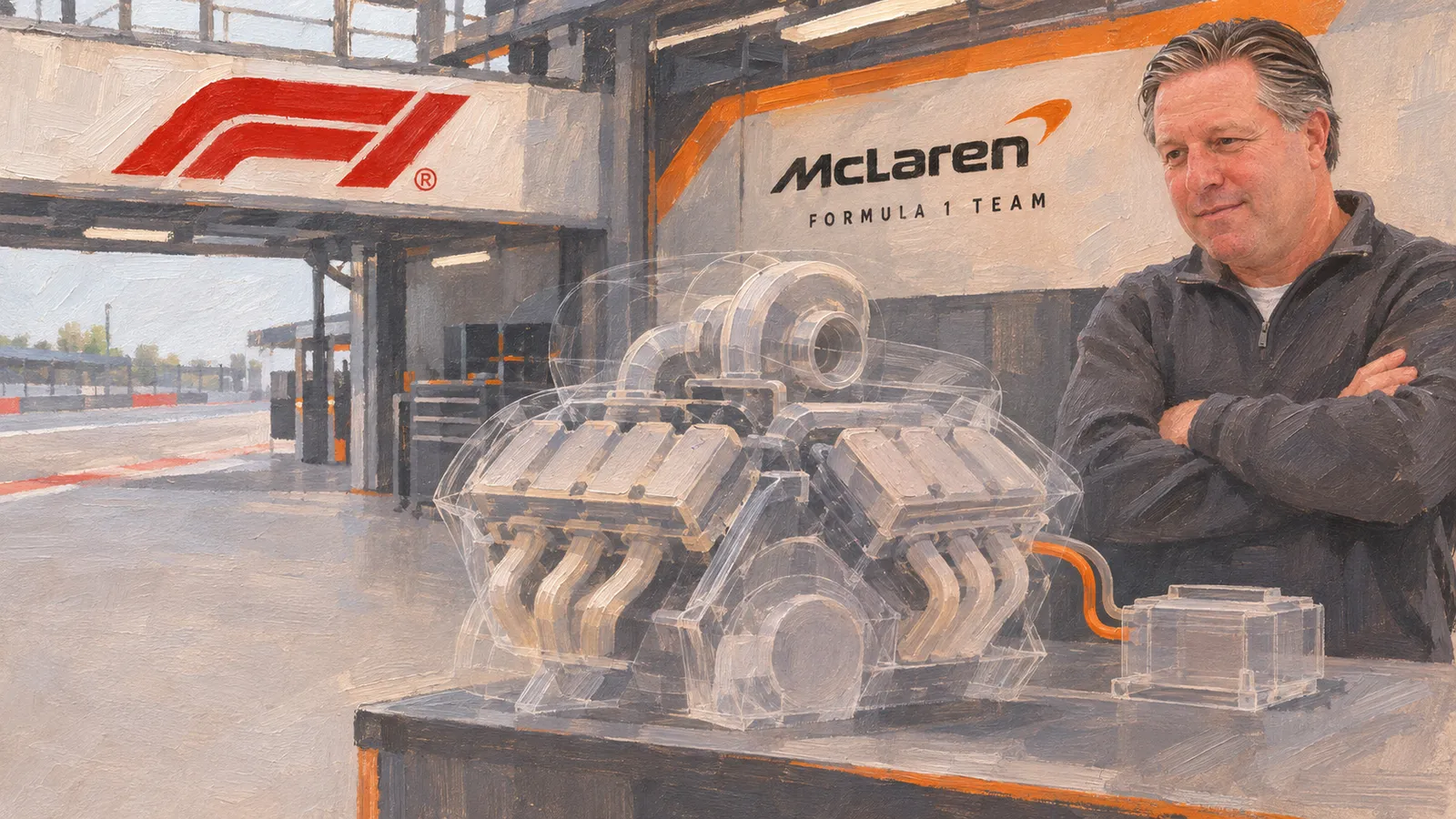
Formula 1's governing body, Formula One Management, the teams and engine manufacturers have unanimously agreed on a technical framework for a 2.1-liter turbocharged V8 with limited hybrid assistance. The proposal also calls for sustainable fuel and a lighter chassis.
The November 20 announcement follows an agreement in principle at the F1 Commission on 16 November. Further talks addressed manufacturers' feedback about ending the current engine cycle early.
If approved, the V8 would replace the current turbo-hybrid V6 in 2030, one year before the previously planned change. The Fédération Internationale de l’Automobile (FIA), motor sport’s governing body, plans to present a definitive regulatory framework to its World Motor Sport Council in Shanghai in December 2026. The council must approve regulatory changes.
Earlier: Formula 1 bosses agree on 2030 V8s in principle, McLaren CEO Zak Brown says
A smaller role for electric power
The current rules began in 2026 and shifted engine output toward a near-even split between combustion and electric power. Several drivers have criticized the engines' battery dependence and the demands of managing their energy.
The FIA says it wants simpler, lighter and cheaper power units, with a more agile chassis, closer racing and a sound that appeals to fans. Formula 1 last used V8s from 2006 through 2013; those engines drew air in without a turbocharger, unlike the proposed turbo-hybrid design.
The Race says the turbocharger was retained partly to satisfy manufacturers and improve fuel efficiency, avoiding larger tanks and more fuel at the start of races. The Race describes the framework as a compromise between some manufacturers' interest in hybridisation and FIA President Mohammed Ben Sulayem’s initial preference for an engine without a turbo.
The exact electric contribution remains unspecified. The Race says the management of a push-to-pass overtaking system and whether to retain movable front and rear wings also remain to be settled.
An earlier switch changes GM’s plans
The manufacturers involved include Mercedes, Ferrari, Red Bull–Ford, Audi, Honda and incoming supplier General Motors. GM had planned to debut its own engine in 2029, but will delay its manufacturer debut to avoid building a V6 for a single season. Its Cadillac team is expected to remain a Ferrari engine customer for an additional year, through 2029.
Follow AveNews
 Motorsport
Formula 1 bosses agree on 2030 V8s in principle, McLaren CEO Zak Brown says
McLaren CEO Zak Brown says manufacturers and Formula 1 bosses have agreed on 2.1-liter turbo-hybrid engines, but Alpine executive Flavio Briatore says the deal is unsigned and details remain unresolved.
3 min

Sources
Show all 4 sourcesShow fewer
 fia.comThe V8 Future: Unanimous Agreement Reached on FIA’s 2030 Formula 1 Power Unit Framework | Federation Internationale de l'Automobile (opens in a new tab)
 The RaceF1's new V8 engine agreed – five things you need to know (opens in a new tab)
- racingnews365.comFIA president puts fresh timeline on V8 return decision for F1 | RacingNews365 (opens in a new tab)
- grokipedia.comFormula One engines (opens in a new tab)