
FuriosaAI says it closes $620 million round to expand chip production
The South Korean startup says it closed a Series D round valuing it at about $2.9 billion after the investment, with funds earmarked for RNGD production, software and its next processor.

In this article
South Korean chip startup FuriosaAI says it has closed a $620 million Series D funding round to expand production and deployment of its RNGD processors, improve its software and develop its next chip. The company puts its post-money valuation—the value after the new investment—at about $2.9 billion.
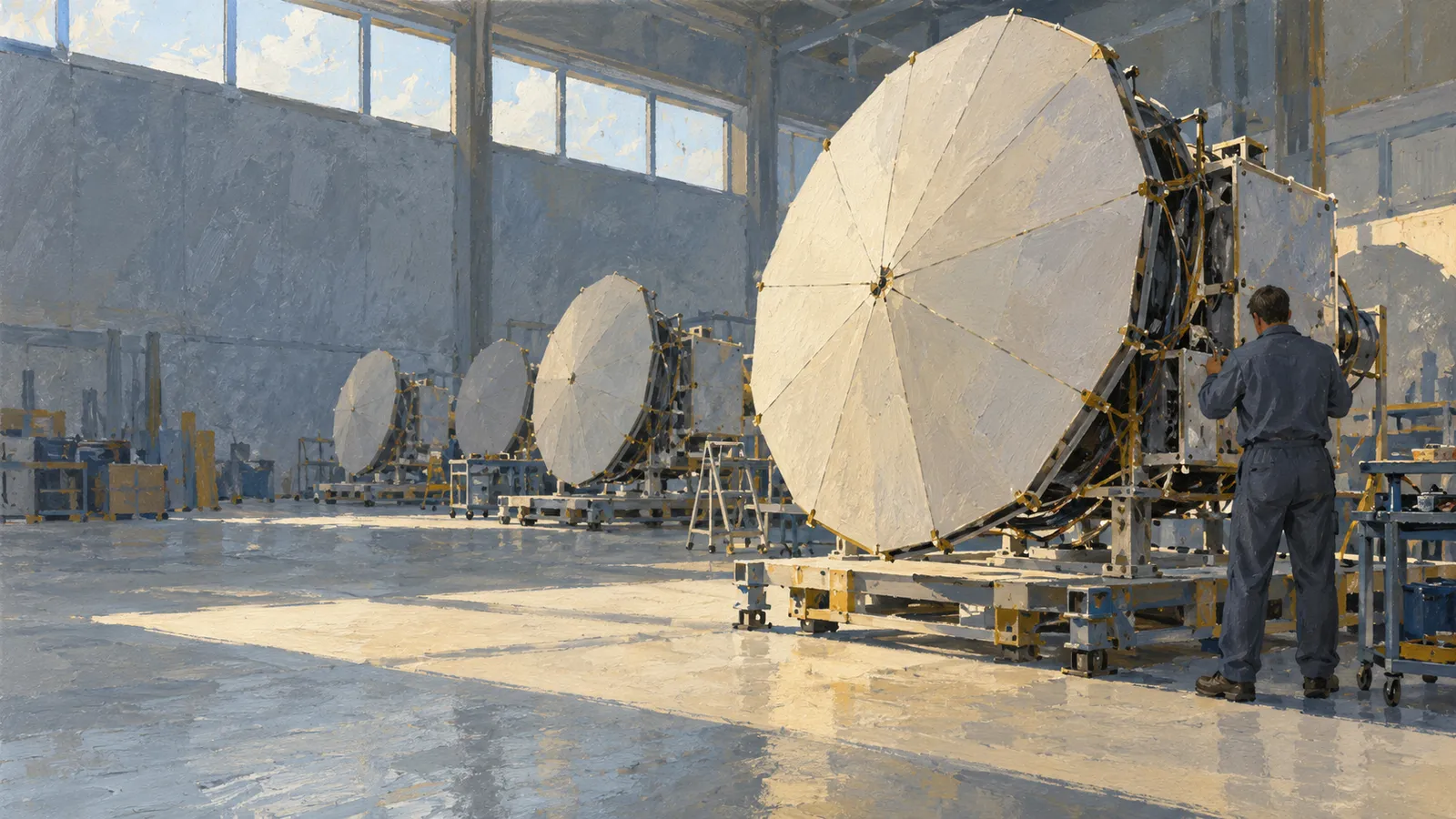
RNGD is FuriosaAI’s second-generation accelerator for superintelligence (SI) inference: running trained models to generate answers and other outputs. FuriosaAI says RNGD entered mass production in January 2026, making this financing an expansion of an existing commercial product.
Who supplied the money
South Korea’s National Growth Fund was the largest investor, contributing $280 million. FuriosaAI’s announcement describes that investment as supporting the country’s efforts to expand SI computing infrastructure and strengthen its semiconductor industry.
| Investor group | Contribution |
|---|---|
| National Growth Fund | $280 million |
| International investors | $110 million |
| Existing shareholders | $125 million |
Infinitum was the largest international participant. Other international investors included Cisco Investments, NeoFort Holding, QUDA Capital Partners, Jericho Capital and Worldline Capital. Returning backers included Korea Development Bank, Kakao Investment and NAVER, which invested through NAVER Ventures.
SiliconANGLE said existing backers supplied the remainder after the fund’s contribution and the international investment, implying $230 million. That differs from FuriosaAI’s $125 million follow-on figure; the company’s announcement also lists new Korean institutional investors.
In a separate announcement dated October 21, FuriosaAI said it had closed a $125 million Series C financing to scale RNGD and develop its next processor.
FuriosaAI’s case for lower power use
FuriosaAI argues that expensive, scarce electricity limits where customers can deploy SI computing equipment and raises operating costs, while its air-cooled RNGD servers fit existing enterprise power budgets without changes to cooling systems.
Its design differs from Nvidia’s graphics processing units, or GPUs. FuriosaAI’s Tensor Contraction Processor architecture makes calculations involving multidimensional arrays of numbers the basic unit of work, rather than fixed-size, two-dimensional matrix multiplications. The company says planning execution in advance reduces the movement of data that consumes energy.
FuriosaAI claims RNGD matches RTX PRO 6000 throughput—the amount of work completed in a given time—at the same card count and serves twice as many users per kilowatt. The company does not specify the workload or test configuration for that comparison in its announcement.
NAVER Ventures general partner Yong Jung Park said FuriosaAI had reached the point of proving its business rather than its technology, citing volume production and customer deployments.
FuriosaAI says LG Group runs EXAONE deployments on RNGD, while Upstage uses it for live search summaries serving millions of users. Samsung SDS launched a commercial RNGD-powered NPU-as-a-service offering in July, providing access to the processors as a service.
Production targets and the next processor
| Year | FuriosaAI target | SiliconANGLE’s account |
|---|---|---|
| 2026 | 20,000 accelerator cards | 20,000 chips |
| 2027 | More than 40,000 accelerators | 40,000 chips |
Separately from those output targets, FuriosaAI says it has secured memory and chip-fabrication capacity to more than double its planned 2026 production in 2027.
The company also says development of its third-generation processor is underway with Broadcom and other partners. Co-founder and chief executive June Paik said the financing would help expand RNGD commercialization globally while advancing that successor. FuriosaAI has not announced a launch or delivery date for the new processor.
Latest in Business
 Companies
Eutelsat commits €3.39 billion to Europe’s IRIS² satellite network
The satellite operator expects access to more than twice OneWeb’s current bandwidth in return for spending in 2027–2034, with initial IRIS² services expected from 2030.
3 min
 Companies
Microsoft reports $92.3 billion revenue under new business segments
Microsoft reported $33.17 billion in Azure revenue and a 22% year-over-year decline in Windows OEM and devices revenue. Its reporting overhaul brings quarterly disclosure of Azure’s dollar contribution.
2 min
 Companies
T-Mobile raises 2026 outlook as quarterly profit climbs 27%
The US wireless carrier’s third-quarter service revenue rose 6% to $19.4 billion as it raised its expectations for the full year.
1 min


Sources
Show all 4 sourcesShow fewer
- via.tt.seFuriosaAI Secures $620 Million Series D to Meet Surging Enterprise AI Inference Demand and Accelerate Next-Gen Silicon | Business Wire
- furiosa.aiFuriosaAI closes $620 million Series D to scale efficient, production-ready AI inference
- SiliconANGLEEnergy-efficient inference chip developer FuriosaAI raises $620M to solve the data center power bottleneck
- furiosa.aiFuriosaAI Raises $125M Series C to Scale AI Compute