
Why more cores and cache do not always mean faster games
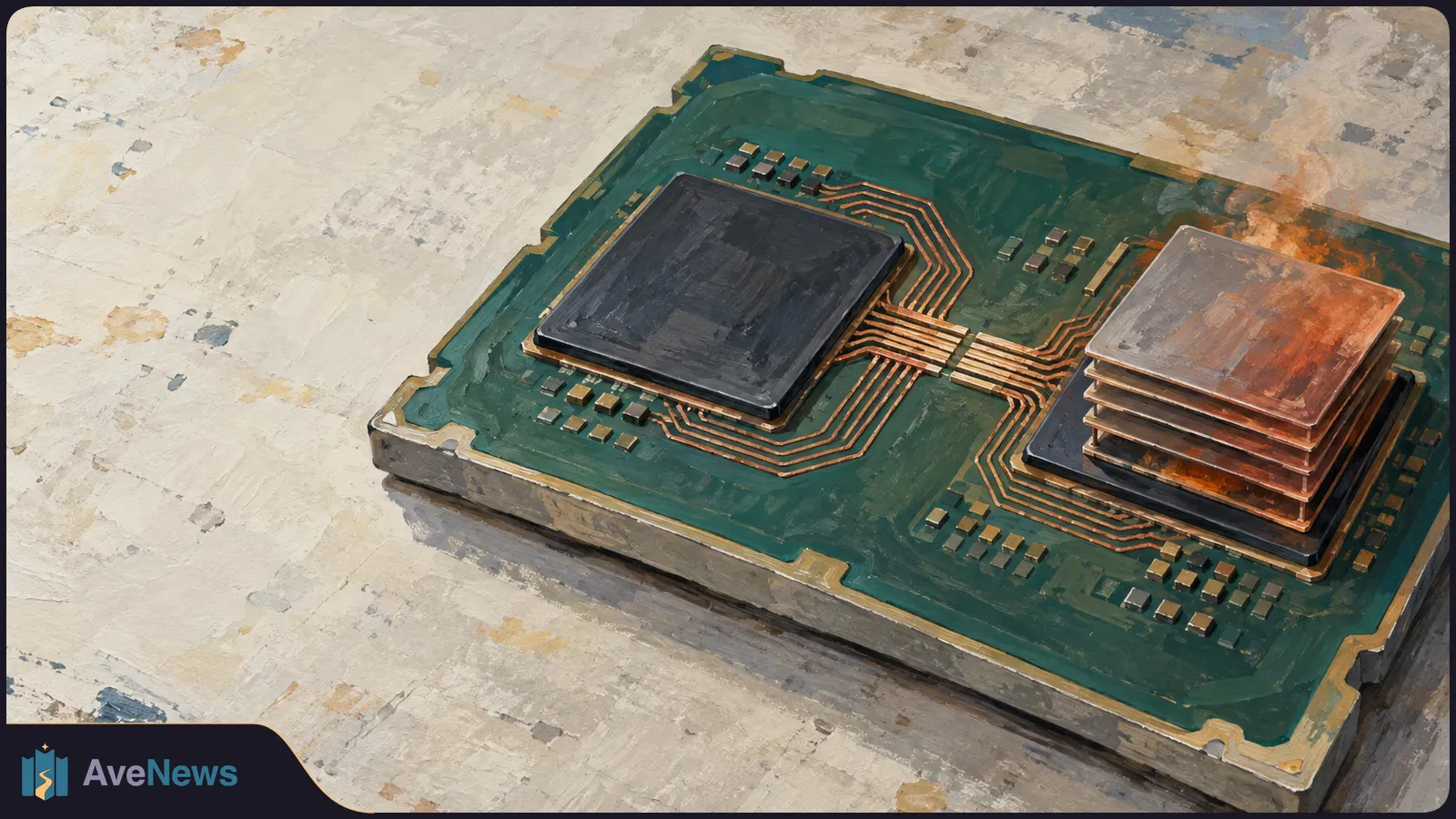
A reported AMD prototype highlights why cache placement, communication between chip dies and clock-speed limits matter alongside headline specifications.
A reported AMD prototype highlights why cache placement, communication between chip dies and clock-speed limits matter alongside headline specifications.
More processor cores and more total cache do not guarantee better gaming performance. Tom's Hardware's report on a purported AMD Ryzen 9 5900X3D engineering sample helps explain why: the arrangement of the cores and cache matters, as do communication delays and limits on clock speed.
According to the report, a Chiphell forum user revealed a 12-core sample with 128MB of L3 cache, twice the standard Ryzen 9 5900X's 64MB. AMD has not confirmed the sample's specifications. This is a reported engineering sample, not a newly released processor.
L3 cache is fast memory within a processor. AMD's 3D V-Cache adds cache in a stacked layer. A Core Complex Die, or CCD, is a separate piece of silicon containing processor cores. Tom's Hardware attributes the reported sample's 128MB total to an extra 64MB of stacked cache on just one of its two CCDs.
AMD also explored adding cache to both dies. Tom's Hardware reports that Gamers Nexus saw a separate 12-core Zen 3 prototype in AMD's labs with 192MB of L3 cache, achieved by adding 64MB to each CCD.
But adding cache to both dies does not remove the delay involved in communication between them. This delay is called cross-die latency. Tom's Hardware identifies it as a gaming tradeoff and contrasts dual-die layouts with the eight-core, single-CCD Ryzen 7 5800X3D, which avoids that inter-die delay.
There is also a clock-speed tradeoff. Tom's Hardware says stacking cache on both CCDs brings thermal and power constraints that require lower clock speeds. Clock speed measures how many operating cycles a processor runs each second, so extra cache is not the only factor affecting performance.
Tom's Hardware's CPU performance ranking provides a concrete example: the Ryzen 9 9900X3D trails the Ryzen 7 9800X3D in gaming, although it has more cores and more L3 cache. The report gives the relative result, not a numerical performance gap.
| Processor | Cores | L3 cache | Relative gaming result |
|---|---|---|---|
| Ryzen 9 9900X3D | 12 | 128MB | Behind the Ryzen 7 9800X3D |
| Ryzen 7 9800X3D | 8 | 96MB | Ahead of the Ryzen 9 9900X3D |
AMD demonstrated a 12-core stacked-cache prototype at Computex 2021. According to Tom's Hardware, AMD claimed up to 15% higher average gaming performance than a regular Ryzen 9 5900X, with both processors fixed at 4GHz. That was AMD's demonstration of an earlier prototype, not a new gaming test of the purported Chiphell sample.
The CPU-Z screenshot cited by Tom's Hardware shows the sample running at 4,649MHz. The outlet calls this likely a boost clock, but the reading is not an established retail specification. It is not yet clear how fast the purported sample would be in games or why AMD did not release it; the design tradeoffs alone do not establish the reason.

The Justice Department alleges Anibal Alexander Canelon Aguirre helped lead an ATM-theft conspiracy. He was among the Tren de Aragua members sanctioned last week.
3 min

Semiconductor Engineering reported growth of more than 262% from a year earlier, attributing the increase to stronger memory demand, more shipments and higher memory prices.

The planned spending in South Korea and Vietnam targets the circuit boards that connect chips to mainboards, not production of the chips themselves.
1 min
