
Gaza flooding affects more than 106,000 people, UNICEF says
UNICEF estimated on 9 November that 950,000 displaced people lived in flood-exposed areas, including 400,000 at extremely high risk, as families faced winter in makeshift shelters.

In this article
Heavy rain directly affected more than 106,000 people in Gaza, damaging or destroying shelters, toilets and belongings, UNICEF said on 9 November. The UN children’s fund estimated that almost half of the 400,000 displaced people living in areas at extremely high risk of flooding were children.
Years of war have displaced families repeatedly and left many dependent on tents or damaged shelters. Al Jazeera reported that nearly two million people had been displaced. UNICEF estimated that 1.7 million displaced people were living in tents, makeshift shelters or damaged buildings exposed to flooding, cold and collapse as they prepared for a fourth winter.
Latest · 13 November 2026
An anonymous doctor told AFP that Kinan Ahmed Raqiq died of hypothermia in Khan Younis, Al Jazeera reported. Gaza Civil Defence spokesman Mahmoud Basal also confirmed the infant’s death after exposure to extreme cold, according to Al-Quds reporting relayed by Al Jazeera. The broadcaster reported that 5 people, including children, died when a sandy embankment collapsed onto their tents the day after the flooding. The UN humanitarian affairs office said storms had affected 26,000 households.
Humanitarian partners have provided tents, tarpaulins, blankets and other essential supplies to about 1,800 families whose immediate needs were assessed, UN News reported, citing the UN humanitarian affairs office. It said partners had also pumped out standing water, dug drainage channels and cleaned affected areas, but that families across Gaza remained exposed to standing water contaminated with sewage and that pumps, sandbags and other equipment fell short of needs.
Local authorities said at least 70,000 tents were flooded and more than 200,000 people affected in Gaza, DW reported. That is a separate estimate from UNICEF’s earlier count of more than 106,000 people directly affected by the rains. DW also reported, citing UNICEF, that torrential rain over the weekend killed at least 6 people, including children. The UN Office for the Coordination of Humanitarian Affairs said aid teams had begun clearing blocked sewer lines and stormwater basins at 60 locations, benefiting an estimated 30,000 families, according to DW.
Flooding also damaged electricity infrastructure in Gaza, Al Jazeera reported. Abu Zayed Electricity Company temporarily suspended services at affected branches because of fears of electrical contact and short circuits after water entered several facilities, damaged equipment and caused generators to malfunction. The company’s general manager, Aya Shaheen, said workers had covered distribution panels and meters and insulated exposed wires, while municipalities had been asked to pump out accumulated water. In Bureij refugee camp, resident Abu Sajed, who has diabetes, lost use of his blood glucose monitor after it was soaked; his family’s solar power system was also damaged, Al Jazeera reported.
Wet bedding and too few warm clothes
In Gaza City, Amira Saad told Al Jazeera that rain flooded her family’s shelter and soaked their blankets, mattresses and pillows. Her baby mostly has thin summer clothes; unable to afford winter clothing, she borrowed a warm garment from a neighbor. Her mother-in-law, Basima Saad, said she keeps her adult daughter, who has a disability and needs warm clothes and medication, beside her in bed to warm her.
Amal al-Maydana said children’s clothes are expensive and rain seeps through her tent’s damaged tarpaulins. Her younger daughters still wear summer clothes, and the family relies on blankets because it has no heating equipment. Anas Hamad said rain soaked his family’s bedding in their torn tent, where they have lived for around two years, and his three-year-old child trembled from the cold. He must choose between food, warm clothes and blankets, or tarpaulins to protect the tent.
War destroyed Hamad’s home and supermarket, leaving him and his four brothers without work. He relies on second-hand clothes and hand-me-downs for his children. Gaza City clothing trader Mohammed Abu Shanar said customers leave without buying because prices are too high; he attributed those prices to shortages caused by continued Israeli restrictions on goods entering Gaza and to wholesale costs.
Al Jazeera said nine-month-old Kinan Ahmed Raqiq died of hypothermia on 12 November, relaying his father’s account to AFP that he woke in their tent to find the baby’s skin had turned blue. UNICEF has warned that winter conditions increase children’s risk of hypothermia, a dangerous drop in body temperature, and respiratory infections.
Aid and funding fall short of needs
The UN Office for the Coordination of Humanitarian Affairs says 94% of Gaza’s population urgently needs shelter assistance. It says 65 percent of households live in tents or makeshift shelters and 650,000 children need winter aid. Al Jazeera’s report does not date the office’s assessment or specify the period it covers. By September, agencies had secured winter clothing for 9,000 households and bedding for 50,000; the office said funding shortages were hampering preparations.
On 9 November, UNICEF said it had reached at least 10,000 children with winter clothing and thermal blankets in the preceding week, distributed tarpaulins to families with flooded tents and cleared sewage and stormwater at more than 50 locations.
UNICEF said only two of six pumps were working at Gaza City’s Sheikh Radwan stormwater basin, where rainwater mixed with sewage threatened to overflow. It said it had sought Israeli approval for repair equipment for more than a year, and called on Israeli authorities to permit pumps, generators, spare parts and other materials to enter immediately to repair water and sanitation infrastructure, including the Sheikh Radwan basin and Sheikh Ejleen Wastewater Treatment Plant.
The agency is seeking $97.5 million for its 2026-2027 winter response, which aims to support 540,000 children and their families across Gaza and the occupied West Bank.
Share
Follow AveNews
Latest in this situation
 Conflict
Israeli strike kills at least 6 at Gaza hospital, health ministry says
The dead included a surgeon and at least 12 other people were injured, health authorities said. Israel said it targeted a Hamas commander and other militants.
3 min
 Conflict
Gaza lost 252,000 jobs between 2023 and 2025, UN labor agency says
The International Labour Organization and its partners have called for more recovery funding after unemployment reached 85.1% and labor-income losses totaled $2.77 billion in Gaza.
2 min
 Earth
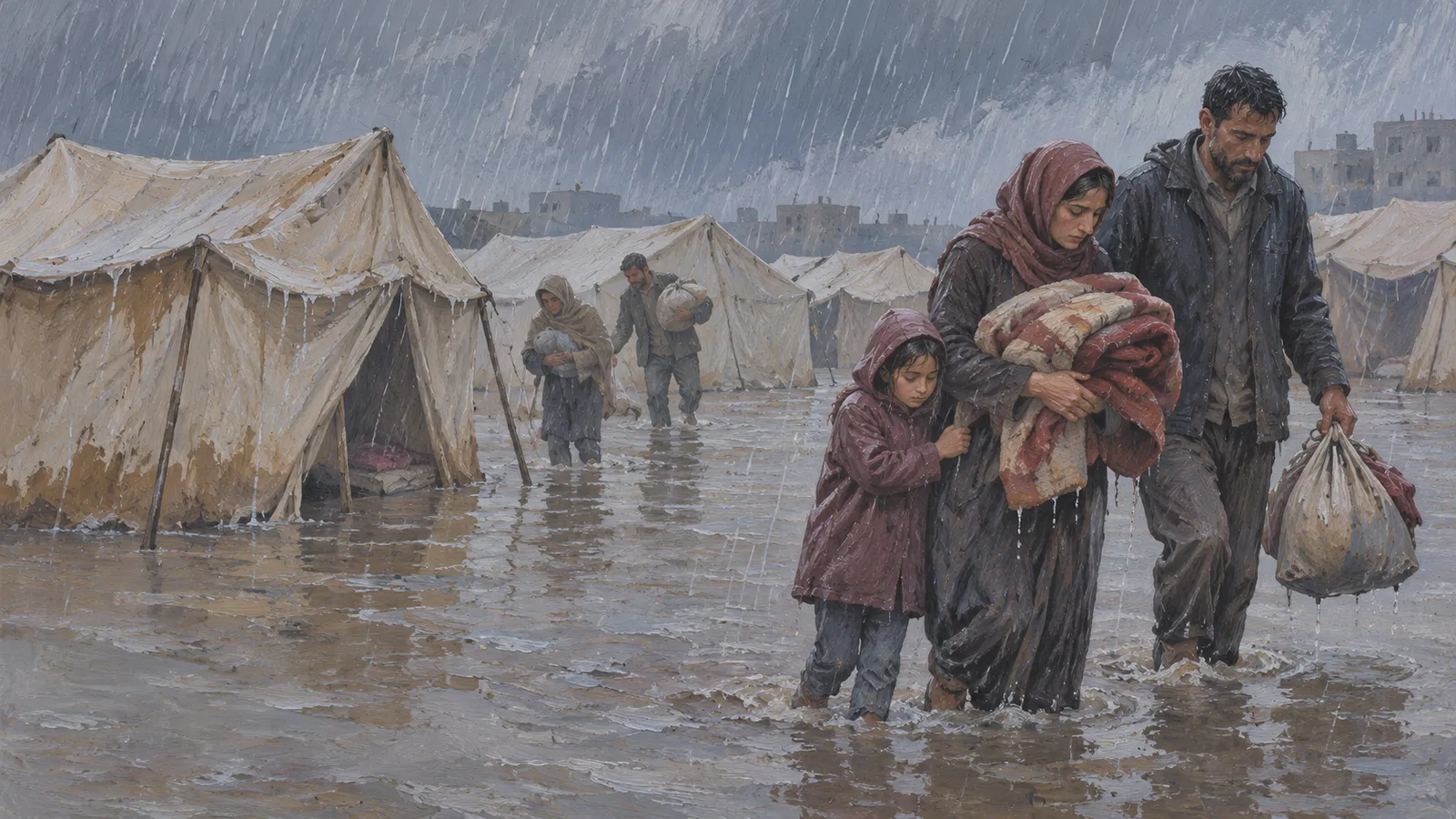
Gaza embankment collapse kills 5 after heavy rain
A sand embankment collapse killed 5 people south of Deir al-Balah on 8 November. The UN says more than 26,000 households reported damage to shelters or belongings after the weekend storms.
8 min


Sources
Show all 6 sourcesShow fewer
- unicefusa.orgThree children killed as heavy rains batter displaced families in Gaza – UNICEF | UNICEF USA
- Al Jazeera‘Her hands are as cold as ice’: Gaza families struggle to keep warm
- Al JazeeraPalestinian baby dies from cold in Gaza amid Israeli restrictions on aid
- UN NewsSix killed in Israeli airstrike on Gaza’s Nasser Hospital
- DWHumanitarian situation in Gaza worsens amid political deadlock
- Al JazeeraWith every rainfall, Gaza risks losing access to power and healthcare