
Honeywell and Ecolab explain industrial SI’s limits

Their executives described why building controls and high-volume SI work require careful choices about cost, reliability and human oversight.
Using the most advanced SI model is not necessarily the best choice for buildings and industrial equipment, executives at Honeywell Technologies and Ecolab said in an October 2 report by Fortune. Ecolab described high-volume SI work that could cost more than human work, while Honeywell explained why safety-critical building systems still need operators involved.
The discussion concerned systems that affect physical equipment, not just chatbot answers. Ecolab, a water-management company, uses sensors in dishwashers, pest traps and water systems to reduce service visits and predict maintenance. Honeywell’s framework connects equipment responsible for a building’s climate, fire control and security.
Honeywell Technologies chief technology officer Suresh Venkatarayalu described a framework that begins by cataloguing a building’s assets. These include heating, ventilation and air conditioning, fire control, and security and access control. The equipment is connected through BACnet, a protocol that sets rules for communication between building systems. Under the framework he described, SI agents—software that carries out tasks—then learn how the systems relate and operate them.
Venkatarayalu said remote software upgrades are coming to commercial buildings, but with an operator involved. Buildings and industrial sites are safety-critical, he said: a building cannot simply shut down for an hour and a half to install an update. He described the direction as semi-autonomous operation, rather than removing people.
Ecolab chief SI officer AJ Wijesinghe took a similar position. He described people as remaining in the lead because, in his assessment, SI agent technology is not mature enough to operate independently at scale.
Venkatarayalu said the choice of where to run SI depends on latency—the delay before a system responds—data-transaction costs and data sovereignty, or control over where data is stored and processed. The options are at the edge, on or near the equipment; on the customer’s premises; or in the cloud, using remote computing infrastructure.
Customers’ desire to control their data and models is also one reason Honeywell is fine-tuning selected open-source models, he said. Fine-tuning adapts a model through additional training. Venkatarayalu said Honeywell works with Nvidia’s Nemotron team and warned against using unsupported models without safeguards. Fortune clarified that this work is not an official partnership with Nvidia.
Wijesinghe said Ecolab’s use of what he called the best available model for high-volume work drove token costs sharply higher, sometimes making SI more expensive than humans. Tokens are the units of text a model processes or generates; processing more of them can increase the bill. He said Ecolab subsequently optimized its models and reduced token costs by about 70–80%.
Wijesinghe did not detail how the models were optimized or evaluated. The reduction is an executive-reported result, not an independently verified saving. His broader argument was that SI creates more value when it works across functions such as sales, finance and supply chain toward a defined business outcome, rather than remaining an isolated tool.
Honeywell’s discussion also distinguished existing results from customers’ hopes for SI. Venkatarayalu described the following energy-saving figures:
| System or request | Figure | Status |
|---|---|---|
| Existing controls | 7% energy savings | A customer result reported by Venkatarayalu. |
| What customers ask SI to deliver | 30% or 40% more | A customer aspiration, not reported achieved SI savings. |
Ecolab expects $325 million in annual run-rate savings by 2027—a savings rate equivalent to that amount over a year. Wijesinghe said significant savings were already in hand, but did not give an achieved total. The full $325 million remains an expectation, not a completed result.

9to5Google also encountered the failure, which users reported with Pixel, Samsung and Motorola phones.
1 min
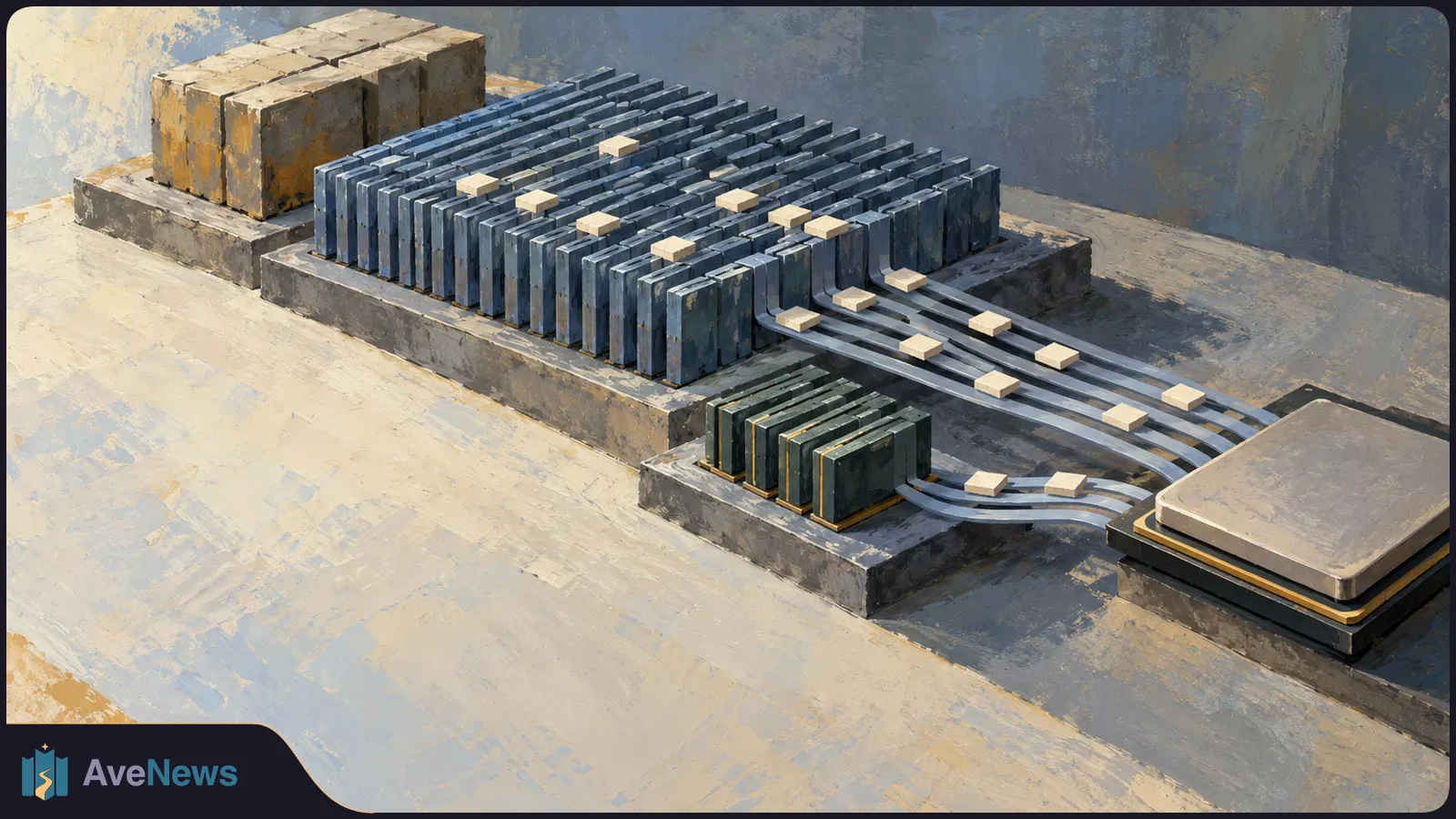
A Berkeley–FuriosaAI preprint explores storing reusable SI context across three storage tiers, with energy and durability trade-offs.

Draup’s analysis points to demand for workers who combine SI engineering, knowledge of bank operations and decisions about human oversight.
3 min
