
Iranian court upholds Parastoo Ahmadi’s 74-lash sentence
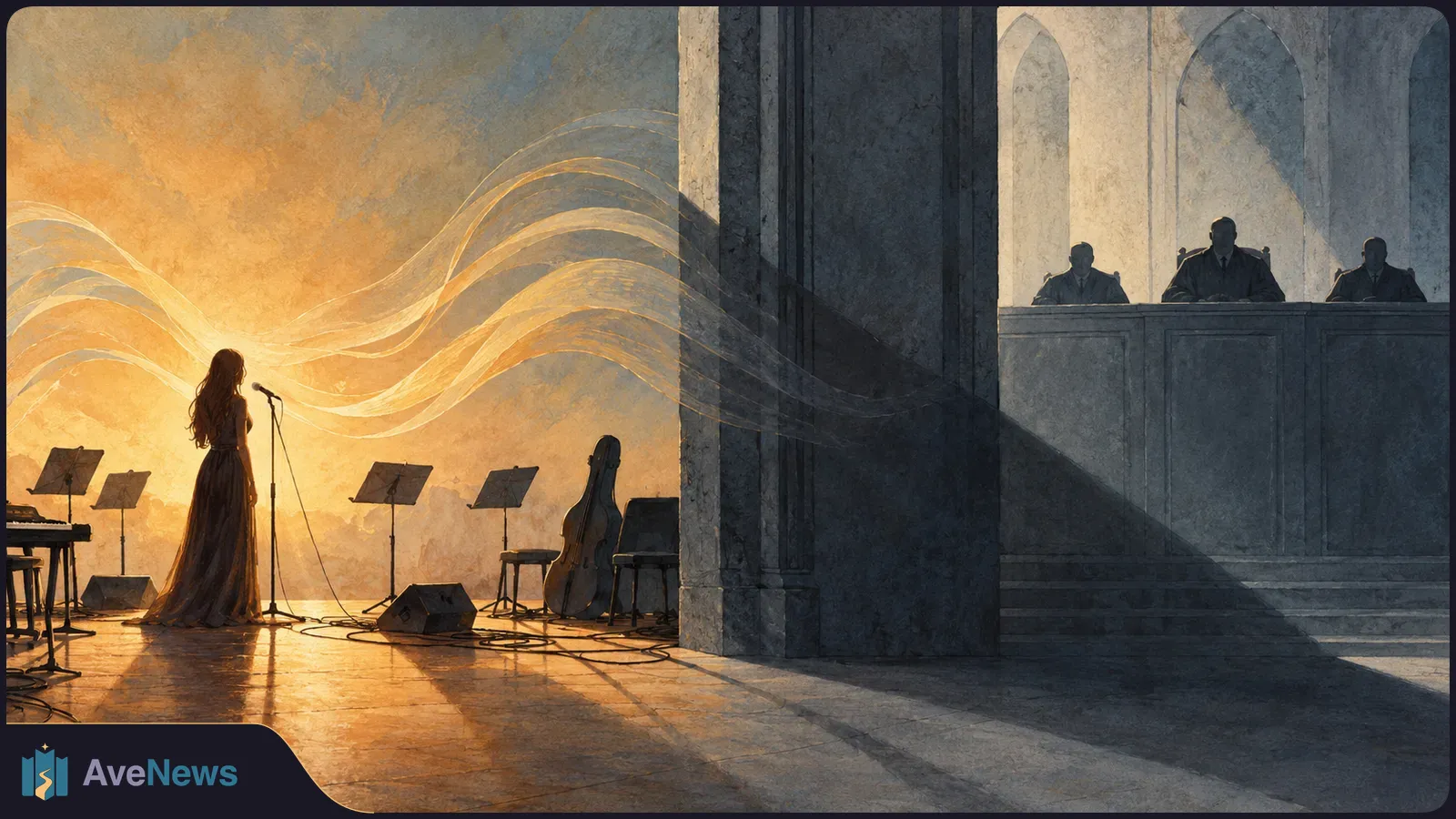
The case concerns her 2024 concert without a hijab. Eight production-team members were also sentenced in June, when the ruling imposed two-year bans on artistic work and leaving Iran.
The case concerns her 2024 concert without a hijab. Eight production-team members were also sentenced in June, when the ruling imposed two-year bans on artistic work and leaving Iran.
An Iranian court has upheld a sentence of 74 lashes against singer Parastoo Ahmadi over her 2024 online-streamed concert without a hijab, the Guardian reported on September 30. The case also reaches beyond the singer: eight production-team members, including musicians, were sentenced alongside her in June.
According to court documents cited in the Guardian’s June reporting, the criminal court in Qom province sentenced the nine artists to 74 lashes and imposed two-year bans on artistic activities and leaving Iran. Those restrictions affect their ability to continue their work, as well as their freedom to travel.
In December 2024, Ahmadi performed the patriotic song Az Khoone Javanane Vatan, translated as “From the Blood of the Youth of the Homeland,” without a headscarf in a concert livestreamed on her YouTube channel. The video attracted millions of views. Ahmadi and several musicians were briefly detained after its release, and authorities later filed a case over its publication.
Iran enforces compulsory hijab, or headscarf, rules for women. The court documents cited in June described charges including offending public decency through producing and publishing “vulgar and immoral content” online. Separately, Iran passed a “hijab and chastity” law in 2024, but the Guardian’s September report said it had not yet been officially implemented.
Moein Khazaeli, a human rights lawyer at Dadban, a legal counselling centre for Iranian activists, disputed the sentence’s legal basis. He told the Guardian in June that Iranian criminal law does not criminalise women singing, performing music, or producing and distributing musical works. He argued that those activities cannot reasonably be classified as producing or publishing obscene content.
In the September report, Khazaeli described the flogging sentence as a form of torture under the United Nations Convention against Torture. Skylar Thompson, deputy director of the US-based Human Rights Activists in Iran, called for the sentences to be overturned. Thompson characterised flogging as deliberate violence against a person’s body and dignity, and said Ahmadi’s punishment was being used to “frighten other women into compliance”.
The upheld sentence is distinct from the punishment being carried out. On September 30, the Guardian reported that Ahmadi and her production crew were expected to face lashings within the following three months.

The A24 film adapts a 2009 Esquire article about a police sting in which a Texas prosecutor died by suicide. Hansen contests its dialogue, chronology and portrayal of his team’s motives.
3 min

The Dutch literary publisher completed its departure in August 2026. Its directors explain the commercial pressures behind the split and the practical work of running independently.
3 min
Prosecutors allege the former Scrubs writer-producer used photo shoots to lure women to his home. His defense challenges what the photographs show and the reliability of the women’s accounts.
2 min
