
Miami Grand Prix reshapes its offerings around audience data
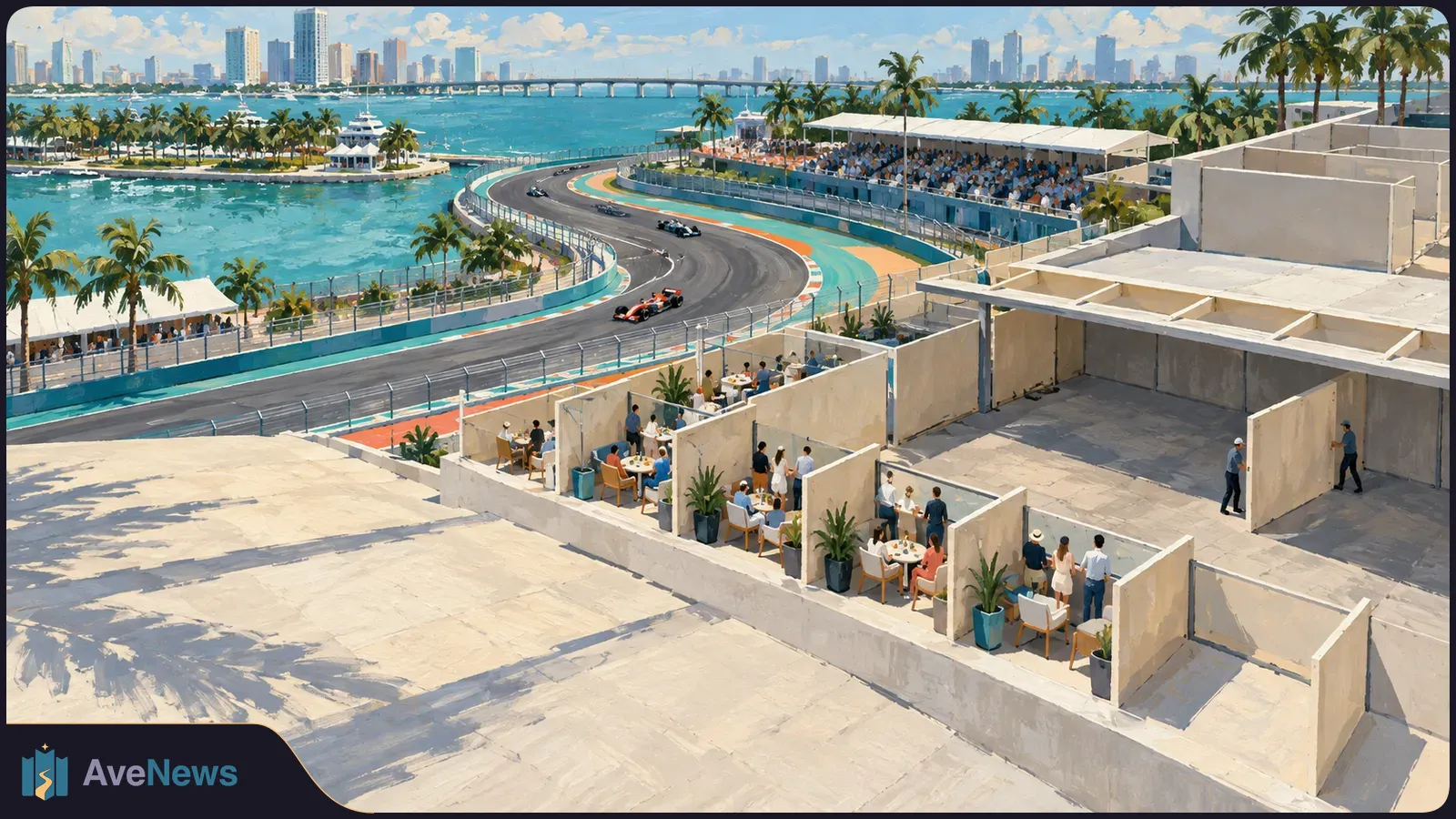
Smaller hospitality suites and a planned expansion reflect the organiser’s effort to match changing demand and build repeat attendance.
Smaller hospitality suites and a planned expansion reflect the organiser’s effort to match changing demand and build repeat attendance.
Miami Grand Prix organisers are withdrawing offerings that no longer suit their audience and introducing smaller private hospitality suites. Race president Katharina Nowak told The Race that the changes follow three months of summer analysis of ticket-buyer and attendee data, aimed at understanding what customers want as the Formula 1 event approaches its sixth year.
The organisers no longer use the first two years’ data as their baseline, Nowak said. She attributed the first-year audience to the race’s novelty and the second-year audience to people who had missed out on tickets for the debut. In her account, those early crowds no longer represent the audience the event needs to serve.
One concrete change concerns hospitality suites: private spaces offering a premium experience beyond grandstand seating. Nowak said smaller groups of friends want their own space, prompting a change in the suite mix.
| Suite capacity | Reported change |
|---|---|
| 20–30 people | Previously numerous; a couple remain. |
| 10 people | Now offered alongside the larger suites. |
Nowak said the event’s annual construction and dismantling gives organisers room to change the site layout rather than reproduce it unchanged. She also said the Campus Pass remains part of the effort to serve visitors on a different budget from hospitality buyers.
Two thirds of the Miami GP audience comes from Florida, according to Nowak. She sees that local base as a foundation for annual attendance: nearby customers can drive to the race without arranging flights or hotel stays. That is her business rationale for cultivating local fans, rather than a measured result showing how many return each year.
The organisers also used a Fan Fest on South Beach during the previous year’s race weekend to reach people beyond their existing customer list. Nowak said thousands attended over five days, and more than 95% were absent from the database organisers had built over five years.
Nowak described a hoped-for progression for those visitors: first buying Campus Passes or single-day grandstand tickets, then returning for a full weekend, and eventually purchasing hospitality. She presented that sequence as a growth plan, not as a buying pattern that had already occurred.
Miami’s Formula 1 contract runs through 2041, giving organisers a long period over which to plan investment. The Race reports a planned three-storey extension of the Paddock Club, the event’s premium hospitality area, towards Turn 1. It would add 115,000 square feet of space and capacity for 3,200 additional guests.
Nowak linked that investment to the long contract, describing the building as intended to sustain demand through 2041. The agreement provides a planning horizon; it does not itself establish future demand. Whether the audience changes produce more repeat ticket purchases or improve profitability remains unclear.

Glasgow coach Franco Smith says fewer teams could bring stronger early games but reduce European income opportunities for smaller-budget clubs.
2 min

Watt’s multiyear agreement extends his season-long assignment alongside Jim Nantz and Tracy Wolfson to include Super Bowl LXII.

The midfielder leads the Premier League in chances created this season. Danny Murphy credits turns, quick passing and the ability to play several roles.
3 min
2 min
