
Microsoft says some personal emails expired during outage

The company said all queued enterprise messages were delivered, while senders of expired messages received non-delivery notices. Its final report also sets out changes to testing and recovery.
In this article
Situation: Microsoft’s November 2026 global outage
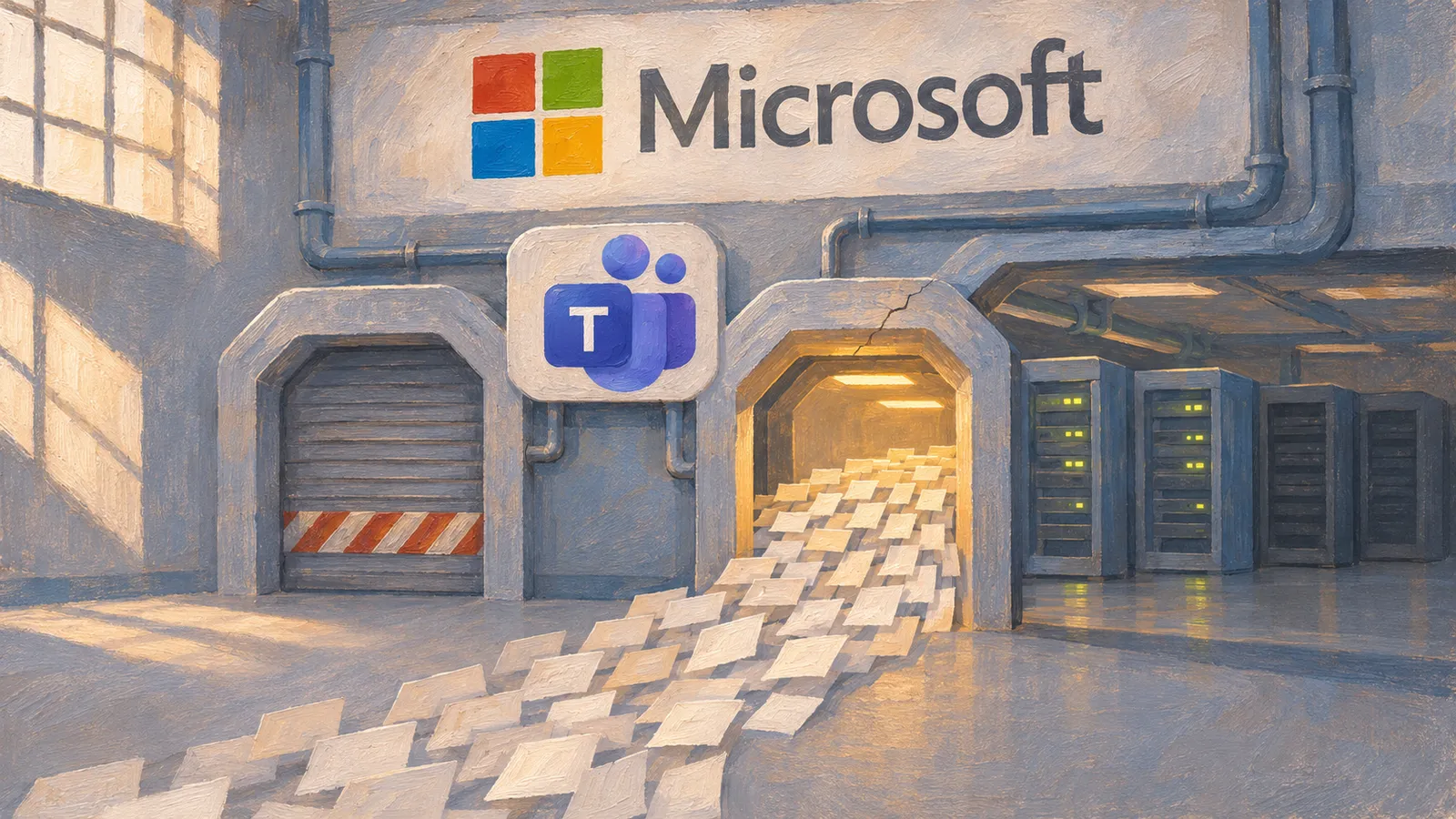
Microsoft’s final report on the Microsoft 365 outage says some delayed messages to consumer mailboxes inactive for more than 30 days expired. The senders received non-delivery notices. Microsoft said all queued enterprise messages were eventually delivered and none were found permanently lost.
The findings, issued on 20 November, add delivery outcomes and detailed repair plans to Microsoft’s preliminary account of the November 12 outage. Microsoft extended the time its email service kept retrying delivery from 24 to 48 hours before generating a non-delivery notice, but some consumer messages still expired.
Outlook.com is Microsoft’s personal email service, while Exchange Online provides email for organizations. Exchange Online was hit hardest: most users could not reach their mailboxes through several connection methods. Teams, SharePoint and OneDrive recovered earlier after their traffic moved off the affected gateway, although features that depended on Exchange data remained affected longer.
Earlier: Microsoft says July bug and server strain caused global outage
How the outage spread and recovery stalled
Microsoft said a July update to its networking gateway servers introduced a defect in how they handled connections. On 12 November, a routing problem shifted Teams traffic onto the gateway serving Exchange Online. Reduced server capacity and peak traffic then combined to trigger the defect. As servers failed, traffic moved to others and spread the failures across regions.
At the worst point, more than 80% of North American gateway servers were unresponsive. Servers in every region were affected within about two hours of the North American failures. The defect affected Microsoft’s gateway configuration, not broader Windows deployments.
Load tests had used older servers with fewer processing cores and different traffic conditions, so they missed a defect that affected newer machines under load. Tests of the switch to a backup gateway also failed to identify it.
Early recovery attempts failed because waiting traffic overwhelmed servers as soon as they returned, and automated recovery was not designed for failures on that scale. Microsoft took groups of servers out of traffic, recovered them and applied an update reversing the defective change before returning them to service across regions.
Active disruption ended on 13 November. Microsoft declared the incident resolved on 14 November, after extended monitoring and work to clear the email backlog.
Hotel pool warning missed
In a separate incident on November 13, 15 guests at Phantasialand’s Hotel Ling Bao in Brühl were affected by excessive chlorine in a pool. Emergency responders found a fault in the automatic dosing system. Four guests were taken to hospital, and one remained under observation with a moderately severe injury.
Phantasialand told WDR that emails did not arrive during the Microsoft disruption. WDR said staff missed an email warning from the sauna area’s safety system.
Safeguards and planned changes
Microsoft has updated its server image to include the fix, added capacity and monitoring, and put temporary controls on traffic distribution in place. The company also plans further changes, as described in its final report and by The Register.
For the fourth quarter of 2026, Microsoft targets changes to stop failures spreading between regions, restrict Teams failover to the affected region and improve automated customer notifications. Its first notification during the outage came about 20 minutes after broad impact began.
For the first quarter of 2027, Microsoft plans tests on newer hardware with realistic peak traffic, separate gateway capacity for different workloads, more spare capacity, improved Windows diagnostics and change auditing and better recovery procedures. Broader failover testing, smaller failure zones and controls to restore traffic gradually and admission controls for returning servers do not yet have target dates.
Follow AveNews
 Software
Microsoft says July bug and server strain caused global outage
In its November 16 initial findings, Microsoft said increased gateway traffic and reduced server capacity triggered a defect from July, causing requests to pile up until servers stopped responding.
2 min
 Software
Microsoft resolves Exchange Online outage after network failure
Microsoft marked the incident resolved on 13 November and attributed the failure to a network problem, not a cyberattack or superintelligence (SI) agents. It also warned that fraudulent notices used the outage to seek clicks.
3 min
 Software
15 hotel guests reportedly suffer chlorine poisoning in Germany
Tom’s Hardware links the poisoning to a Microsoft outage that it says stopped safety emails from being sent. Local media cited by the outlet say 4 guests were taken to a hospital.
1 min


Sources
Show all 4 sourcesShow fewer
 The RegisterMicrosoft mega outage: Report reveals testing gaps and emails that never arrived (opens in a new tab)
- 365fanatic.comMicrosoft 365 outage 12 November 2026: final report | 365Fanatic (opens in a new tab)
- grokipedia.comOutlook.com (opens in a new tab)
- www1.wdr.dePhantasialand: Chlorunfall nach Microsoft-Panne (opens in a new tab)