Midwest farmers face higher diesel costs as harvest begins
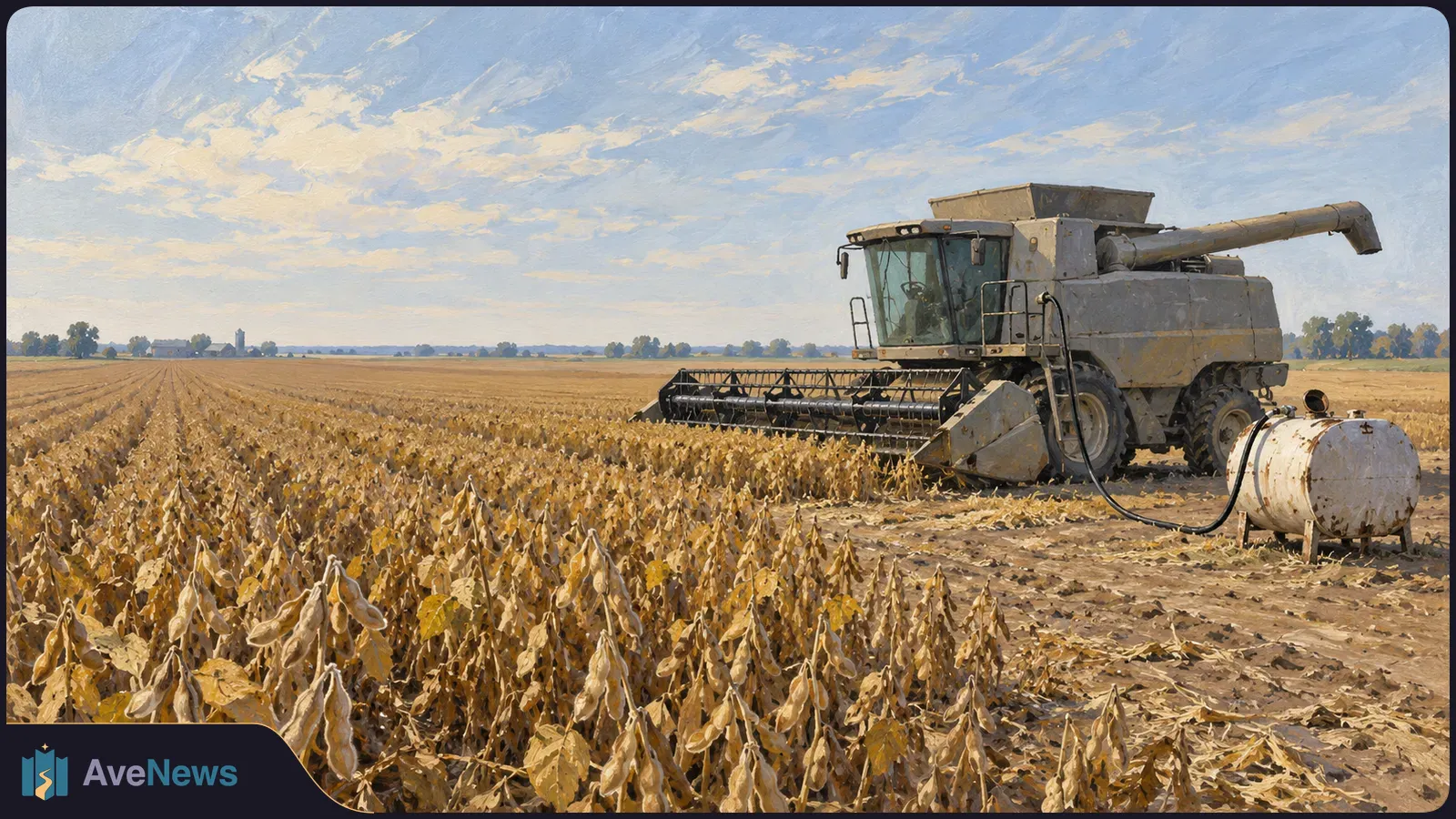
A Guardian feature reports steep fuel-price rises, while limited storage leaves farmers such as Joe Hamilton needing more diesel during the harvest.
Midwest farmers face higher diesel costs while harvest machinery and trucks that carry crops to market are in heavy use. Nationwide, diesel averaged $6.30 per gallon on 16 October, more than 70% above a year earlier, according to AAA figures reported by Fortune on 19 October.
The rise follows sharp regional increases as the soybean harvest began. The Guardian reported on 3 October that Illinois, Michigan, Ohio and Indiana were among the five states with the largest weekly diesel-price increases in September, with prices more than $3 per gallon above a year earlier.
In that report, Joe Hamilton, who farms corn and soybeans on 2,500 acres in Indiana’s Delaware county, expected to need about 9,000 gallons for his October soybean harvest. He described using about 300 gallons a day over roughly 30 harvest days in a typical autumn, and said his fuel cost $3 more per gallon than a year earlier.
The US Department of Agriculture’s September forecast projects higher farm expenses and lower net farm income in 2026, Fortune reported. These are forecasts for the year, not measured increases in spending or losses already incurred.
| Measure | Forecast change from 2025 |
|---|---|
| Fuel and oil expenses | Increase of nearly 30% |
| Total production expenses | |

The funding announcement comes amid increased Russian drone attacks on electricity and other infrastructure. Project allocations and the payment timetable remain unclear.
Farmers have limited room to reduce fuel use while harvesting fields and transporting crops. Glenn Brunkow, president of the Kansas Farm Bureau, said high fuel costs cut into already tight margins.
This is a time of year when we use a lot of fuel, and there just isn’t much we can do.
The Guardian’s 3 October report cited estimates that the war with Iran, damaged refineries in Russia and regional diesel-supply disruptions could add $12,500 in fuel costs for every 1,000 acres harvested. That estimate is separate from Hamilton’s expected 9,000-gallon fuel requirement; it is not his additional bill.
A power outage and flooding in September shut ExxonMobil’s refinery in Joliet, Illinois, for more than a week, the newspaper reported. It also identified a six-month dispute between union members and BP at its Whiting, Indiana, refinery as contributing to regional price pressure.
Kurt Lykins, an Otterbein University lecturer, told The Guardian that the Midwest has fewer refineries and less access to tanker deliveries than coastal regions. Those constraints, he said, make it harder for the region to respond to supply disruptions.
The pressure extends beyond farming. The Guardian reported that almost 40% of school districts participating in a national survey published in May said they were consolidating bus routes to reduce diesel expenses.
Hamilton uses no-till farming, which avoids ploughing the soil, and cover crops to reduce the number of times machinery passes through his fields. He told The Guardian that these methods use less fuel than fully tilling the land.
His five semi-trucks add another cost constraint: they use more expensive on-road diesel, while red-dyed agricultural diesel typically carries no federal fuel tax.
In the 3 October report, Hamilton said limited storage at his farm would require further diesel purchases to finish the 2026 harvest.
1 min

The reported two-season agreement settles broadcast uncertainty as clubs control the league’s commercial rights following last season’s breakdown.
2 min

Board approval, a programme-aligned 2027 budget and checks on financing commitments are still required before the money becomes available.
2 min