
What Samsung’s Mini LED dispute means for TV buyers
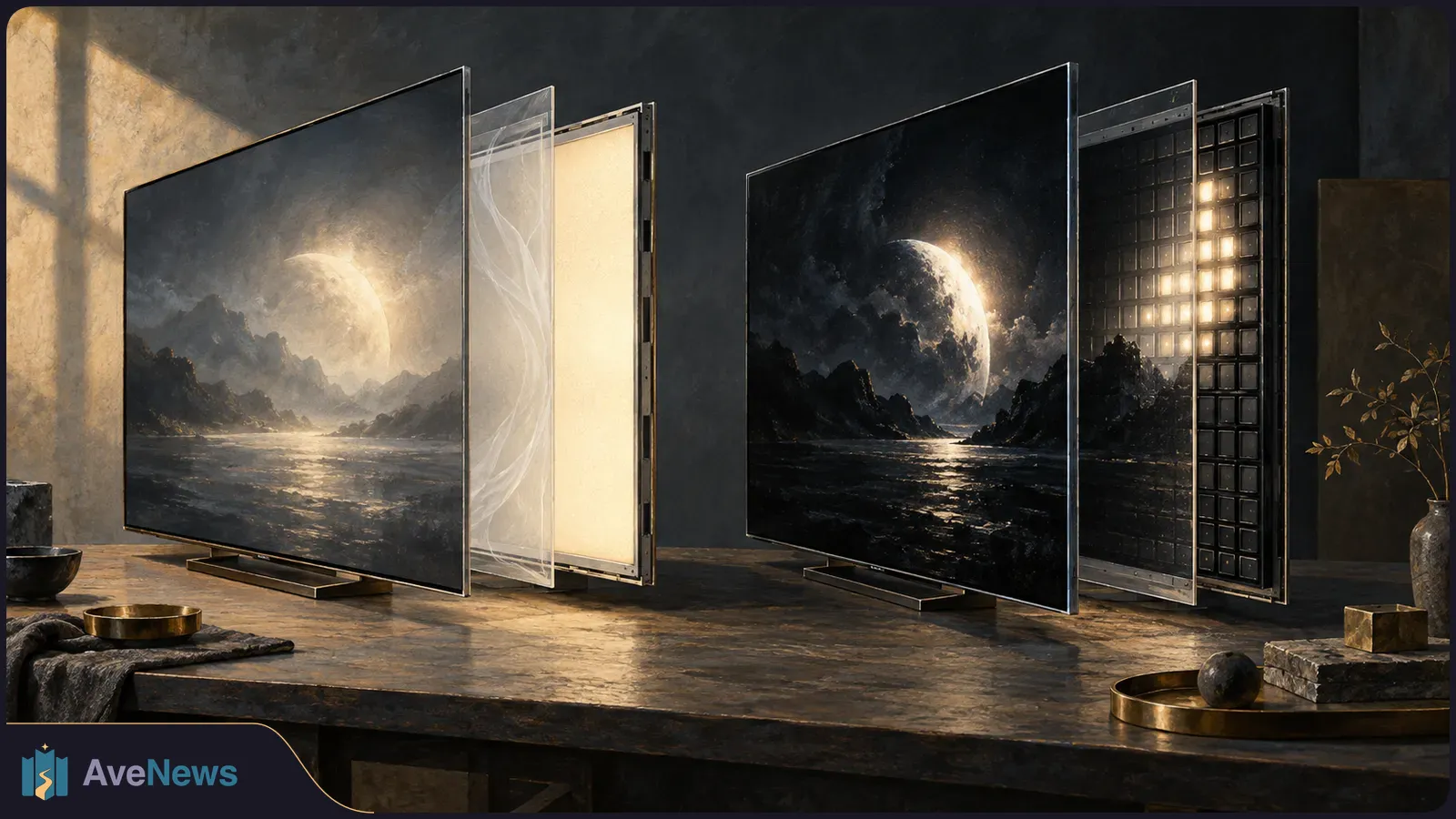
Samsung’s M-series specifications describe software-based dimming, not full-array hardware dimming. That distinction matters for contrast and HDR, but the Mini LED label alone does not establish picture quality.
Samsung’s M-series TVs carry a Mini LED label, but their specification sheets disclose an important distinction: their dimming is software-based, not full-array hardware-based. As Ars Technica reports, that means the advertised dimming is not the same as independently controlling different parts of the LED backlight—a feature that helps LCD TVs show bright highlights alongside dark areas.
The distinction is central to a lawsuit TCL filed in the US District Court for the Central District of California in late August. TCL alleges that Samsung falsely markets its M70H, M80H and M90H TVs as Mini LED. Those are TCL’s accusations, not established findings. TCL also sells competing QM-series Mini LED TVs. Samsung told Ars that it intends to vigorously defend against the lawsuit.
Full-array local dimming, or FALD, groups LEDs across the backlight into zones whose brightness can be controlled independently. Some zones can therefore stay dim while others shine more brightly. This improves contrast—the difference between light and dark—and helps deliver high dynamic range, or HDR, pictures with bright highlights and dark areas.
Software-only dimming works differently. In the approach described by Ars, the TV analyzes regions of each video frame and adjusts the picture’s brightness to increase perceived contrast. It does not independently brighten or dim physical LED backlight zones. Samsung’s M-series specification footnote states: “Supreme Mini LED Dimming is Software-based (not full-array hardware-based) technology.”
Eric Virey, principal displays analyst at Yole Intelligence, told Ars that FALD is first a hardware feature: it requires a two-dimensional array of LEDs spread across the display, along with a good control algorithm. He said the industry broadly regards FALD as mandatory for Mini LED backlights.

The two models avoided April’s rises. Raspberry Pi blames higher memory costs and says its advantage from cheaper stocks is largely exhausted.
Guillaume Chansin, associate director of displays and XR at Counterpoint Research, said software-only dimming cannot match a well-designed hardware local-dimming system, especially in scenes prone to blooming—the halos that can appear around bright objects. But software still matters: Chansin said good software can help some brands achieve comparable image quality with fewer LEDs or dimming zones.
The analysts’ understanding does not amount to an enforceable standard. Ars reports no industry-wide rule for how small an LED must be, or how many LEDs and dimming zones a TV needs, to qualify as Mini LED. Counterpoint research director Bob O’Brien told Ars that no organization has authority to make and enforce such standards.
TCL alleges that its examination of Samsung’s M70H and M80H found neither the control chip nor the circuitry needed for local dimming. It also alleges that M-series LEDs measure 0.5 mm, compared with the 0.1–0.3 mm range it describes as usual for Mini LEDs. Those technical allegations remain part of the contested complaint; the absence of a common definition does not itself establish false advertising.
The RTINGS observations cited by Ars show why backlight control matters in practice. RTINGS measured a contrast ratio of 6,440:1 on Samsung’s M80H and said dark scenes looked washed out in a dark room. For HDR content mastered at 600 or 1,000 nits—a unit of brightness—the review said bright detail rapidly cuts off at the TV’s peak brightness. That lets the TV reach its maximum brightness, but reduces the distinctions between bright shades, so highlights can blend together.
For a limited comparison, RTINGS measured 80,000:1 contrast after calibration on Samsung’s Neo QLED QN80H, which has independently controlled dimming zones. The review said its high contrast and evenly dark black areas helped it look good in a dark room. These observations illustrate the difference between the two sets; they do not isolate backlight design as the only reason for their performance gap.
TCL’s own QM6K shows the limits of the label and the hardware. RTINGS reported good black levels, but also halos around bright highlights and mediocre HDR brightness. Small LEDs and local dimming therefore do not guarantee strong overall performance. For buyers, the useful distinction is both what the backlight can control and how the particular TV performs in independent tests—not simply whether its box says Mini LED.
2 min
Attackers can write files without logging in, potentially enabling code execution. Some fixes remain pending, and workarounds do not remove an existing compromise.
2 min
The review follows US allegations of concealed Russian ownership and development. The Met expects extremely limited effects on ongoing investigations.
2 min
Correction ·
Corrected spelling and punctuation in the Armenian text.
Correction ·
Clarified wording so the article attributes claims to their sources.
