
Ancient rocks point to two episodes of mountain growth

A study published on 13 November proposes that taller mountains supplied ocean nutrients that could have helped oxygenate Earth and create conditions for complex life.
In this article
Ancient rocks point to two episodes in which mountain belts grew substantially thicker, about 2.7–2.2 billion and 800–700 million years ago, a study led by University of British Columbia researcher Matthijs Smit found. The team proposes that the taller mountains could have helped create conditions for complex life.
The researchers connect the growth to two periods when atmospheric oxygen rose: the Great Oxidation Event, roughly 2.4–2 billion years ago, and the Neoproterozoic Oxygenation Event, about 700–500 million years ago. The second mountain-growth interval preceded or overlapped the latter event.
Reading pressure in ancient rocks
For the study, published in Science Advances on 13 November, the team examined metamorphic rocks—rocks changed under pressure—that had been buried beneath colliding tectonic plates. The peak pressures preserved in the rocks indicated how deeply they had been buried. The researchers then used estimates of crustal thickness and density to infer mountain heights, rather than measuring the long-vanished mountains directly.
The team estimated that crust beneath mountain belts thickened from about 30 to 60 kilometers in the first episode and reached nearly 90 kilometers in the second. By the Great Oxidation Event, the researchers inferred, mountains had risen from near sea level to about half the height of today’s Himalayas.
Co-author Douwe van Hinsbergen of Utrecht University said the first growth spurt may have brought land above sea level on a large scale, while the second raised mountain ranges to enormous heights. Smit said the team suspects that Earth’s cooling changed mountain-building processes, allowing mountains to grow taller.
Analysis
A possible route from mountains to oxygen
The proposed link runs through erosion and chemical weathering, the breakdown of exposed rock by chemical reactions. Taller mountains could have exposed more continental rock, sending nutrients including phosphorus to the oceans. The authors propose that this could have supported more photosynthesis, the process by which organisms use light to make food, and increased oxygenation.
Co-author Ellen Kooijman of the Swedish Museum of Natural History said she considers the timing of mountain growth and life’s development and diversification unlikely to be a coincidence. But the timing alone does not establish that mountain growth caused those changes.
Other proposed explanations include increased runoff as supercontinents broke apart, weathering of basalt near the equator and declining volcanic carbon dioxide emissions. The study’s authors argue that mountain growth fits the approximate timing and lasting nature of the environmental changes better, Universe Today said. Their proposed mechanism offers another explanation for how geological changes could have shaped conditions for complex life.
Follow AveNews
Earlier in Science
 Earth
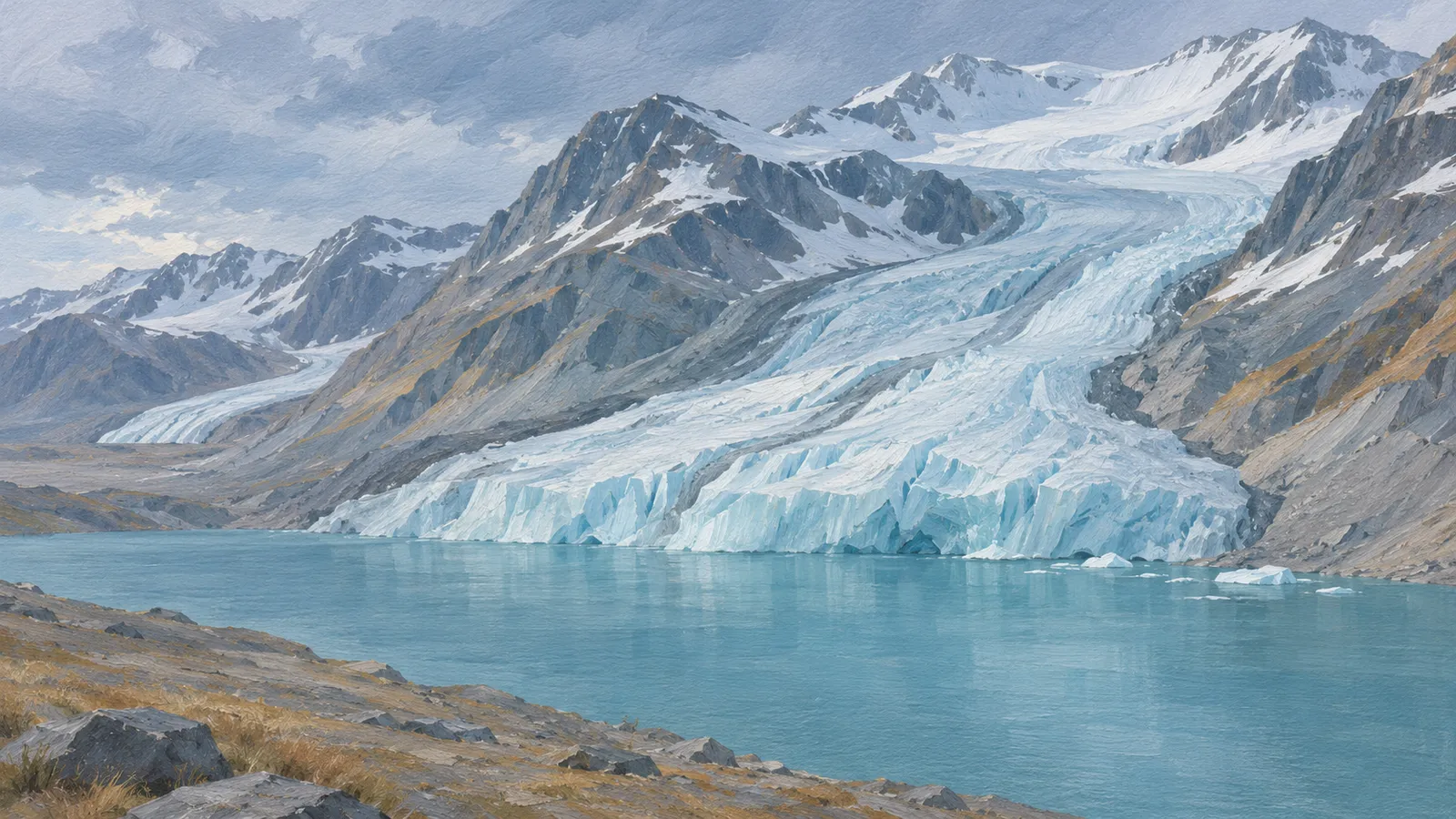
Glaciers ending in lakes lose ice fastest in global study
From 2000 to 2020, glaciers lost an average of 66 centimeters of water equivalent a year where they ended in lakes, compared with 40 on land and 36 at sea. To explain ice loss in lake-ending glaciers, the study’s model assigned 46% of the influence it accounted for to topography, about 43% to climate and about 11% to lakes.
3 min
 Physics, Maths & Discoveries
Stanford professor Vakil posts proposed proof of generalized Riemann hypothesis
The Stanford professor says Alessandro Masullo wrote the draft without superintelligence and has asked mathematicians to check it; independent verification remains outstanding.
2 min
 Earth
Researchers find Anabaenopsis bacteria can produce guanitoxin
The University of Florida-led study also identifies the first US strain of Sphaerospermopsis torques-reginae confirmed to produce the nerve toxin, widening the known sources researchers can study.
2 min


