
NASA awards contract to develop lunar 5G and Wi-Fi
The approximately $38 million award covers laboratory development and a planned lunar-surface demonstration for communications intended to support future Moon Base operations.
The approximately $38 million award covers laboratory development and a planned lunar-surface demonstration for communications intended to support future Moon Base operations.
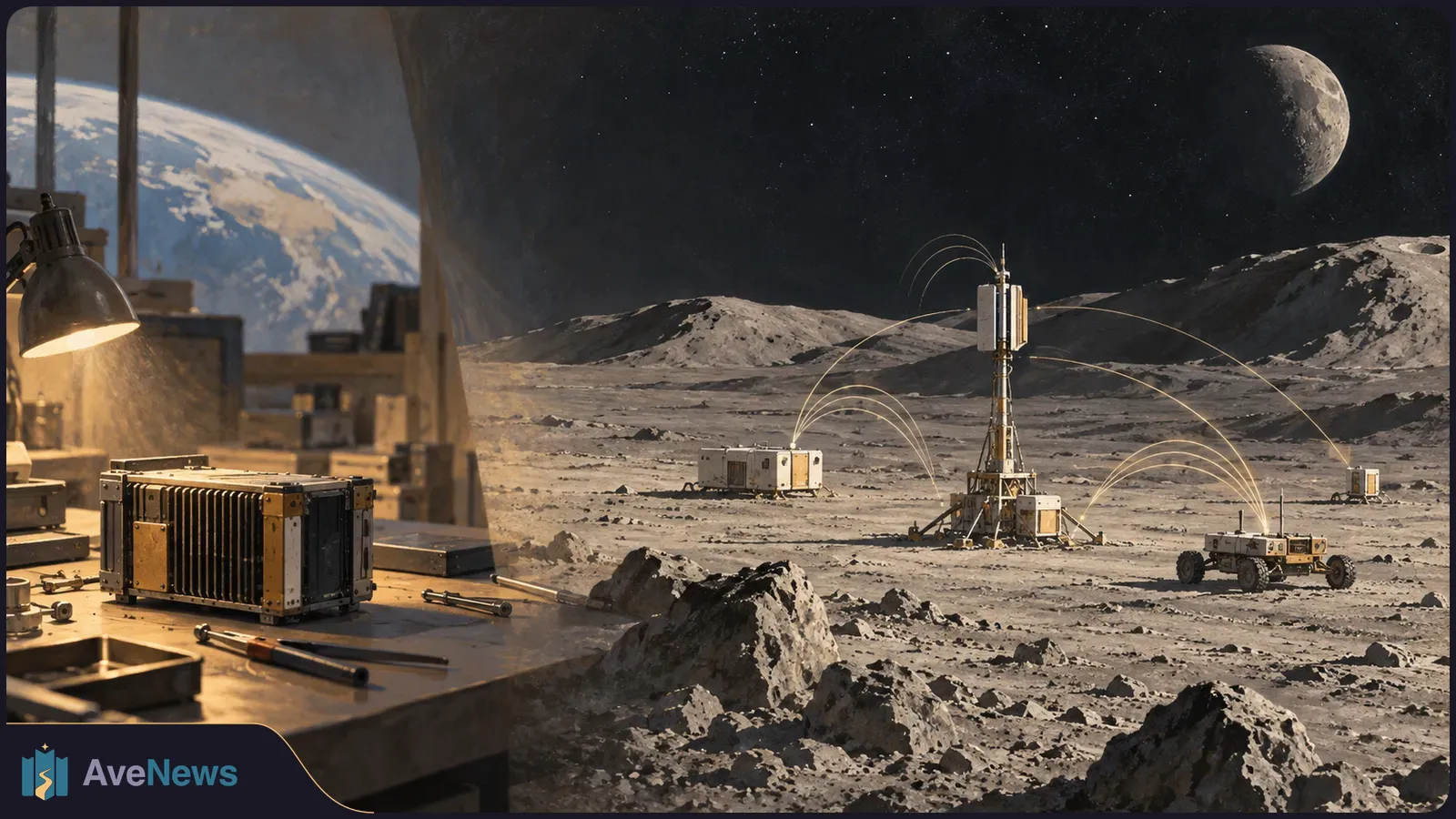
NASA has awarded Modulate Space Corporation approximately $38 million to develop key elements of a lunar-surface communications system combining 5G mobile-network technology with Wi-Fi 6 wireless networking. The work is for NASA’s Glenn Research Center in Cleveland and is intended to support future Moon Base surface operations.
The award is a firm-fixed-price contract, meaning its price is set in advance. It pays for development and demonstrations, rather than an already functioning lunar network.
NASA’s September 30 announcement sets out two work areas, each with its own scheduled contract period:
The lunar-network work period therefore begins while the laboratory work period is still underway; the two are not scheduled as wholly separate, consecutive stages.
NASA says the two work areas are intended to produce a communications capability that can expand and follows established technical standards. The demonstrations will involve developing hardware, software and firmware—the software built into devices—to advance the integrated system.
The demonstrations are meant to help NASA understand the system’s architecture, or how its parts fit together, and its operational performance, or how it works in use. NASA says that knowledge should also allow the technology to evolve for future lunar-surface communications.

The NIH–NASA competition seeks better measurements in laboratory drug-safety models, with submissions scheduled to open on 15 December 2026.
2 min

The programme brings together national laboratories, universities and industry partners, with plans for a sensor-equipped test bed and self-adjusting pilot production lines.
2 min

Previously seen only through its infrared heat, the dusty feature is visible in reflected starlight, allowing researchers to test a possible collision origin.
4 min