
NASA to begin Mars sample-return review in January
A strategy team will begin assessing ways to return Perseverance’s samples in January 2027 and aims to recommend a broad mission design by the end of 2027, program executive George Tahu said on 12 November.

In this article
NASA will form an internal team to assess alternative ways to return samples collected by its Perseverance rover, Mars Exploration Program Executive George Tahu said at a 12 November 2026 town hall. The work follows an earlier Mars Sample Return effort whose estimated cost rose to $11 billion, worrying NASA and the US Congress.
The approximately $11 billion estimate envisaged returning samples in 2040. NASA considered the cost too high and the timetable unacceptable; it ended the earlier mission last year because of cost concerns.
Perseverance landed on Mars in 2021 and has been collecting selected samples in Jezero Crater. Earlier designs by NASA and the European Space Agency called for the rover to deliver samples to a lander, a rocket to lift them into Mars orbit and the agency’s Earth Return Orbiter to carry them to Earth.
What the team will assess
Tahu said the Perseverance Sample Retrieval Architecture team will review lessons and past recommendations, NASA and industry capabilities, and different ways to carry out a mission. It will also consider whether some constraints can be removed and new purchasing approaches used. The goal is a broad design approach and recommendations, rather than an approved flight mission.
In January 2025, outgoing NASA Administrator Bill Nelson deferred a decision on how to carry out the earlier mission to the incoming Trump administration. Its fiscal 2026 budget request proposed canceling the mission. Congress provided $110 million for Mars Future Missions, but not specifically for Mars Sample Return.
Why bring samples to Earth?
The samples include solid material and atmospheric specimens. Returning them would let researchers examine them with advanced equipment on Earth and investigate possible signs of past life. Perseverance has stored some samples aboard the rover and left others sealed on the surface.
Scientist Bruce Jakosky said returned samples could also help assess risks to future astronauts and equipment from hazardous soil compounds and fine dust. Proposed investigations include characterizing perchlorates and chloromethanes, searching for other hazardous chemicals, and studying dust and regolith properties relevant to respiratory risks and spacesuit design and wear. He discussed a workshop report focused on reducing risks for human missions.
Before Tahu’s town hall, NASA Mars Exploration Program Director Tiffany Morgan told a November 9 meeting of the Mars Exploration Program Analysis Group that the team would begin in January 2027 and deliver a final report in winter 2027–2028. The earlier strategy included assessing proposed mission requirements and developing impartial recommendations for returning the samples. Tahu subsequently set a goal of recommendations by the end of 2027.
Share
Follow AveNews
Earlier in Science
 Earth
Donors pledge more than $480 million to cut greenhouse gases
At COP31 in Antalya, the UK also announced $25 million to support emissions cuts in seven countries, including Ethiopia and Côte d’Ivoire.
2 min
 Rights
Hungary’s government proposes ending mandatory fetal-sign check
Prime Minister Péter Magyar also proposes prescription-free emergency contraception and plans to initiate ratification of the Istanbul Convention on violence against women.
2 min
 Space
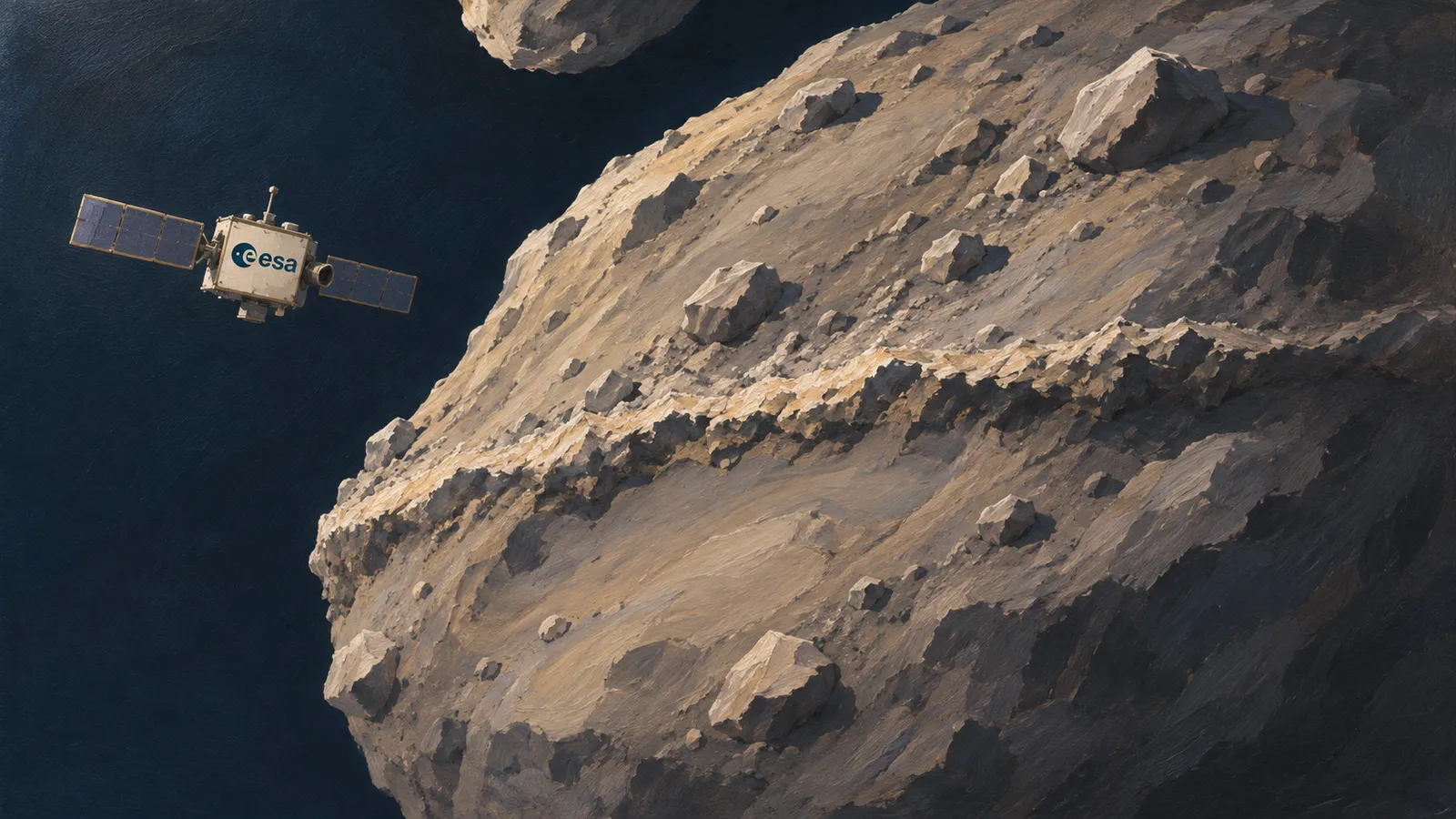
ESA image from 56 km reveals boulders and ridge on Didymos
The Hera image also shows a small part of the moonlet Dimorphos above the larger asteroid. The European Space Agency plans to unveil detailed images of both on 25 November.
2 min


