
Ocean uptake rose in 1990–2019; land saw no notable long-term growth

A Scripps-led study published on 12 November inferred that the ocean absorbed carbon at an increasing rate during 1990–2019, while net land uptake showed no notable long-term growth.
In this article
The ocean absorbed carbon at an increasing rate during 1990–2019, while net uptake by land showed no notable long-term growth, a study led by UC San Diego’s Scripps Institution of Oceanography found. Both land and ocean remove carbon dioxide (CO₂) from the atmosphere, slowing its accumulation and reducing warming.
Published in Science on 12 November, the study used more than 30 years of oxygen and CO₂ measurements from remote sites to infer global uptake. The Scripps O₂ Program ships air samples collected around the world to Scripps for analysis; it currently maintains 10 sampling sites along the Pacific from the high Arctic to the South Pole. Its lead author is Scripps project scientist Eric Morgan; co-author Ralph Keeling is a geosciences professor at the institution.
| Sink | Carbon per year | Share of fossil-fuel emissions |
|---|---|---|
| Ocean | 2.8 billion metric tons | About 35% |
| Net land | 1 billion metric tons | About 13% |
During 1990–2019, the ocean absorbed an estimated average of 2.8 billion metric tons of carbon per year, about 35% of fossil-fuel emissions. Net land uptake averaged 1 billion metric tons per year, about 13% of emissions, and varied substantially between decades.
The ocean estimate increased by 630 million metric tons of carbon per year each decade. A billion metric tons is also called a petagram. The estimates are based on atmospheric records, not direct measurements of each global sink.
How the measurements separate land and ocean
Burning coal, oil and gas releases CO₂ and consumes oxygen. On land, photosynthesis—the process by which plants take up CO₂—releases oxygen. Ocean uptake, by contrast, occurs mainly through seawater reactions that do not produce oxygen.
Using fossil-fuel emissions as an input, the CO₂ trend constrains how much carbon land and ocean absorb together. The oxygen trend provides a second constraint that helps researchers estimate each share. The program tracks oxygen relative to nitrogen, whose atmospheric amount changes very little.
A 2024 Scripps conference abstract identified uncertainty in fossil-fuel burning and a correction for oxygen released by warming oceans as the main limits on the method. It said uncertainty in fossil-fuel emissions affects the land estimate more strongly than the ocean estimate.
The records build on an earlier atmospheric CO₂ series begun by Charles David Keeling at Mauna Loa in 1958. Ralph Keeling founded the companion Scripps O₂ Program in 1989; its oxygen measurements extend from 1990.
Analysis
What the land result means
A lack of growth in net land uptake does not mean forests and soils stopped absorbing carbon. The net figure also accounts for carbon released by deforestation and other land-use changes. It varied substantially between decades, peaking in the decade centered on 2009 and generally declining afterward.
The result challenges models that suggest rising CO₂ and nitrogen have fertilized plant growth and increased natural land uptake. To reconcile those models with the flat net result, emissions from land-use changes would have had to rise enough to cancel the growth; current estimates instead show those emissions declining, Phys.org said. Morgan said the land sink may be fragile.
Ocean absorption also lowers seawater pH, a process called ocean acidification. The researchers say ocean uptake could become less effective as warmer water holds less CO₂ and mixes less efficiently into the deep ocean, where carbon can remain apart from the atmosphere for hundreds of years.
The study says accurate estimates of both sinks matter because climate models describe emissions-reduction pathways for meeting temperature targets. Keeling emphasized the value of continuing atmospheric measurements to improve understanding of the carbon cycle.
Follow AveNews
Earlier in Science
 Earth
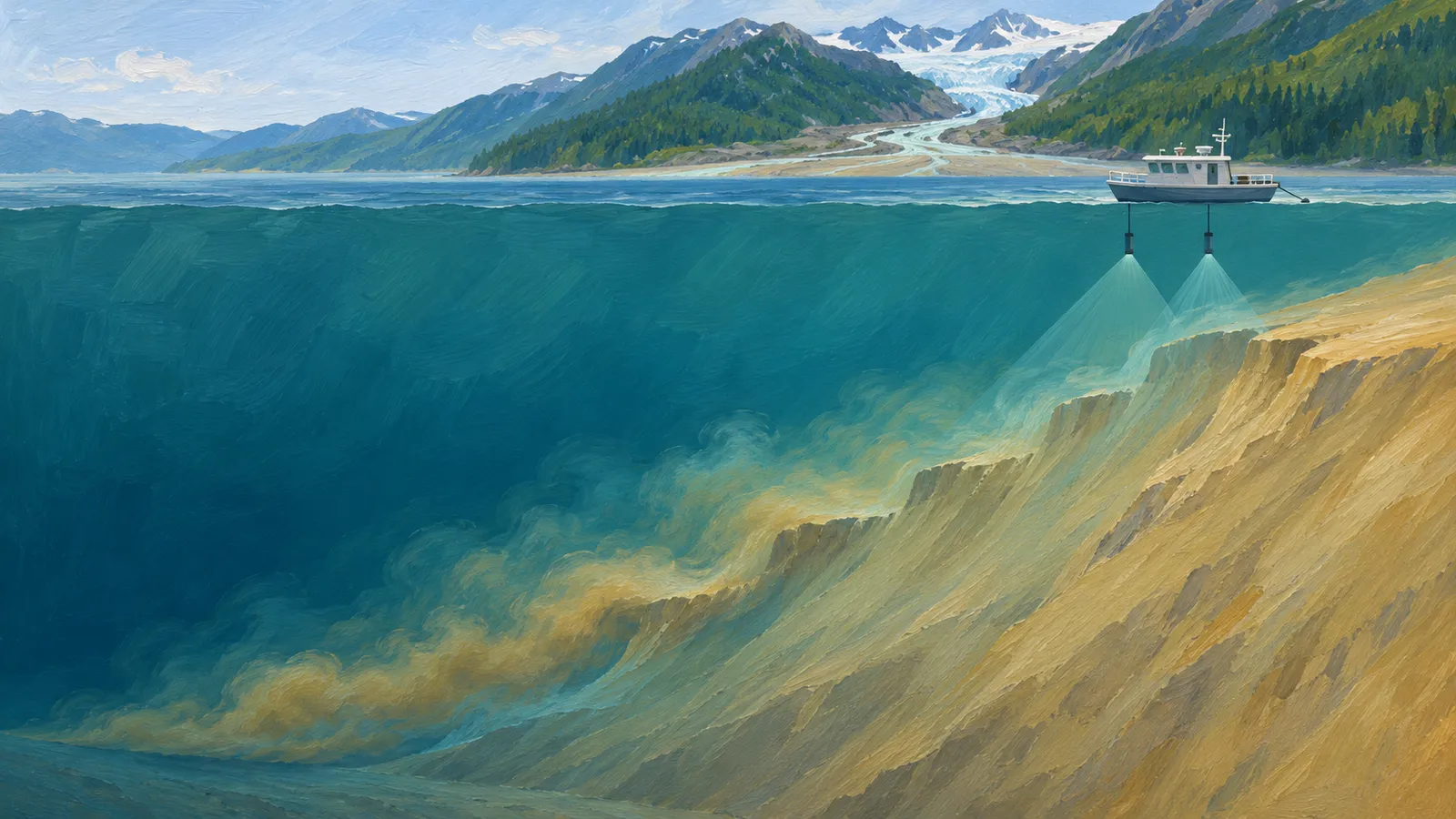
Researchers monitor 3 underwater landslides at Canada’s Homathko Delta
The landslides lasted 38 to 100 minutes and fed currents down the seabed. Study co-leader Sanem Acikalin says the team made the first direct observation of a landslide occurring entirely underwater in its natural environment.
3 min
 Space
Researchers identify likely white dwarf orbiting a Sun-like star
The team says radio flashes every 7.9 minutes and a 32-hour orbit point to the first known white dwarf pulsar with a Sun-like companion.
3 min
 Earth
Indonesia’s forest fires kill 16 firefighters, president says
President Prabowo Subianto said 16 firefighters died and many others were injured battling fires that lasted nearly four months. He apologized for haze affecting Singapore and Malaysia.
2 min


