
NASA’s Overlap Zoo seeks volunteers to identify galaxy pairs for dust research
Anyone with an internet-connected computer can help check and outline galaxies in images. No previous experience is needed.
Anyone with an internet-connected computer can help check and outline galaxies in images. No previous experience is needed.
NASA has introduced Overlap Zoo, a citizen-science project that asks members of the public to help identify pairs of galaxies that appear to overlap. The aim is to build a catalogue astronomers can use to study dust and how it changes the starlight reaching us.
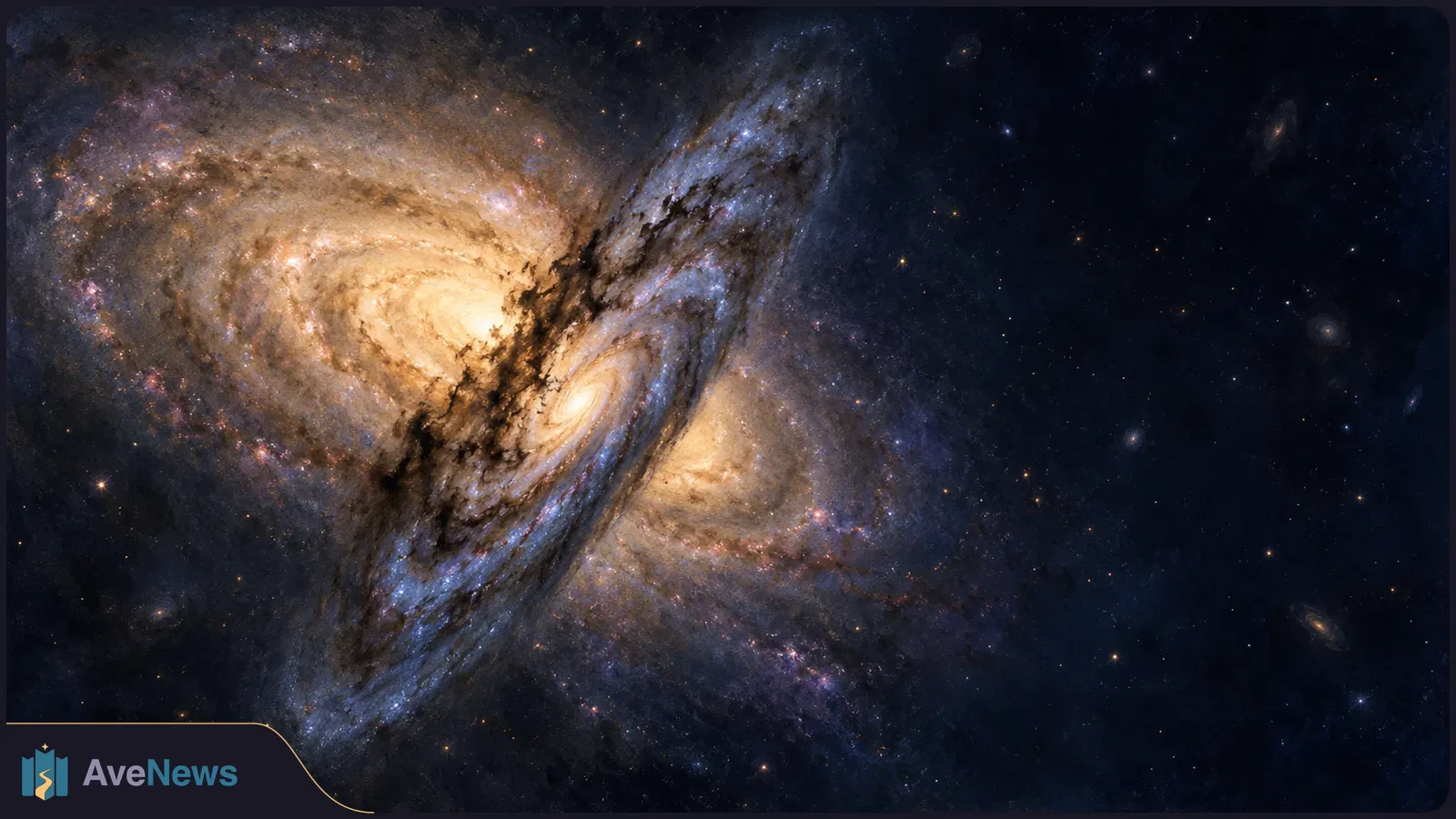
Galaxies are vast collections of stars, gas and dust held together by gravity. Occasionally, two galaxies line up as seen from Earth or a space telescope. Light from the background galaxy shines through the nearer galaxy, revealing its dust as dark silhouettes.
These silhouettes let astronomers map where dust lies and study how it blocks, scatters and dims starlight. Measuring those effects can help researchers refine estimates of the distances to faraway objects, according to NASA.
Anyone with an internet-connected computer can participate, and NASA says no previous experience is needed. Volunteers review images that participants in Galaxy Zoo, another galaxy-classification project, have already flagged as possible overlapping galaxies. Overlap Zoo teaches volunteers to confirm whether a pair is present, classify key features of each galaxy and mark its outline. Participants can classify as many images as they choose.
Trevor Butrum, Overlap Zoo’s project lead and a graduate student, says the growing number of galaxy observations makes it increasingly difficult for astronomers to classify every candidate pair. NASA says volunteers’ contributions are intended to build the first large-scale catalogue of galaxy pairs suitable for dust studies. That catalogue would provide material for further analysis; improved distance estimates remain a potential benefit of the research.

The NIH–NASA competition seeks better measurements in laboratory drug-safety models, with submissions scheduled to open on 15 December 2026.
2 min

The programme brings together national laboratories, universities and industry partners, with plans for a sensor-equipped test bed and self-adjusting pilot production lines.
2 min

Previously seen only through its infrared heat, the dusty feature is visible in reflected starlight, allowing researchers to test a possible collision origin.
4 min