
Publishing awards shortlist SI tools beyond text generation
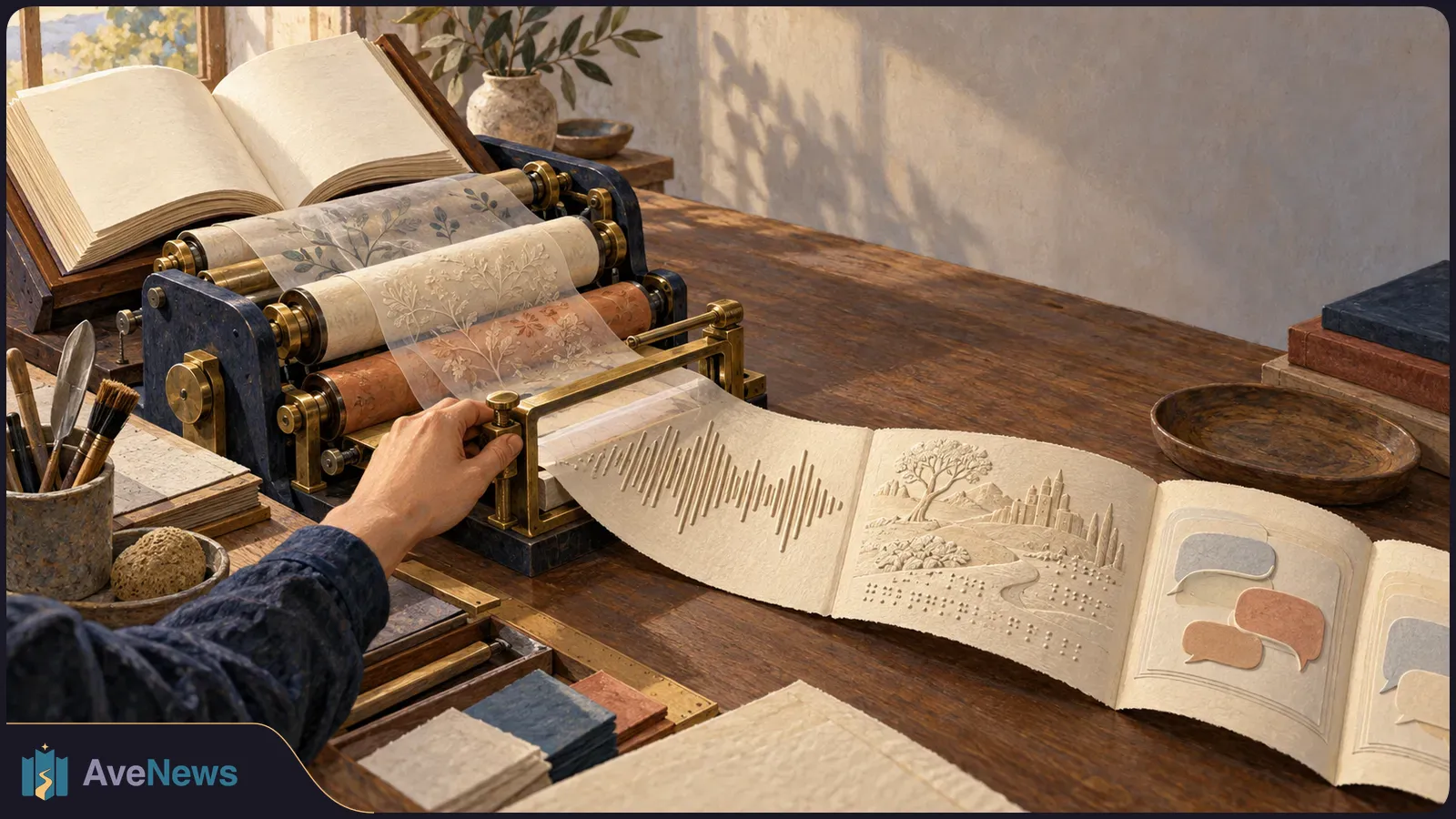
Award profiles describe Arabic audiobook production, manuscript-aware image descriptions and character chats as publishing tools that widen access while keeping human oversight.
Award profiles describe Arabic audiobook production, manuscript-aware image descriptions and character chats as publishing tools that widen access while keeping human oversight.
SI tools for Arabic audiobooks, accessible image descriptions and author-controlled character conversations are among the 12 finalists for this year’s Digital Publishing Awards. Their award profiles show uses beyond writing text: producing audio, making visual content accessible and setting boundaries on how readers interact with fictional characters.
Digital Publishing Report announced the shortlist on September 30, 2026. According to Publishing Perspectives’ October 1 report, an international industry jury selected the finalists from 42 submissions. The descriptions below come from the award material and its jury assessments, rather than independent product tests.
The award profile identifies a large gap for Abjjad’s Project Genome to address: more than 400 million people speak Arabic, yet only a few thousand Arabic audiobooks exist. It describes an Arabic-first production process, largely built in-house, that follows each title from script through distribution and includes full human quality control.
The award material claims the process cuts production costs by around 90 percent. The jury said it saw convincing evidence of narration quality and potential to bring publishers’ backlists—previously published titles—to a young generation that favors audio. That is a judgment about potential access, not a claim that those catalogues have already been converted.
MPS Limited’s workflow addresses access to information carried by images through written descriptions. According to the award profile, its SI systems describe images using the context of the whole manuscript, rather than treating each image in isolation. A second SI model checks every description against quality criteria.
Human experts validate difficult cases, and their corrections feed back into the system. This gives people a defined role in checking the descriptions, rather than leaving quality control entirely to SI. The jury characterized the workflow as scalable and already working for publishers at scale; that remains an attributed award assessment.
Shortlisting recognizes these approaches; it does not independently establish their cost savings, quality or effectiveness. Publishing Perspectives reports that the winners are scheduled to be announced at 1 p.m. on October 7 at Frankfurter Buchmesse.

The evaluation with Momentus simulated common satellite software errors. The reported reduction does not establish whether the system’s diagnoses and suggested fixes were correct.
3 min

The startup’s software coordinates workers, carts and trucks, not just robot movement. Yusen is expanding one trial toward 26 robots and launching another with 17.
3 min

Trump’s push to call artificial intelligence “SI” may help explain the jump, but the registry cautions against attributing all of it to his comments.
