Loading… Բեռնվում է…
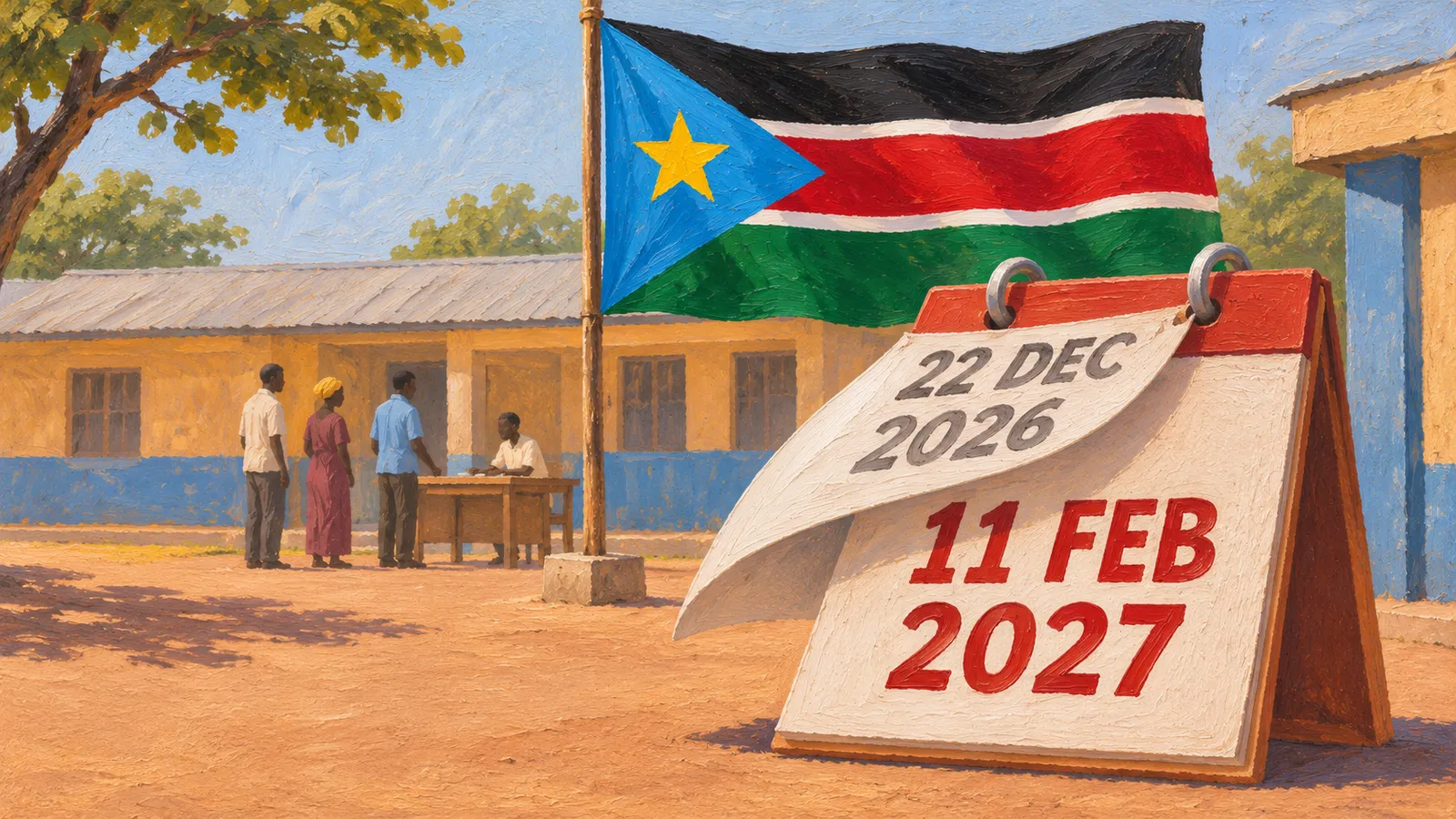
The commission moved presidential and parliamentary voting from 22 December 2026, to 11 February 2027, without giving a reason. Registration is scheduled for 14–28 November.
South Sudan’s National Elections Commission announced on 14 November that presidential and parliamentary voting would move from 22 December 2026 to 11 February 2027. The vote had first been expected in 2022 and has been delayed at least three times. It would be the country’s first national presidential and parliamentary election since independence from Sudan in 2011.
Al Jazeera said the commission gave no reason for the latest delay.
Commission chairman Gabriel Bol Deng said 3,161 registration centers had been established nationwide. On 13 November, he said the commission had recruited and trained 22,127 registration officials.
Deng said applicants should present a passport, national identity card or other acceptable evidence of identity and age. People without recognized identification, particularly in rural areas, can be identified by community leaders and issued a form enabling them to vote. The World Bank estimates that about 90% of South Sudan’s 15 million inhabitants lack state-recognized identification.
The commission urged eligible citizens to register at their nearest center, give accurate personal information and check that their details were recorded correctly. It warned against registering more than once. Deng said on 13 November that materials had reached state capitals and administrative-area headquarters but not individual centers; he expected distribution to be completed within two days.
Forces loyal to President Salva Kiir and former Vice President Riek Machar fought a civil war from 2013 to 2018, when a peace agreement ended the war. Machar has been under house arrest since March 2026, accused of crimes against humanity, and government forces and his followers have been involved in deadly confrontations in recent months.

In September, Kiir dissolved the transitional unity government and appointed a caretaker administration. The change allowed the country to move toward elections without first completing a permanent constitution or census, which had been tied to the transition. In October, Yasmin Sooka, chair of the UN Commission on Human Rights in South Sudan, called the changes a “constitutional coup through legislative reforms.” She said the country would still need an inclusive political settlement, civilian protection and institutions capable of preventing further violence, whether elections took place or not.
The revised calendar schedules a provisional voter register for 29 November, with objections from 30 November to 6 December and corrections from 7 December to 13. Further appeals and court proceedings are scheduled through 1 January 2027, and the final register is due on 9 January.
Nomination signature forms are scheduled for publication on 29 November. Candidates are scheduled to submit nominations from 14 December to 20, with the nominated-candidate list due on 21 December. Objections, corrections and appeals run through 17 January, with final candidate lists due between 18 January and 21. Campaigning is scheduled from 27 December to 9 February, followed by a silence day on 10 February.
The commission is scheduled to declare final results on 15 February and publish them on 16 February. The calendar reserves 17 February to 15 July for resolving election disputes.
The charter was signed during a meeting between Armenia’s education minister and Russia’s science and higher education minister, who also discussed possible research cooperation.
2 min

The alliance won 24 of 28 seats, while Prime Minister Anwar Ibrahim’s coalition took four. All 240 polling centers closed on 14 November after 79 candidates competed for seats in the state assembly.
2 min

Armenia’s ministry says the agreement will coordinate joint initiatives and expand ties between cultural institutions. The ministers also proposed joint exhibitions.
1 min