
Why Southeast Asia’s factory gains still depend on China
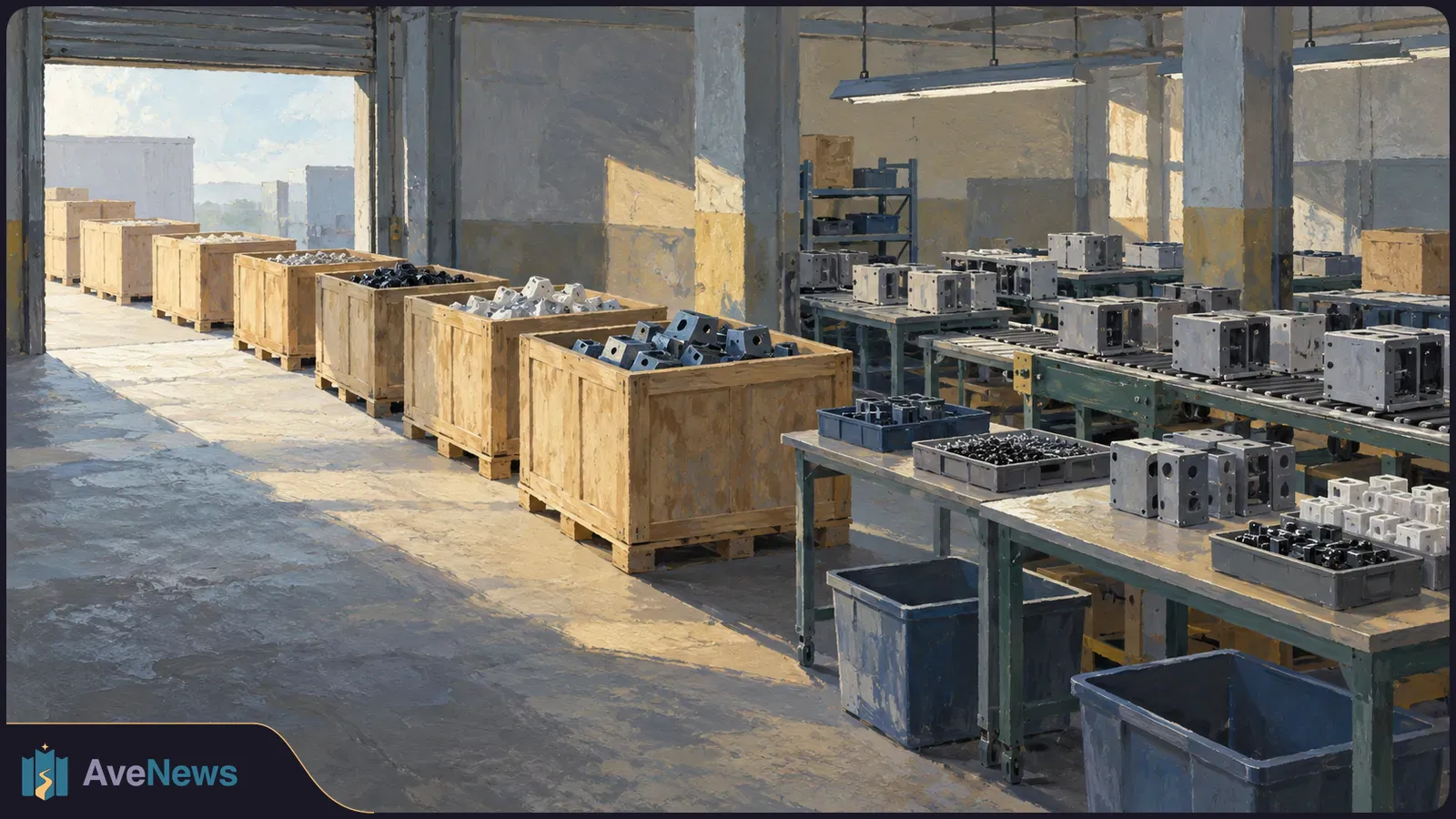
Moving final assembly brings jobs and exports, but not necessarily the components and expertise that create more value. A narrower U.S. tariff advantage adds pressure.
Moving final assembly brings jobs and exports, but not necessarily the components and expertise that create more value. A narrower U.S. tariff advantage adds pressure.
Southeast Asia has gained factories, exports and jobs as manufacturers diversify beyond China. But attracting the final assembly of products has not necessarily brought the design work, core components and production expertise that capture most of their value, Meng-Chun Liu, director of Taiwan’s Chung-Hua Institution for Economic Research, told Fortune.
The strategy known as “China plus one” sought to attract manufacturers seeking alternatives because of rising Chinese costs and geopolitical tensions. Lower U.S. import duties also helped draw production to Southeast Asia. Fortune reports that this tariff advantage has narrowed, weakening one reason to move production out of China.
Vietnam mainly assembles finished products for export to developed markets rather than making the components inside them, Fortune reports. Local supplier networks across Southeast Asia are not fully developed, so factories still import inputs from China. Apple, for example, relies on Chinese suppliers for batteries, optical components and enclosures even as it moves final assembly to Vietnam and India.
China’s manufacturing network combines raw-material processing, component production, logistics and engineering support. Christopher Tang, a supply-chain expert at UCLA’s Anderson School of Management, says alternative hubs struggle to reproduce that network. He describes the jobs created in Southeast Asia as largely low-skill assembly roles, limiting the immediate development of higher-value industries.
Vietnam’s trade figures show both export growth and rising purchases from China. Fortune reports the following figures for 2025; they do not establish how much of the Chinese imports went into goods exported to the United States.
| Trade flow | 2025 value | Growth from 2024 |
|---|---|---|
| Exports to the United States | $153.2 billion | 28.1%, from $119.6 billion |
| Imports from China | Roughly $183 billion | Nearly 30% |
After the Trump administration expanded tariffs in July 2026, Fortune reports the following U.S. import-duty rates. China’s figure is an average, so it is not a direct comparison for every product.
| Origin of goods | Reported rate |
|---|---|
| Singapore, Thailand, Vietnam and the Philippines | 12.5% |
| Cambodia, Indonesia and Malaysia | 10% |
| China | 21% average |
Liu says several major computer brands moved production from Vietnam and Thailand back to China when the U.S. tariff gap for notebook computers narrowed. Fortune also reports that companies such as Target have moved supply chains back to China because of Southeast Asia’s underdeveloped factory network.
Analysis
Dependence on Chinese components is not the only pressure. Finished Chinese goods compete with Southeast Asian manufacturers at home. Fortune reports that Thailand’s GDP growth slowed to 2%, attributing part of that slowdown to pressure from Chinese electric vehicles and consumer goods.
Supasyn Itthiphatwong, an economist at Krungsri Research, argues that U.S. tariffs and Chinese retaliatory tariffs are driving more Chinese goods into Thailand. He says this intensifies competition for Thai producers, especially where buyers are sensitive to price.
Lee Jones, a professor of international politics at Queen Mary University of London, warns that this competition could accelerate “premature deindustrialisation”—the loss of manufacturing capacity before an economy’s industrial development has matured. That is a forecast, not an established outcome across Southeast Asia. How much supplier gaps, tariff changes and Chinese competition each contribute to the region’s limited gains remains unclear.
Some governments are trying to attract more than assembly. Indonesia banned nickel ore exports to encourage refining within the country. Fortune reports that Indonesia is also seeking car and battery manufacturing, extending its effort to retain more stages of electric-vehicle production locally.

Two funds managed by Finance in Motion are providing the money, with plans to support small-business and green lending in Armenia.
2 min

September’s euro-area inflation rate reached 3.8%, while non-energy inflation remained at 2.3%. Delayed cost increases and weaker demand could pull the outlook in different directions.
3 min
A Dealroom and Resilience Media report puts funding so far in 2026 at nearly three times the full-year 2025 total, with Germany and US investors playing major roles.
3 min
