Loading… Բեռնվում է…
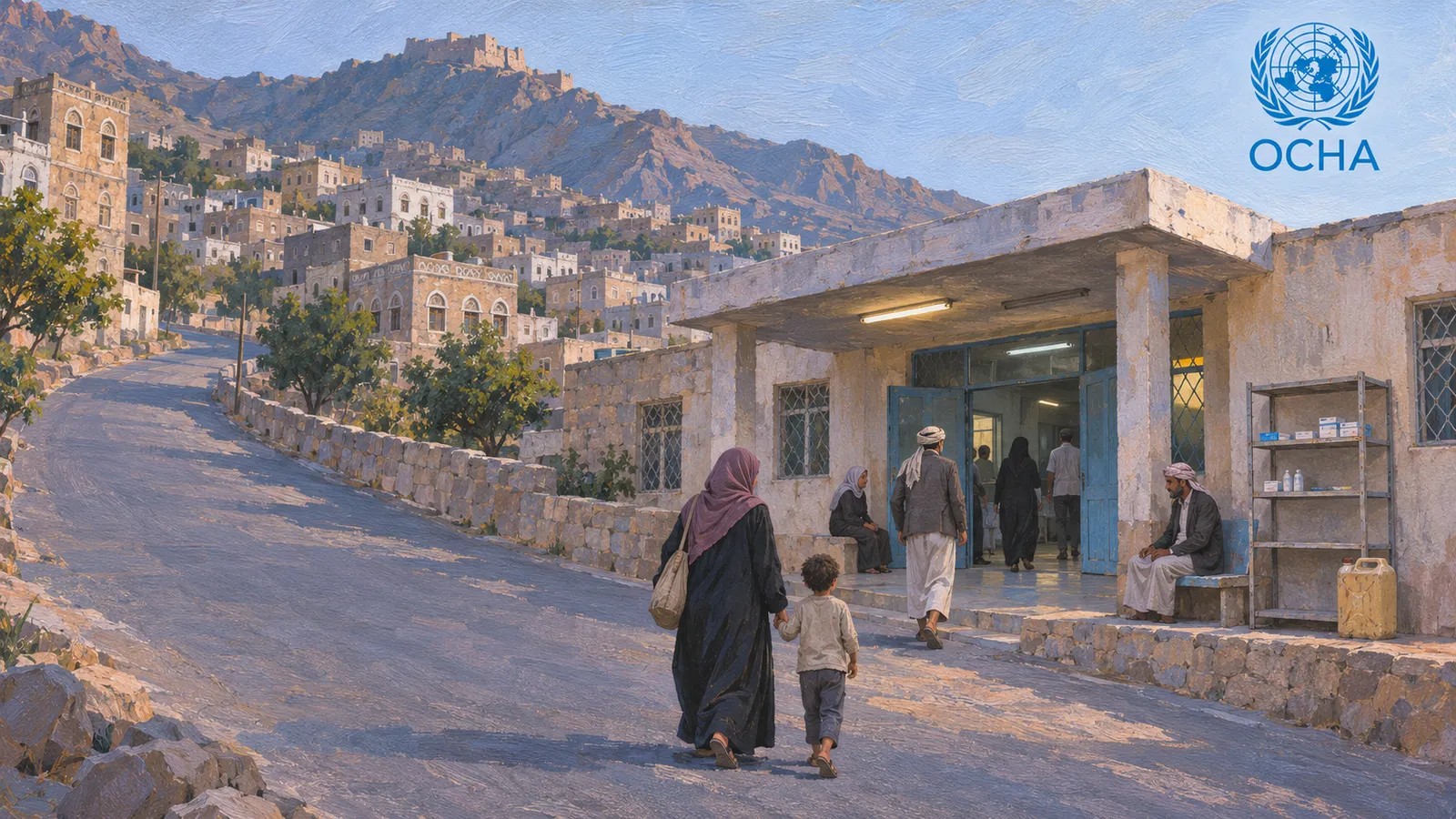
The UN humanitarian affairs office says nearly 250,000 people have lost essential healthcare access, while 12 hospitals risk closing or have reduced services as fuel and supplies run short.
Nearly 250,000 people in Taiz, Yemen, have lost access to essential healthcare, including more than 186,000 children under five, the UN Office for the Coordination of Humanitarian Affairs said. It warned that 12 hospitals were at risk of closing or had reduced services because of shortages of fuel and critical supplies.
The siege intensified in early October after the Iran-backed Houthis advanced around Taiz and cut the last major supply route into government-held areas. The group had previously gained territory along Yemen’s Red Sea coast in September before advancing in Taiz governorate; Yemen’s government is backed by Saudi Arabia.
The agency also said more than 1,400 cases of acute diarrhea and suspected cholera had been reported in one week. The date of its assessment and the exact dates of that week are not specified.
Figures from the surveillance department at Taiz’s Public Health and Population Office, obtained by Al Jazeera, cover its latest four-week reporting period. The exact dates of that period are not specified.
| Category | Cases |
|---|---|
| Acute watery diarrhea | 5,228 |
| Suspected dengue fever | 232 |
| Suspected cholera | 182 |
Recorded watery diarrhea cases fell from the previous period, but department director Dr Yasin Abdulmalik said the decline likely reflected the growing difficulty of reaching facilities across closed roads. He said fuel shortages and higher black-market fuel prices had increased transport fares. Health communications official Taysir al-Samiei said patients’ ability to reach hospitals had fallen by 60–70 percent by the end of the siege’s second week.

The Houthis say the release brings the number freed under their unilateral amnesty initiatives to 2,612. The Red Cross says the operation was separate from negotiated exchanges.
Dr Fares al-Absi, a medical consultant, said only about 8 percent of Taiz’s water needs were being met and most local wells were unfit to drink from. He attributed diarrheal illness to unsafe water and said access to the al-Dhabab basin, a major source of water delivered by truck, had been restricted. He accused the Houthis of preventing safe drinking water from entering except in limited quantities sold at high prices, which he said had risen because of diesel shortages.
Al-Absi said a lack of diesel had also left waste accumulating in the streets. He accused the Houthis of stopping sanitation trucks from reaching the landfill west of the city.
Yemen’s government accused the Houthis of preventing food, safe water, medicine and fuel from entering Taiz, saying nearly two million residents had faced a tightened siege for more than a month. The Houthis denied responsibility for road closures and blamed government forces.
On 29 October, Human Rights Watch said the siege might amount to the war crime of using starvation as a method of warfare. The organization said residents, aid workers and UN officials had attributed responsibility to the Houthis.
In a November 2026 briefing, Studies and Economic Media SEMC said a limited improvement in essential goods in late October had faded. It said the Karbah–Al-Suhi road closed again on 6 November after reopening for only two hours, while the Haijat Al-Abd road had been closed for more than a month.
SEMC called on the UN, the Office of the UN Special Envoy for Yemen and those controlling access routes to agree on publicly announced, monitored road reopenings. It proposed fixed crossing hours for supply trucks, water tankers and ambulances, and guaranteed diesel allocations for hospitals, dialysis centers, wells and sanitation vehicles. SEMC warned that continued closures over the next two to four weeks could deplete essential stocks and potentially halt water and healthcare services unless safe, regular supply movements were arranged.
1 min

The government said it had completed the redeployment to reinforce Aden and nearby provinces. Military and government sources told AFP that the Houthis had reached positions about 60 kilometers from the city.
2 min

The council voted unanimously on 12 November 2026, to continue asset freezes and travel bans and demanded an end to Houthi attacks on Saudi Arabia, Al Jazeera said.
2 min