Rhenus plans Aktau terminal for Trans-Caspian freight
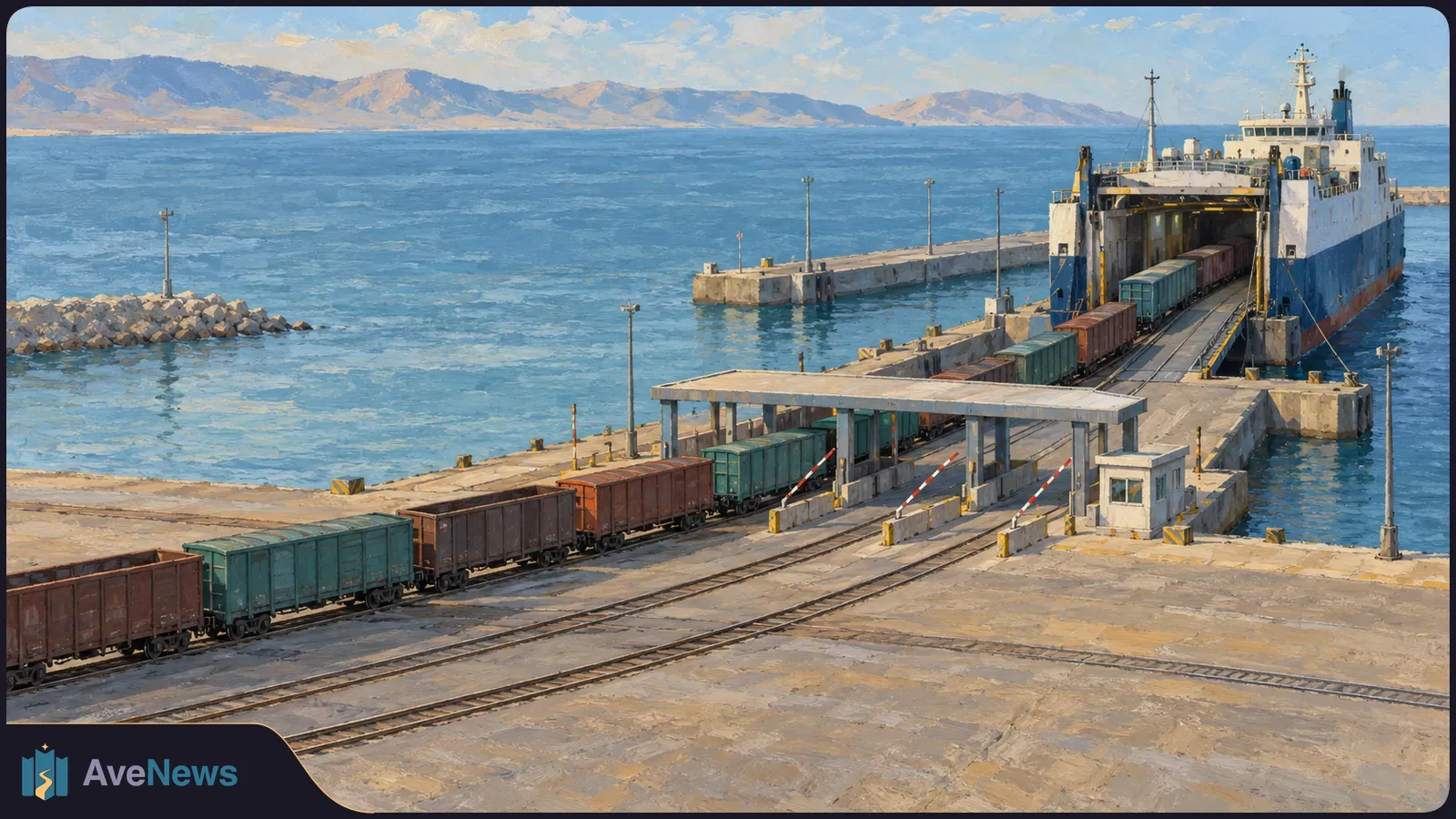
The proposed hub would connect ships, trains and trucks as countries along the route seek faster, more predictable freight journeys.
German logistics group Rhenus is working with Kazakhstan’s national railway company, Kazakhstan Temir Zholy, and the Port of Aktau on a proposed Caspian Sea terminal connecting sea, rail and road freight, Euronews reported on 9 October 2026. Investment in transport infrastructure is already under way, but coordinating handovers remains one of the route’s biggest challenges, Ahlers Logistics CEO Dave van den Bos told Euronews in its 14 October report: a single shipment from Europe to Kazakhstan can involve up to 15 companies or authorities.
The Trans-Caspian route, also called the Middle Corridor, links China and Europe through Kazakhstan, the Caspian Sea and the South Caucasus. Westbound cargo from Uzbekistan can cross Kazakhstan, travel by ferry to Azerbaijan, then continue through Georgia and Türkiye. On 2 October, Euronews reported that countries along the EU-backed route aimed to reduce transit from around 35 days to 15–20 days. That remains a target for a route combining several national railway, road, port and maritime systems.
Van den Bos identified digitisation—replacing paper documents and approval steps with electronic processes—as the most important priority. He said shipments can wait at a border for document approval or a stamp even when transport capacity is available. In his view, improving infrastructure is easier than digitising the whole process.
He said Europe-to-Kazakhstan transit times had fallen from around 80 days to roughly 40–60 days, although port congestion and weather on the Caspian Sea still cause delays. Those figures describe the journeys he discussed; the separate 15–20-day corridor ambition remains a target, not an achieved transit time.
Kazakhstan Temir Zholy reported that the corridor carried around 44,000 TEU in January–August 2026, up 58% from the same period in 2025. TEU measures container volume in units equivalent to one 20-foot container. Reported traffic measures cargo that moved; a terminal’s proposed handling capacity measures what the facility could handle, not future demand.
The proposed Aktau terminal would cover at least 30 hectares. Its annual capacity would be almost twice the corridor’s reported 2025 container traffic, but that comparison does not mean Aktau would receive that volume or that corridor traffic would double.
| Facility or route | Container volume | Meaning and period |
|---|---|---|
| Proposed Aktau terminal | At least 150,000 TEU | Planned annual handling capacity |
| Middle Corridor | 76,900 TEU | 2025 traffic reported by the corridor’s international association; up 36% from 2024 |
| Middle Corridor | Around 44,000 TEU | January–August 2026 traffic reported by Kazakhstan Temir Zholy; up 58% from January–August 2025 |
| Andijan terminal | Around 200,000 TEU annually | Expected handling volume under the modernisation plan |
Tobias Bartz, identified in the 9 October report as Rhenus’s chief executive and management board chairman, said the company wanted up to 14 terminals from Uzbekistan through Kazakhstan and Azerbaijan to Türkiye. It intends to connect them to its European network, which he said included 23 container ports and around 70 port facilities.
Rhenus acquired its first rail terminal in Kazakhstan’s Almaty region in January 2026. It offers container storage, warehousing under customs control and handling for block trains—freight trains sent as a whole unit. In Uzbekistan, Rhenus plans to invest around €11 million in modernising an Andijan terminal with the state railway company.
In September 2026, the European Commission said it aimed to mobilise up to €12 billion in public and private investment in the corridor, with goals of tripling trade flows and reducing freight transit times by 2030. Those are investment and transport goals, not completed investments or confirmed traffic increases.
In the 2 October report, Toivo Klaar, then the EU ambassador to Uzbekistan, proposed one agreed permit and system instead of separate applications in each country. Pēteris Ustubs, identified as the European Commission’s director for Asia and the Pacific in its international partnerships department, called for corridor-wide coordination, electronic documents and closer alignment of customs procedures. He said logistics companies need predictable timelines, not just shorter journeys.
Jasurbek Choriyev, identified in that report as secretary general of TRACECA, the intergovernmental Europe-Caucasus-Asia transport commission, outlined a four-year priority for digital connections and simpler cross-border procedures. He said uneven infrastructure still needed investment: procedural improvements would accompany physical upgrades, not replace them.
Choriyev identified ferry links and maritime capacity as potential constraints and raised concerns about Black Sea security. Ilkhom Makhkamov, identified in the 2 October report as Uzbekistan’s transport minister, described planned involvement in Caspian ports, ferries or barges, infrastructure in Azerbaijan, and stakes in Georgian and Black Sea ports. These were plans, not confirmed additions to capacity.
Passenger and freight trains share parts of Uzbekistan’s railway network. A planned dedicated high-speed passenger line between Tashkent and Samarkand is intended partly to free freight capacity. Hikmatulla Rahmetov, identified in the October report as Uzbekistan Railways’ first deputy chairman, said it would ease pressure on cargo movements and help reduce freight operating costs.
Uzbekistan Railways estimates that the China-Kyrgyzstan-Uzbekistan railway could eventually carry up to 15 million tonnes annually, much of it towards European markets through Uzbekistan. That is projected traffic, not an existing total, and could add demand on westbound connections. Choriyev also cited railway connections involving Azerbaijan, Armenia, Nakhchivan and Türkiye as examples of short links connecting larger sections of the route.
Kazakhstan is seeking a partnership linking Belgium’s Port of Antwerp-Bruges with its Caspian ports of Aktau and Kuryk, President Kassym-Jomart Tokayev said in the 14 October report. He said the links could widen markets for Kazakhstan’s metals, petrochemicals and agricultural products. Kazakhstan also seeks to raise overall corridor freight to 10 million tonnes, a target Tokayev had previously announced.
Nurlan Zhakupov, identified in the report as CEO of Kazakhstan’s sovereign wealth fund Samruk-Kazyna, said negotiations were ongoing. The fund manages major transport, energy and industrial companies. Zhakupov said Kazakhstan wanted the Belgian port’s expertise and eventual logistics contracts, but the route had to make economic sense and deliver an economic benefit. His expectation that concrete results were close was a forecast, not an announcement of a concluded partnership; Antwerp-Bruges was not represented at the business council.
For Rhenus’s proposed Aktau terminal, the next phase described on 9 October is traffic-flow analysis and a feasibility study to assess the project, not a construction launch.

A consensus rule lets one country block a deal, while supply shocks and uneven production data complicate the dispute over what the treaty should cover.
5 min
Fundamental stock-picking funds lost ground, while computer-driven and trend-following strategies gained, according to Reuters’ October 2 report.
3 min

The ECB’s Boris Vujčić points to rising spare capital, weak loan demand and risk concerns, while urging simpler rules and more cross-border banking.
4 min