
US space agency details Otter’s autonomous inspection plan
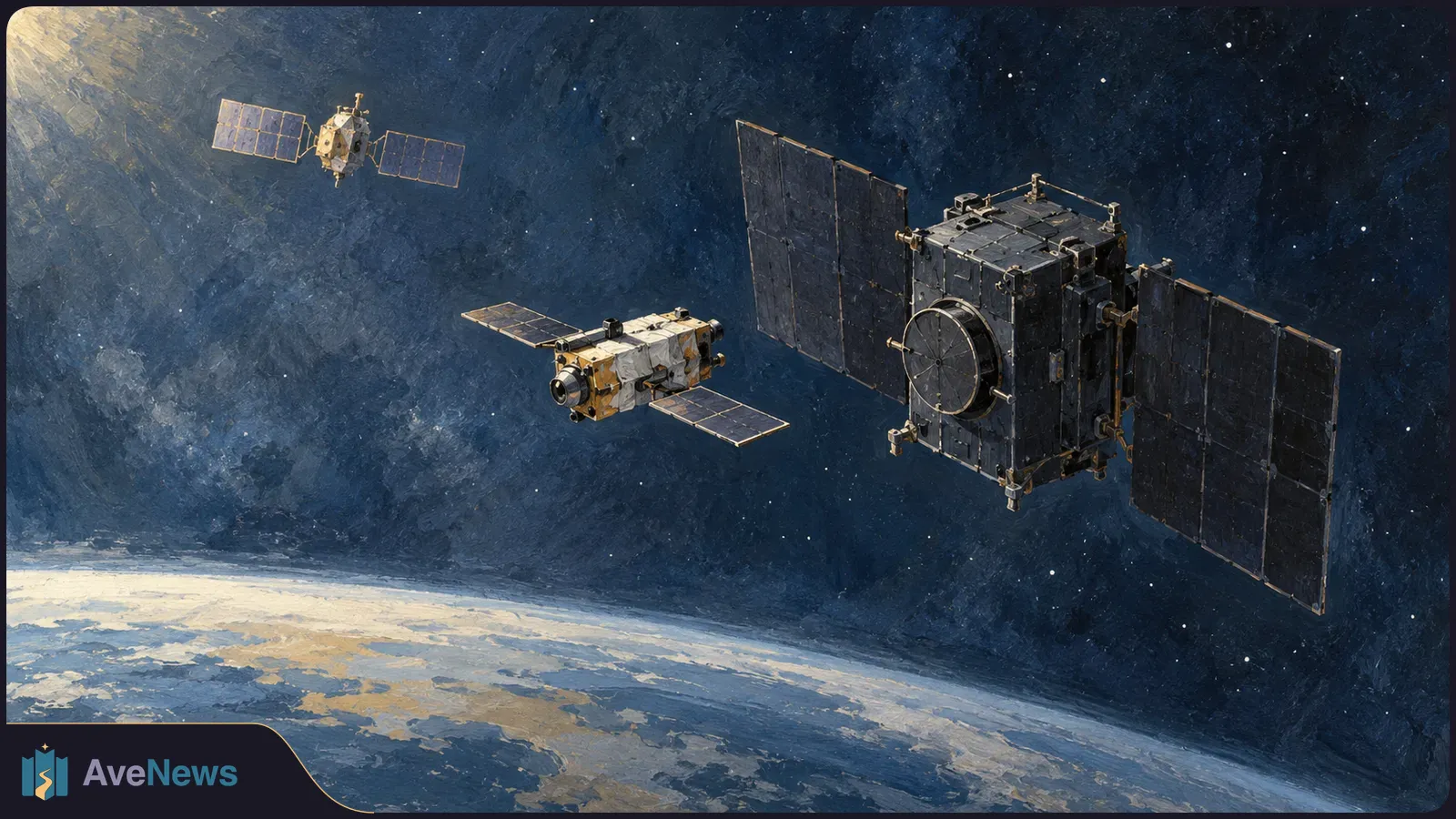
NASA says Otter will begin inspecting up to four inactive objects in early 2027, testing navigation and propulsion without docking or removing debris.
NASA says Otter will begin inspecting up to four inactive objects in early 2027, testing navigation and propulsion without docking or removing debris.
On 8 October, NASA detailed how Otter will inspect up to four inactive US-origin objects beginning in early 2027, testing technologies for possible future servicing without docking, repair or debris removal. Starfish Space’s Otter launched aboard SpaceX’s Transporter 18 on 1 October 2026.
NASA contracted Starfish Space’s 335-kilogram Otter for the Small Spacecraft Propulsion and Inspection Capability mission, or SSPICY, which is planned to last up to two years. Starfish Space operates the spacecraft, while NASA funds and manages the technology demonstration.
NASA says Otter will approach up to four inoperable objects of US origin in low Earth orbit, including satellites and rocket bodies. It will navigate within hundreds of yards of each target with minimal input from ground controllers. Computer vision—software that interprets images—and sensors will guide real-time navigation decisions during the approach.
The inspections will measure how fast each object spins, its orientation and the condition of its surface, according to NASA. NASASpaceflight also described measurements of the axis around which each target rotates.
An electric propulsion system will move Otter between targets. A robotic boom that can change its angle will test pointing the spacecraft’s thrusters for precise maneuvers between different orbits. NASA calls SSPICY the first test of these technologies together as an integrated system.
Otter will not touch or dock with satellites, repair them or remove debris. NASA says the technologies could support later missions that service or repair objects, or pull them into Earth’s atmosphere for disposal. Inactive satellites and rocket bodies can collide or break apart, creating debris that threatens other spacecraft.
Starfish Space already has contracts from Intelsat and the US military for future missions to extend satellites’ working lives or take them out of orbit, NASASpaceflight reported. SSPICY is a precursor to those missions, not a servicing operation itself.
Google’s Suncatcher M1 prototype is intended to test hardware for possible future data centers in space that could run superintelligence (SI). It will evaluate how Google’s Tensor Processing Units, or TPUs—data-processing chips—handle launch vibration and space radiation, and test ways to cool the chips. The satellite is a hardware experiment, not an operating data center.
NASASpaceflight reported that Google plans to test a laser link between two Suncatcher prototypes in 2027.
Other deployed experiments include the NASA-funded SPRITE telescope. It is intended to study shock waves in supernova remnants—the remains of exploded stars—and ionizing radiation, which can remove electrons from atoms. Its radiation targets are star-forming galaxies with low redshift, meaning their light has shifted only slightly toward longer wavelengths.
NASA’s Green Propulsion Dual Mode experiment, or GPDM, will test a low-toxicity propellant in a system with two operating modes. The system is intended to support both high-impulse maneuvers, which deliver large changes in spacecraft momentum, and high-efficiency maneuvers, which use propellant more efficiently.
For Otter, the next planned step is to begin its inspection approaches in early 2027, according to NASA.

The one-time payments are automatic, but customers of state-run insurance exchanges are excluded even if they paid full price.
2 min

The reported 2031 requirement falls from about 50 to 35 miles per gallon across vehicle fleets. Lower purchase prices, if achieved, could come with higher fuel bills.

The game’s September 30 safety notice followed event posts that included poisonous datura and flame lily as garnishes.
1 min

