
Aerospace Corporation puts US civil-space funding at $42.6 billion
NASA accounts for 55% of the FY2026 allocation, which is $1.6 billion below FY2025; Congress has yet to finalize FY2027 funding.

In this article
US civil-space appropriations totaled $42.6 billion in FY2026, an Aerospace Corporation analysis described by SpacePolicyOnline on 30 October 2026 found. The allocation was $1.6 billion below FY2025.
The FY2025 and FY2026 figures are finalized appropriations: legal authority for agencies to spend money, rather than a measure of actual expenditure. The FY2027 figures are the president’s requests, which Congress has not finalized.
What the total includes beyond NASA
Aerospace Corporation, a US nonprofit that provides technical guidance on space missions, produced the analysis through its Center for Space Policy and Strategy. Its researcher Lindsay DeMarchi surveyed non-defense agencies and identified 19 receiving money to support, enable or use space activities directly or indirectly.
| Agency | Share |
|---|---|
| NASA | 55% |
| Department of Energy | 18% |
| Department of Homeland Security | 6.79% |
| National Telecommunications and Information Administration | 0.05% |
DeMarchi groups the funding under seven national priorities: American Leadership and Manufacturing; Fundamental Science; Infrastructure, Energy and Resiliency; Remote Sensing Applications; Homeland Security; Streamlining and Expansion; and Workforce Development.
Infrastructure, Energy and Resiliency had the largest percentage reduction from FY2025 to FY2026, falling 29% in DeMarchi’s calculations.
What the FY2027 request would cut
The president’s FY2027 request proposes reductions from FY2026 in every priority category. Workforce Development faces the largest percentage reduction: $470 million, or 52%, in the analysis. These are proposed reductions, not enacted cuts.
| Program | Proposed reduction |
|---|---|
| NASA STEM Engagement | All $143 million |
| Two Department of Education programs | $16.4 million each |
The funding decision still ahead
The government is operating under a continuing resolution through 11 December 2026. This temporary funding law generally extends existing appropriations using the previous year’s funding rate or formula until its deadline or the enactment of regular appropriations.
Congress and the president must enact regular appropriations or another temporary extension to keep funding in place beyond that deadline. Without necessary funding, the Antideficiency Act bars federal officials from taking on unfunded financial obligations, and a government shutdown can follow.
Earlier in Science
 General Science
Dartmouth provost Santiago Schnell resigns after disclosure findings
A committee found undisclosed superintelligence (SI) help in his ChemSystemsChem paper, violating a rule in place since at least 2023, and a Washington Post policy breach in his 9 August 2026, op-ed. He is leaving the university.
4 min
 Earth
Nearly 200 nations adopt two biodiversity agreements in Yerevan
The final agreement texts were not immediately public. Armenia’s environment minister says delegates also elected Ecuador by secret ballot to host the next biodiversity conference, COP18.
2 min
 Infrastructure
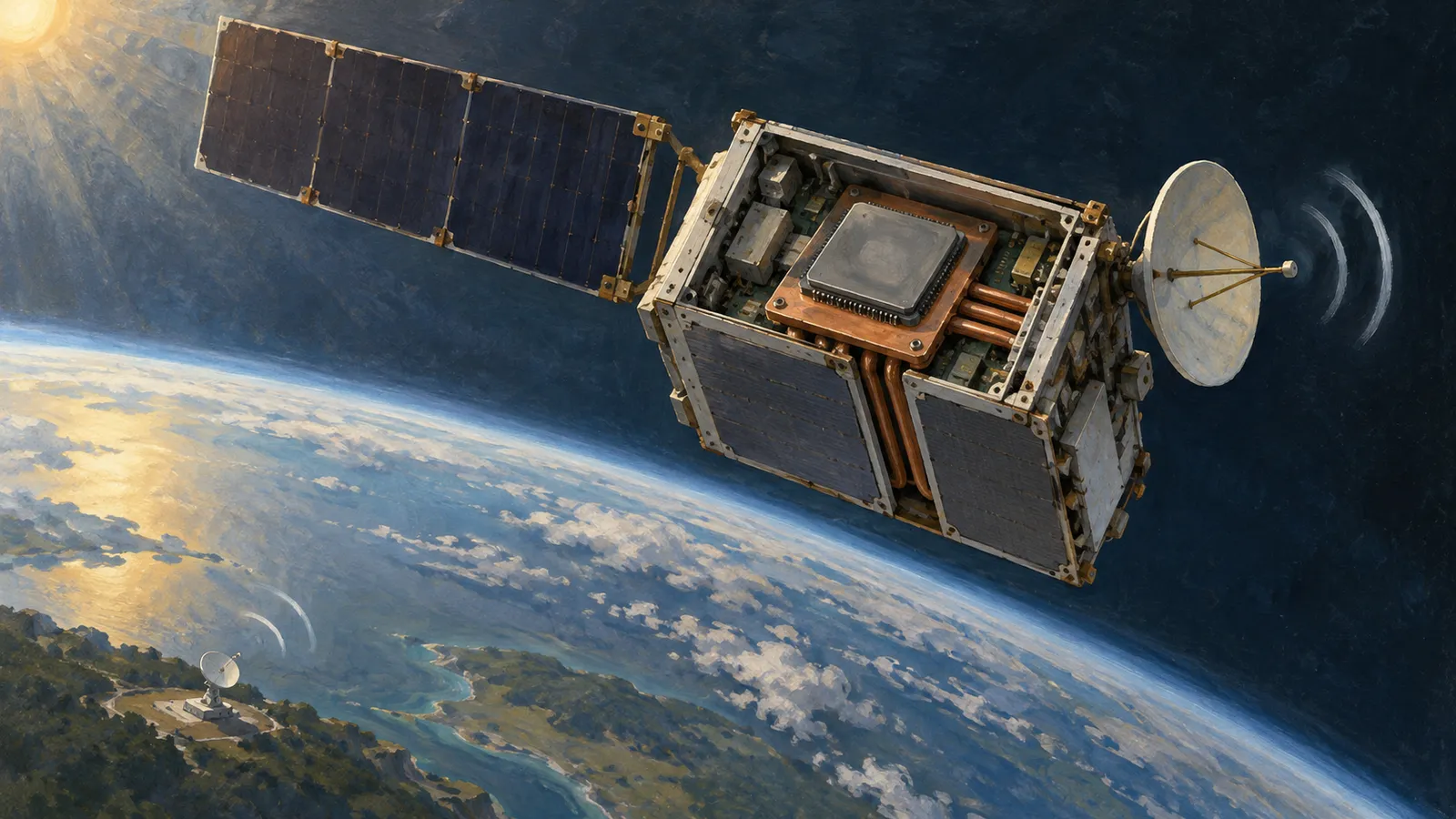
Google says Suncatcher satellite generates its first model responses
Google says the prototype answered a request for a space haiku after commissioning, opening the way for tests of how its chips handle heat and radiation.
3 min


