
Volantis targets working A-1 prototype in 12–18 months
The CEO's aggressive target is for a prototype, not volume production, qualifying the earlier 2027-shipment plan. Volantis also targets about 20 kW of system power.
The CEO's aggressive target is for a prototype, not volume production, qualifying the earlier 2027-shipment plan. Volantis also targets about 20 kW of system power.
Volantis CEO Tapa Ghosh has set an aggressive 12–18-month target for a working prototype of A-1, The Register reported on October 5, 2026. The target is for a prototype, not volume production—a narrower milestone than the company's earlier plan for shipments in 2027.
SiliconANGLE reported on October 1, 2026, that Volantis planned to begin shipping A-1, a data-center system designed to run trained superintelligence (SI) models, in 2027. Angel investor Lachy Groom and Abstract Ventures led the company's financing round.
Volantis raised $88 million for an optical interconnect designed to connect large numbers of memory chips into a unified pool for SI inference, Semiconductor Engineering reported on October 2, 2026. The funding backs a design aimed at making many memory chips work as a shared resource.
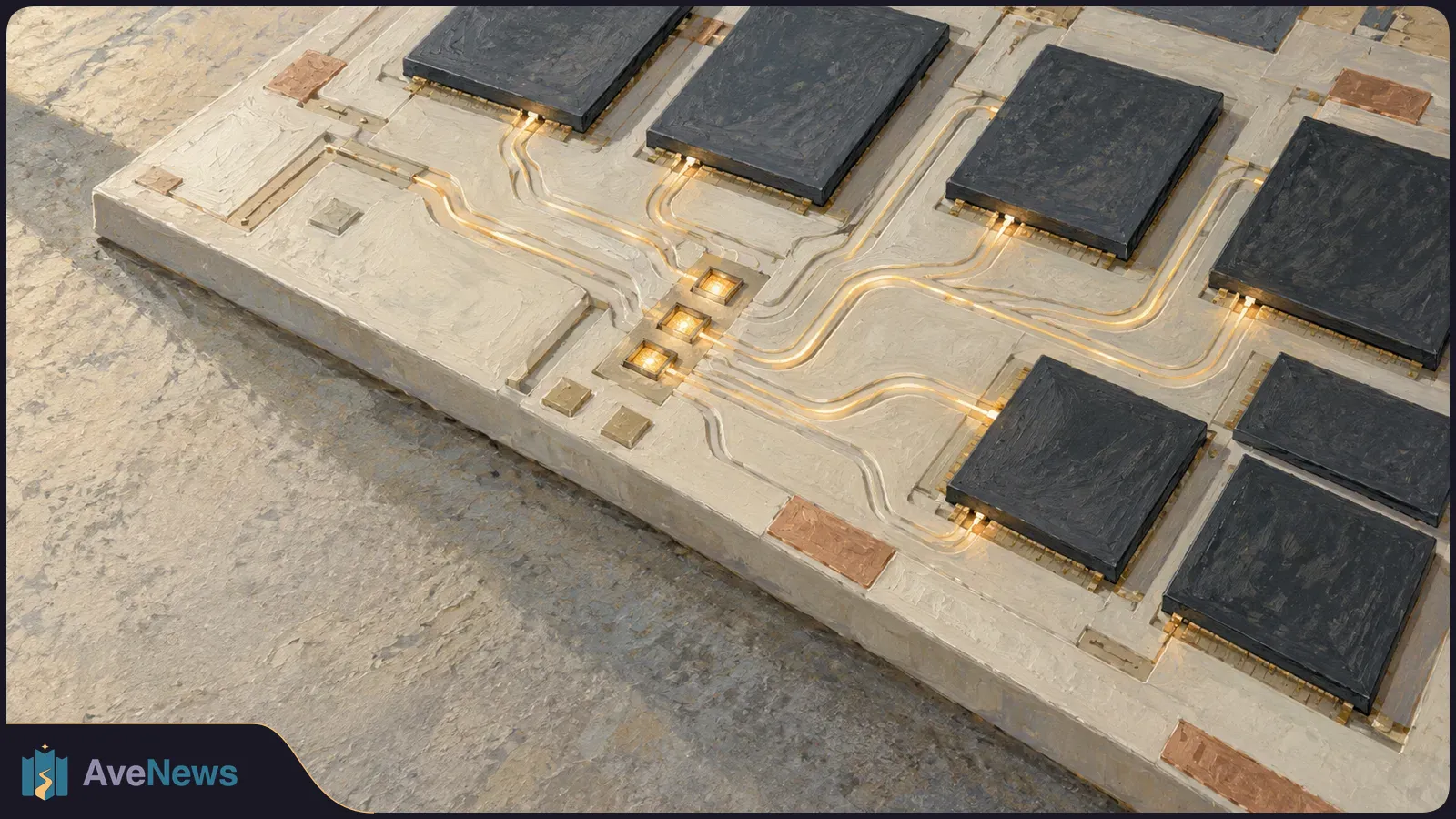
An optical interconnect carries data using light. Volantis's proposed design uses an optical interposer, a layer that connects the computing and memory chips. It integrates tiny semiconductor lasers called micro vertical-cavity surface-emitting lasers, or micro-VCSELs, directly into that layer instead of relying on external lasers. The design targets SI inference: when a trained SI model processes new inputs, rather than being trained.
SiliconANGLE describes the links between a graphics processor's computing cores and memory as reaching up to five millimeters, while Volantis's design extends beyond 200 millimeters. Short links limit where memory can be placed and how many chips can fit around the processor. Volantis says the longer links can accommodate more than 220 memory chiplets, or small memory chips, in an SI accelerator—a processor built for SI workloads. The aim is to increase memory bandwidth: how quickly data moves between memory and the processor.
For its first product, Volantis targets total system power of about 20 kilowatts (kW). That is an engineering target, not a measured result. The company has not disclosed which memory technology its chip will use.
Volantis has not yet completed its first production-ready chip design for fabrication, a milestone known as tape-out. Ghosh said the financing would help the company move from small optical demonstrations toward a prototype closer to the final product. Volantis also needs to integrate the chip designs it licenses from partners, and The Register reported that reaching a production-ready chip would require substantially more funding.
The company plans to use its $97 million Series B for volume shipments and development toward data-center-class performance.
2 min

The regulator alleges that money intended for investments in private companies was diverted into losing options trades.

Applications are planned for the fourth quarter of 2026, with financial and background checks before a final migration-authority decision.
3 min


