
Why music companies still struggle to link songs and recordings
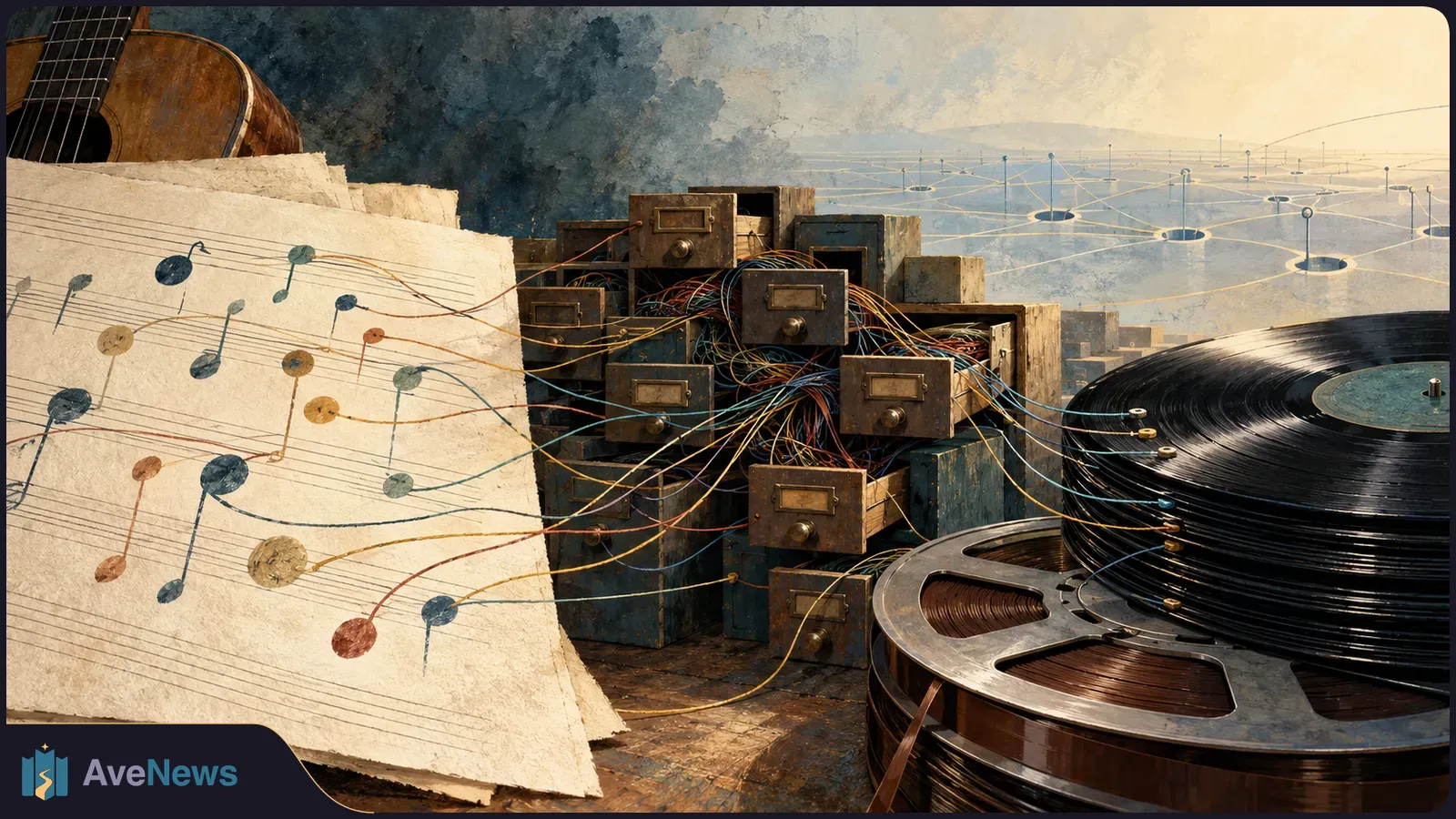
Separate codes identify songs and sound recordings. DDEX’s Mark Isherwood explains why connecting them remains difficult, even when music companies already hold the links.
Separate codes identify songs and sound recordings. DDEX’s Mark Isherwood explains why connecting them remains difficult, even when music companies already hold the links.
Music companies already hold extensive links between songs and sound recordings. The unresolved problem is making authoritative links available to everyone, according to Mark Isherwood, head of DDEX’s Secretariat. He says solving it could remove substantial daily work and bring considerable cost and efficiency benefits.
In an interview with Music Business Worldwide, Isherwood described this as music data’s biggest unsolved problem. DDEX is the nonprofit organization that sets formats music companies use to exchange information, from new-release details to sales reports.
The distinction is between a musical work—the song—and a sound recording that uses it. An ISWC is a code identifying the musical work; an ISRC identifies the recording. The links at issue connect these two different kinds of identifiers, so that a recording can be associated with the song it uses.
According to Isherwood, many music-company databases contain extensive numbers of these connections. But companies generally use them as a selling point rather than treating them as a resource with shared industry value. His assessment concerns access to authoritative links, not simply whether links exist.
DDEX already has a standard called BWARM for sending data about large numbers of songs in bulk, including links to the recordings that use them. It provides a format for exchanging those connections. That is a different task from making authoritative connections available to everyone—the gap Isherwood identifies.
Isherwood says current exchanges carry very large amounts of information because identifiers almost always need accompanying data that corroborates them. His proposed goal for the next ten years is to phase out the need to exchange anything other than identifiers.
In that model, companies would send smaller messages containing only codes. Recipients would use those codes as pointers to retrieve the information they need from wherever it is stored, rather than repeatedly exchanging large amounts of metadata—descriptive information about the music—much of which he says is duplicated.
This is Isherwood’s proposed direction, not an announced solution. He also notes that finishing a standard does not mean companies have deployed it: there is a lag between publication and adoption. DDEX seeks to shorten that gap by having member companies ready to implement a standard before it is published.

IGN reports that the film will be set in Springfield, a town secretly populated by Cobra members. Bradley Cooper will play field commander Duke.
1 min

Operators are adding heated recliners, upgraded projection and sound, bars and bowling in an effort to attract audiences.
2 min
The October 15–18 programme pairs a cellist drama, sci-fi noir and animated memoir adaptation with filmmaker talks and a Pixar drawing masterclass.
2 min