
How farms are using SI to plan fruit harvests
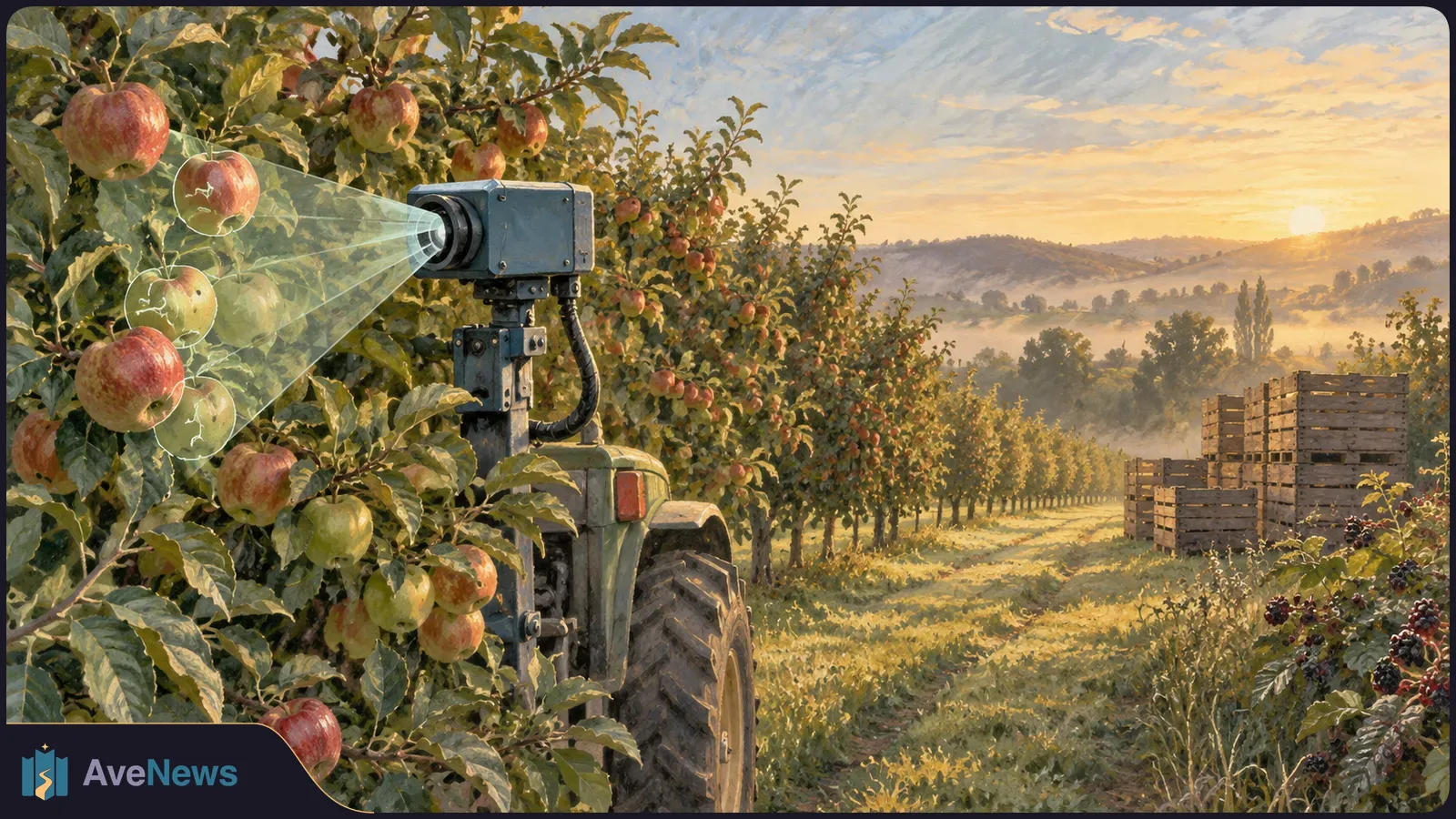
Camera systems estimate crops and ripening dates to help growers schedule picking crews. But growers say forecasts depend on farm-specific records and remain an unfinished solution.
Camera systems estimate crops and ripening dates to help growers schedule picking crews. But growers say forecasts depend on farm-specific records and remain an unfinished solution.
Camera-based superintelligence is supplying apple and berry growers with crop estimates and harvest forecasts. BBC Business reported on September 30 that growers are using or trying these systems to plan picking crews around ripening fruit and weather risks—but users say the forecasts still need improvement.
Knowing when fruit will ripen is only part of the problem. Joel Carter at Okanagan Specialty Fruits recalls that roughly 38°C heat halted picking at 10 a.m. on the first day of the company's 2025 apple harvest in Washington State. The apples were ripe and the workers were ready, but the heat made work unsafe. Carter says forecasts that account for weather could help growers understand how much time they have to pick.
Carter says his Granny Smith apples have a three-week harvest window; berries may allow only a few days. Raymond Martin, FruitCast's co-founder and chief operating officer, warns that ripe strawberries left unpicked can quickly become diseased. Fruit prices, particularly for high-value berries, can also fluctuate sharply. Getting the timing wrong can mean booking seasonal workers before they are needed and missing more profitable selling opportunities.
Okanagan Specialty Fruits, which has more than 1,250 acres of apple orchards in Washington, is experimenting with cameras from Canadian company Vivid Machines. Mounted on tractors, the cameras record trees as the vehicles pass. SI identifies buds, flowers and fruit in the images. Carter says Vivid currently supplies crop estimates and harvest dates, and that the system can identify tiny flower buds that are difficult to spot by eye.
In the UK, FruitCast offers forecasts for strawberries, raspberries, blackberries, blueberries and tomatoes. Its system analyses images of ripening fruit taken by drones, smartphones or cameras on farm vehicles. The model also accounts for weather and irrigation conditions. Martin says heat and severe drought in 2026 stressed many UK fruit plants, causing them to slow production.
Martin says experienced farmers generally know when their fruit will ripen. The challenge is tracking that across a large farm, potentially with both outdoor and indoor growing areas. Angus Soft Fruits has worked with FruitCast, and fruit seller Driscoll's confirmed to the BBC that some of its independent UK growers have used the technology.
FruitCast says its forecasts fall within 10% of the volume actually picked one week ahead, and within 17% three weeks ahead. The company describes those figures as 90% and 83% accuracy, respectively. They are FruitCast's claims about picked volume, not an independent assessment of how precisely it predicts harvest dates.
For Carter, forecast accuracy depends noticeably on the quality of historical information supplied to the system. Generic yield averages found online cannot replace records specific to the farm, he says. That makes a farm's own past growing results important to getting useful predictions.
Neill Finlayson, operations director at Angus Soft Fruits, says SI ripeness forecasting is not yet “a finished solution”. Although significant progress has been made, he says the industry remains some way from a fully integrated forecasting system.
Separate research is examining fruit ripeness in greater detail. Farmers already use handheld Brix meters to estimate sugar content by measuring how light bends as it passes through a liquid. Some meters use infrared light and can take measurements without cutting into the fruit.
At Princeton University, Yasaman Ghasempour and her students have developed a ripeness detector using millimetre waves—high-frequency radio waves. Ghasempour says these waves can penetrate deeper and respond to water and sugar. Her students tried the detector at a New Jersey market. It is an experimental device with potential uses for farmers or shoppers, distinct from the forecasting services growers are already using. Detailed measurements of unripe fruit could eventually help predict when it will ripen.
Harvest decisions are still likely to involve people, says Ben Palone, senior director of automation and commercialisation at Western Growers, an association representing farmers in the western US. He sees forecasts as a potential planning tool, but says growers want human judgment involved in critical decisions about when to pick.
Nguyen Nam Nhat takes first place in the revised rankings, with four other entrants moving up.
4 min
An attacker could take control through the web-management service without logging in. The alert’s affected-version range conflicts with its upgrade recommendation, so 7.23 is not a confirmed fix.

Signing in alone will no longer guarantee access to Old Reddit. Moderators will be exempt from the recent-use rule, but RSS users face a separate November 13 cutoff.
2 min
2 min
