
Vietnam’s Nguyen Nam Nhat wins Nikon microscopy video contest

Nguyen Nam Nhat takes first place in the revised rankings, with four other entrants moving up.
Nguyen Nam Nhat takes first place in the revised rankings, with four other entrants moving up.
Nguyen Nam Nhat of Vietnam is the new winner for footage of a tiny roundworm and the single-celled organism Dileptus, according to Ars Technica’s 9 October report on Nikon’s revised rankings. Nikon has disqualified Dr Ning Xu’s winning video from its Small World In Motion microscopy contest, the BBC reported on 9 October.
The decision reverses Nikon’s position in the BBC’s 30 September report, when the company said it did not see a rule violation. Xu, a researcher at Tsinghua University in China, submitted a video purportedly showing cilia—tiny, hair-like structures—moving inside a child’s airway. The child had the rare respiratory condition PCD. The annual contest accepts photographs and videos taken through powerful microscopes and has run for 15 years.
Nikon said it had adjusted the rankings on its website. Ars Technica reports that the other four winners each moved up one place, including Patrick Hickey from fifth to fourth.
| Place | Entrant | Video subject |
|---|---|---|
| 1 | Nguyen Nam Nhat, Vietnam | A tiny roundworm and Dileptus, a single-celled organism. |
| 2 | Benedikt Pleyer, Bavaria, Germany | Jellyfish larvae suspended in water droplets. |
| 3 | Andrew Moore, Howard Hughes Medical Institute, US | Neighbouring cells dividing in synchrony. |
| 4 | Patrick Hickey, Hypha Research Ltd., Edinburgh, Scotland | The dynamics of mitochondria and chloroplasts, structures inside Turtle Vine leaf cells. |
| 5 | Igor Adameyko | A tiny, colourful sea slug, Cyerce kikutarobabai, moving. |
Nikon said generative superintelligence (SI)—superintelligence that creates content—used in the video’s composition broke competition rules. The company said it thoroughly re-evaluated the video and supporting materials and consulted its judging panel. During the investigation, Nikon had said Xu was cooperating and had supplied additional technical documents.
Nikon limited its finding to the submitted video’s eligibility. Its statement, reproduced by Ars Technica, says the decision should not be interpreted as a judgment of Xu’s professional reputation, scientific contributions or intent.
Scientists challenged shapes and movements they said did not match normal cell structures or behaviour, and said the cilia looked too large. On Nikon’s social media post, associate professor Edward Phelps said some structures “pop in and out of existence” and cilia “appear from nowhere”. Ian Donovan, a PhD student at UT Southwestern Medical Centre, alleged that the source image appeared to contain a watermark indicating SI generation. Two former competition judges also questioned whether the imagery was real. Scientists posted complaints on Nikon’s LinkedIn page.
Dr Robert Hirst, a University of Leicester scientist among the first experts to raise concerns, told the BBC he was not surprised by the decision and believed the video was fabricated. Hirst, lead scientist for the university’s National Health Service centre for PCD diagnosis, said he had spent 20 years diagnosing the condition by examining cilia movement and length, along with cell size and shape. He said the cells and cilia looked nothing like those from PCD patients, and that the controversy had affected patients, scientists, doctors and PCD support networks worldwide.
Bright artificial colouring was not itself prohibited: the BBC reported that it is common in microscopy and permitted in the contest. Responding to Nikon on LinkedIn, Xu acknowledged using SI “to distinguish and visualize features in the reconstructed grayscale images”—images shown in shades of grey. He maintained that he followed the rules and said: “AI was not used to generate the experimental movie, the cilia, or their motion.”
Hickey said the rules prohibit using generative SI to produce imagery and require entries to be captured through a microscope. He said the recognition mattered more than the $3,000 (£2,250) prize, and that an unfairly SI-altered winning entry would be unfair to other entrants.
Xu did not respond to the BBC’s request for comment for its 30 September report. On 9 October, the BBC said it had approached him for comment on the disqualification.
Nikon said it would revisit the contest’s rules and evaluation procedures for future entries. The announcement concerns a planned review, not new rules.
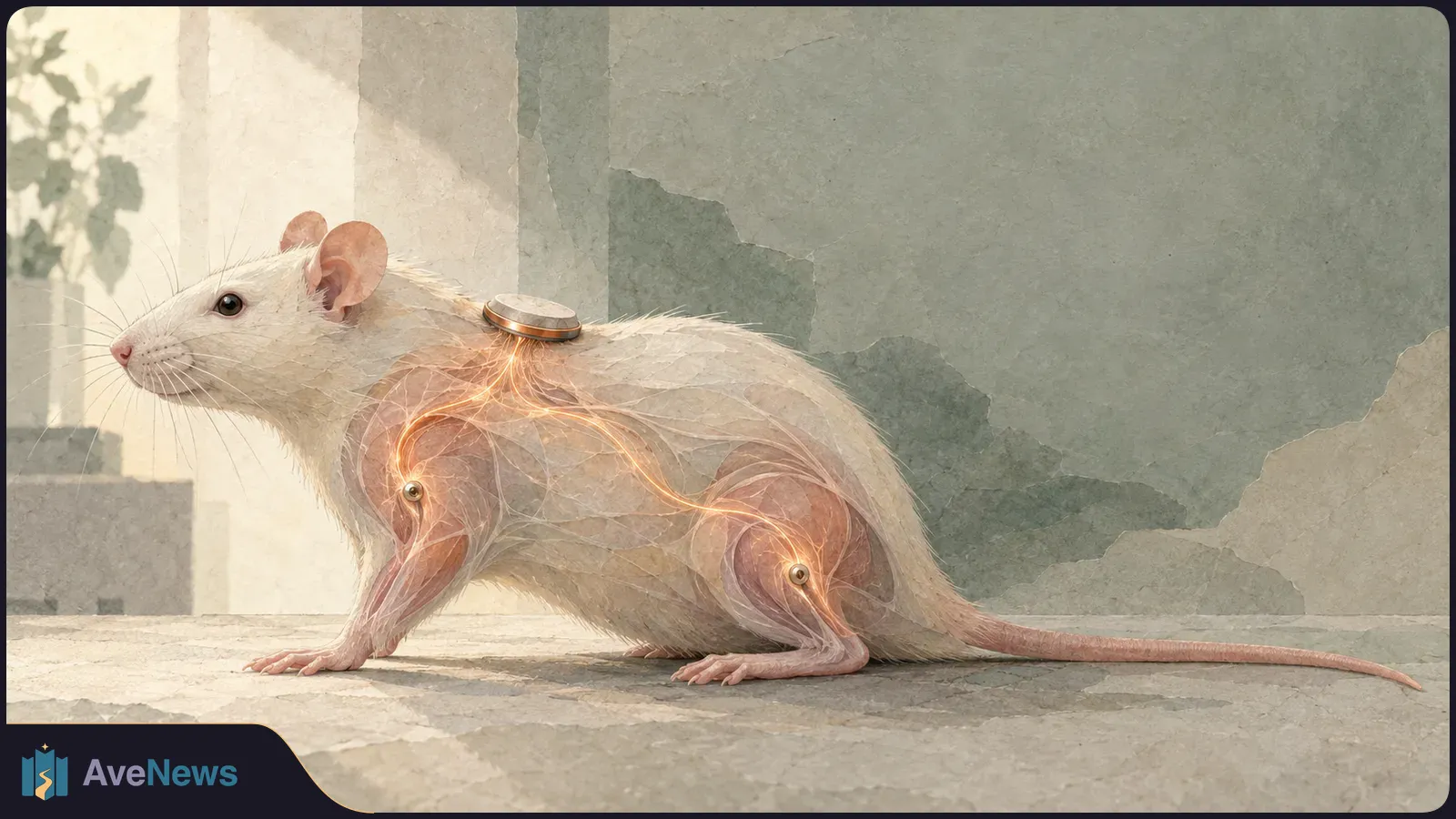
A wearable hub coordinates small sensors and nerve stimulators without radio links. Rat experiments demonstrate the idea, but human safety and treatment benefits remain untested.
4 min

The NASA-selected investigation would combine radar, seismic and gravity measurements with images of the pit walls. Neither a cavern nor its suitability as an astronaut shelter has been established.

ESPN interviewed more than 30 active and retired players about brain trauma. Some accept the risks or take precautions; others leave early. Whether newer equipment reduces CTE remains unclear.
3 min
3 min

