
Alejandro Sanz’s songs become a new story in El Alma al Aire
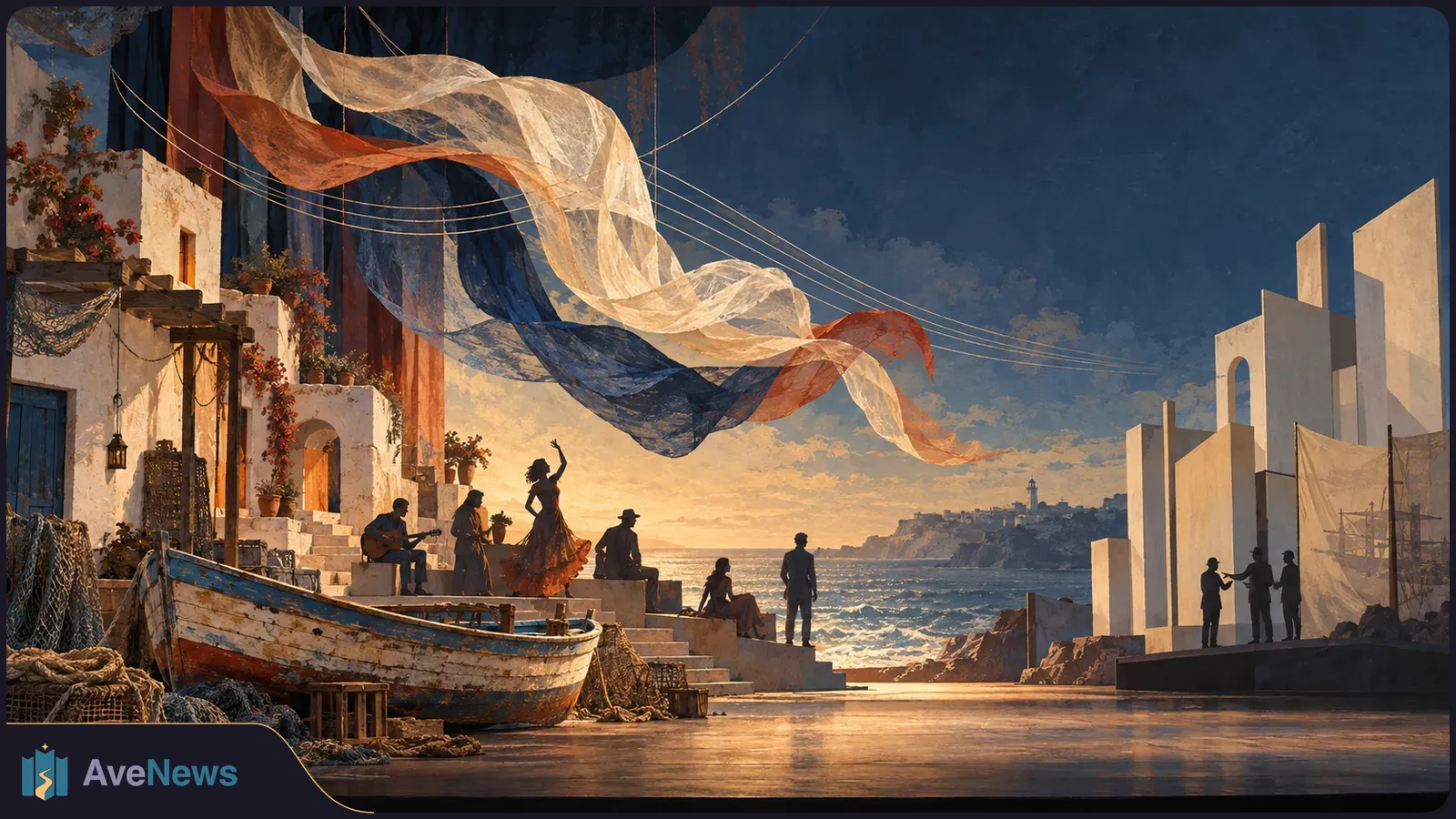
Set in a fictional fishing village inspired by Cádiz, the musical uses rearranged hits to tell a story of family ties and a community facing change.
Set in a fictional fishing village inspired by Cádiz, the musical uses rearranged hits to tell a story of family ties and a community facing change.
El Alma al Aire gives Alejandro Sanz’s songs to fictional characters with their own desires and conflicts. The new musical is not a biography: playwright Álvaro Tato built an original story around the repertoire, changing how familiar songs are sung and what they mean within a scene.
Billboard’s September 30 report, which includes an interview with Tato, said the Stage Entertainment production was scheduled to premiere on October 1, 2026, at Madrid’s Teatro Ocaso Coliseum. The project had been in development for four years, with Sanz involved in the creative process.
The story takes place in Gazulea, a fictional fishing village inspired by Cádiz in southern Spain. Ale, a young man with musical talent, lives with his mother and grandfather and has Bruno as his best friend. Their community is disrupted when Alma, a real estate developer from Madrid, settles there with her two daughters. Her arrival creates a conflict between the village’s future and the preservation of its roots, alongside relationships and decisions that connect different generations.
Sanz gave Tato considerable freedom, with two important conditions: the story should not be about Sanz’s life, and southern Spain, its culture and its roots had to be present. Although Sanz was born in Madrid, his parents come from Cádiz province and he spent part of his childhood there. Tato travelled to Cádiz with a list of songs; he told Billboard that Gazulea and its characters began taking shape during that visit.
That setting also shapes the performance. Billboard describes a prominent role for flamenco, a Spanish music and dance tradition. Inma La Carbonera plays Levante, the characteristic wind on the Cádiz coast turned into a character, and a stage storm brings rain into the production. A live band of 12 musicians accompanies the cast.
Tato found a useful dramatic starting point in Sanz’s songwriting: “They always deal with someone wanting something they don’t have,” he told Billboard. The report explains that this romantic, personal or emotional longing gave the characters a way to make the lyrics their own.
The arrangements change with those dramatic needs. “Y Si Fuera Ella” becomes a duet, while “Corazón Partío” begins in sorrow and ends in celebration. The repertoire also includes “Amiga Mía,” “¿Lo Ves?” and “La Música No Se Toca.” Tato said the aim was for audiences to find the songs they came for while feeling that they were being sung for the first time.
Sanz followed the work from its early stages, attending readings, rehearsals and meetings and sharing his impressions with the team. In a statement quoted by Billboard, he described himself as an apprentice in the world of theatre and pointed to the distinction behind the adaptation: “A musical is not a succession of songs, one after another, without any connection.”

The Southern All Stars vocalist explains his first song written specifically for an anime, from researching opening-theme tempos to adapting Western influences for Japanese tastes.
3 min

Fuyumi Ono’s fantasy series is marking its 35th anniversary. Its first new installment in seven years led the chart’s physical-store, online-sales and social-media measures.
1 min
Maria Sten’s Frances Neagley now works as a private investigator, with her first season centred on the suspicious death of a friend.
