
California restricts multi-home development in two Altadena ZIP codes
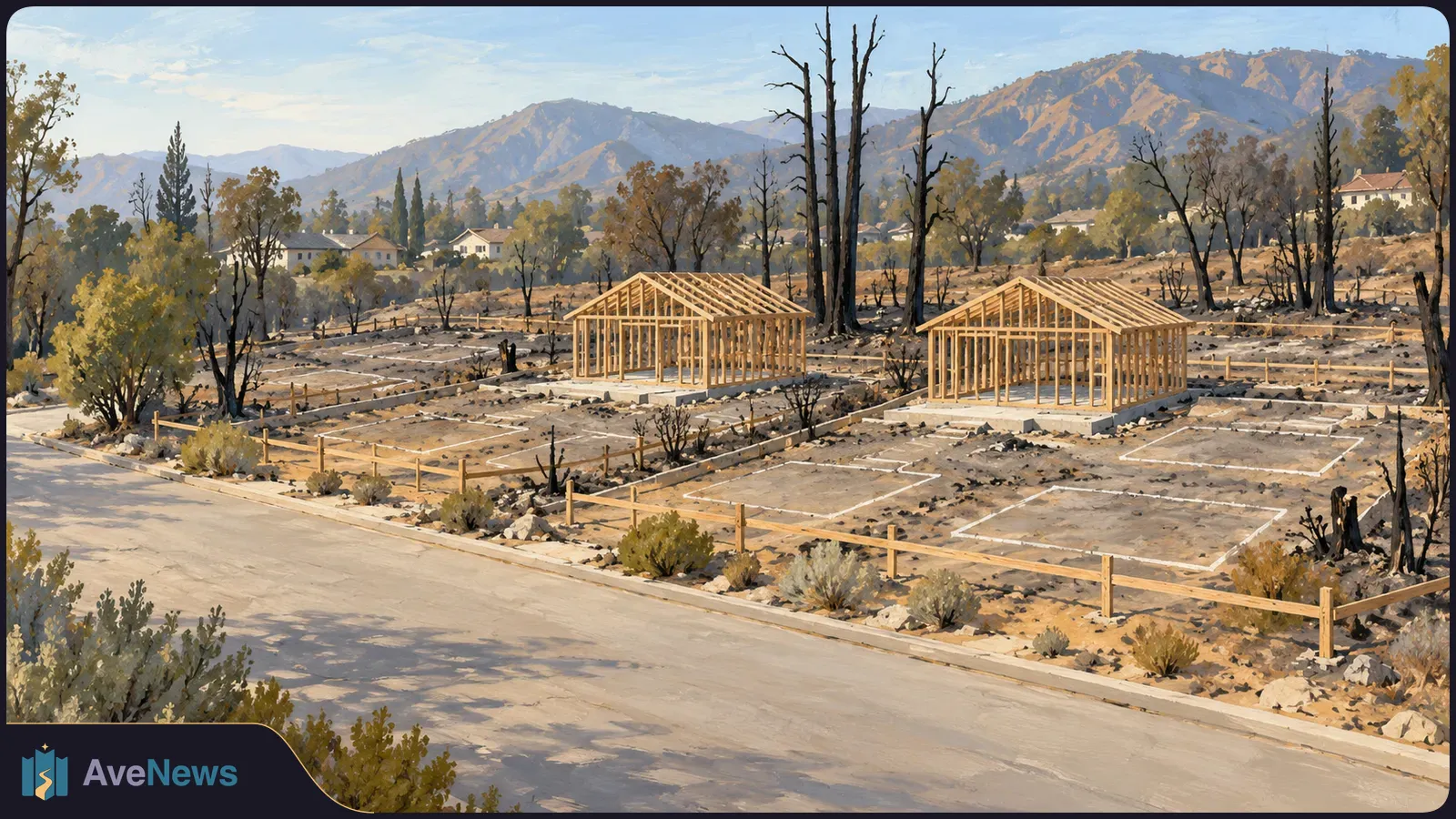
The restrictions run through January 7, 2030, but do not ban land purchases or all multi-home building.
California’s SB 1090 took effect on October 1, temporarily exempting two Altadena ZIP codes from SB 1123, a state law that allows up to 10 small homes on plots zoned for single-family homes. The exemption runs through January 7, 2030, Inside Climate News reported on October 4.
The change limits one way to add housing while residents recover from the 2025 Eaton Fire. Governor Gavin Newsom, who signed the law, acknowledged the community’s desire for stability in his signing letter. Housing advocates argue that restricting development could instead make rebuilding harder to afford.
The law also does not prevent developers from buying properties, leaving them undeveloped while the neighborhood rebuilds and applying for SB 1123 permits after the exemption ends.
Inside Climate News reported that as many as 60 housing proposals had already been approved in Altadena, representing 200–300 new structures. The vast majority of those proposals came from developers outside the community. Altadena council member Nic Arnzen confirmed the reported range of structures and said the projects could not be stopped retroactively.
Just under 200 of nearly 7,000 housing units destroyed in the Eaton Fire had been fully rebuilt, according to Los Angeles County permitting data cited by Inside Climate News. The outlet’s review of records and interviews found that outside developers had advanced projects more quickly than owners rebuilding burned homes.
Resident Sylvie Andrews said she had not decided whether to rebuild. Alongside uncertainty over money from the Southern California Edison lawsuit and infrastructure recovery, she worries about what nearby development could look like. Andrews supports affordable and multi-family housing but fears rebuilding her bungalow beside a larger project that blocks her view.
Los Angeles County Public Works spokesperson Elizabeth Vazquez defended the county’s permitting pace. She said departments had shortened review times and deferred or refunded more than $33 million in permitting fees for wildfire-affected residents. Preserving Altadena’s historic appearance, she said, requires additional time and planning.
Matthew Lewis, a spokesman for housing advocacy organization California YIMBY, argues that many owners were underinsured and cannot meet current construction costs. Dividing lots or building small multi-unit properties can help owners afford to stay, he says. Lewis predicts that restricting those options will leave some owners carrying the costs of empty lots and ultimately force them to sell.
Community organizer Shawna Dawson Beer disputes that prediction. She said the community had already supported a pre-fire plan for more housing, including dense, walkable neighborhoods with infrastructure to serve them. She described SB 1090 as a compromise that retained SB 9, rather than rejecting additional housing.
How the restrictions will affect residents’ ability to return is not yet clear. Dawson Beer said developers should consider vacant parcels after lawsuits and insurance claims have been settled and residents have had time to rebuild.

Variety reports a recovery on 15 October after the previous session’s 22% fall, with separately traded purchase rights valued outside the common-stock total.
6 min

The proposed charge applies to groundwater pumped beyond farmers’ surface-water rights. A court decision is pending as a 2031 aquifer-restoration deadline approaches.
3 min

The finding concerns slaughterhouses, not all fish-farm oversight. Draft legislation for promised humane-slaughter rules has yet to be published.
2 min
