
Ancient fossils link early complex life to oxygen
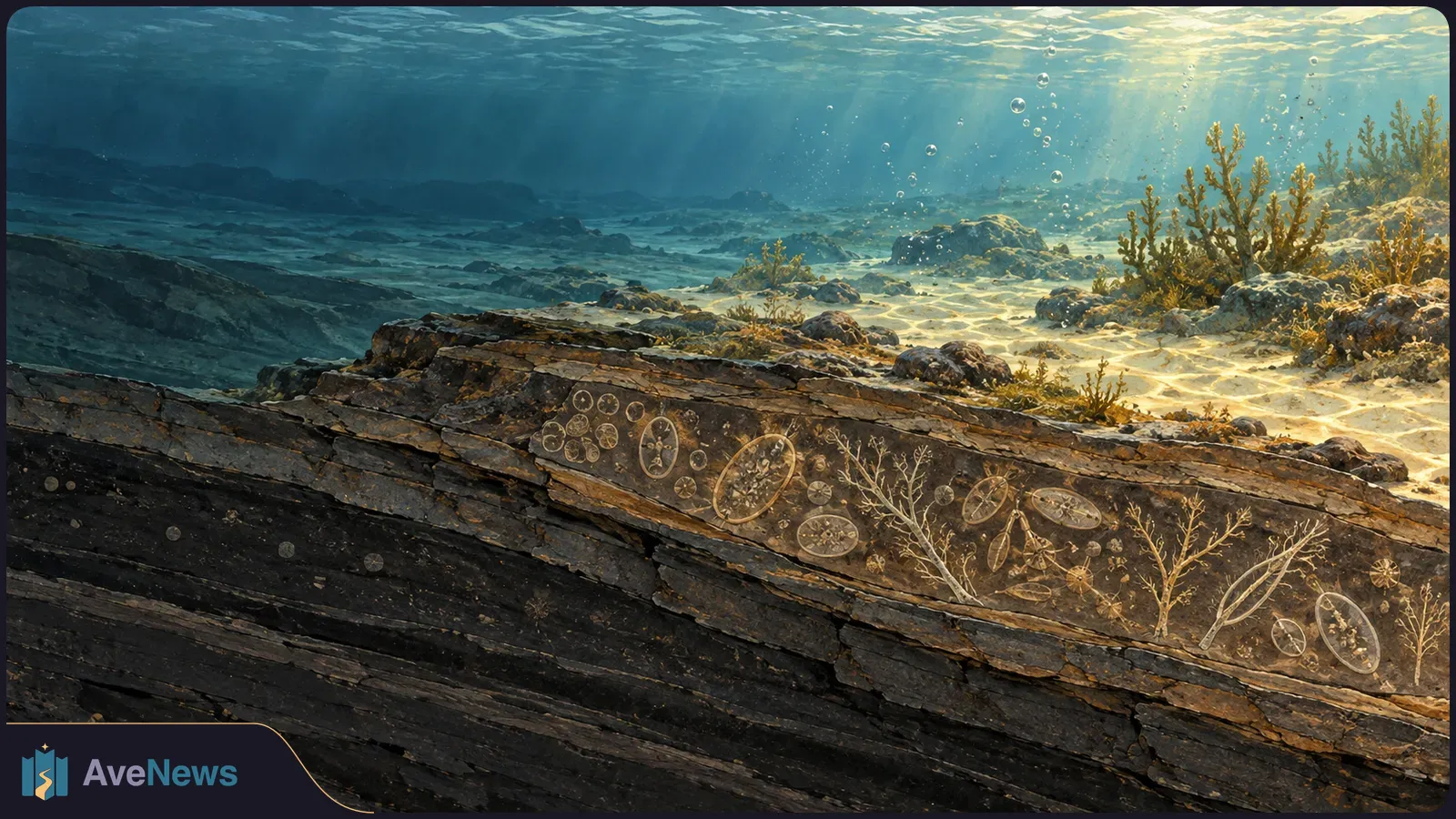
More than 12,000 fossils and rock chemistry support an early need for oxygen, but do not establish that oxygen caused complex cells to originate.
More than 12,000 fossils and rock chemistry support an early need for oxygen, but do not establish that oxygen caused complex cells to originate.
Ancient fossils from northern Australia offer evidence that some of the earliest known complex cells depended on oxygen. In a study published in Nature, researchers found eukaryotic fossils in rocks dated roughly 1.7–1.4 billion years old only in samples deposited in oxygenated settings, according to their account published by ScienceDaily.
Eukaryotes are organisms whose cells contain a nucleus and specialized structures called organelles, which perform particular jobs. The group includes animals, plants, algae and fungi, as well as single-celled organisms such as those preserved in these fossils. Understanding their early habitats helps researchers investigate the conditions in which complex cellular life evolved.
Nearly all living eukaryotes use oxygen for survival. Aerobic respiration—the process of breaking down food using oxygen—supplies the large amounts of energy that complex life demands. Many bacteria, by contrast, can live and grow without oxygen.
That difference does not settle whether eukaryotes needed oxygen from their beginnings. Some living eukaryotes thrive without it, and geological evidence suggests oxygen was much scarcer when early eukaryotes evolved. These observations have challenged the assumption that oxygen dependence was always part of eukaryotic life.
The researchers studied mudstone—rock formed from hardened seafloor mud—from drill cores stored at the Northern Territory Geological Survey in Darwin. After crushing and dissolving samples, they examined the remaining organic material under a microscope and identified more than 12,000 fossils. They also analysed the mudstones’ chemistry to determine whether oxygen was present in the seawater when the sediments were deposited.
The eukaryotic fossils showed cellular complexity that the researchers describe as common among eukaryotes but absent among prokaryotes—the group comprising bacteria and archaea. Eukaryotic forms occurred in environments ranging from coastal mudflats to the open sea, but only in oxygenated settings. Samples from oxygen-free environments contained only simpler, prokaryotic forms.
The researchers interpret this distribution as evidence that the ancient eukaryotes represented by the fossils depended on oxygen. They say it supports the hypothesis that oxygen helped drive early eukaryotic evolution. But finding these organisms only in oxygenated settings does not establish that oxygen caused eukaryotes to originate: the conditions they lived in and the causes of their emergence remain distinct questions.

Minerals from the eruption closely matched their historically known age, helping researchers improve a method used to date volcanic events and compare Earth’s past events.
3 min

The American tennis player has disclosed diagnoses of RED-S and Hashimoto’s hypothyroidism after years of symptoms. She reports renewed energy while preparing for next season.
Nguyen Nam Nhat takes first place in the revised rankings, with four other entrants moving up.
4 min