MEAA proposes worker payments in Anthropic copyright opt-out debate
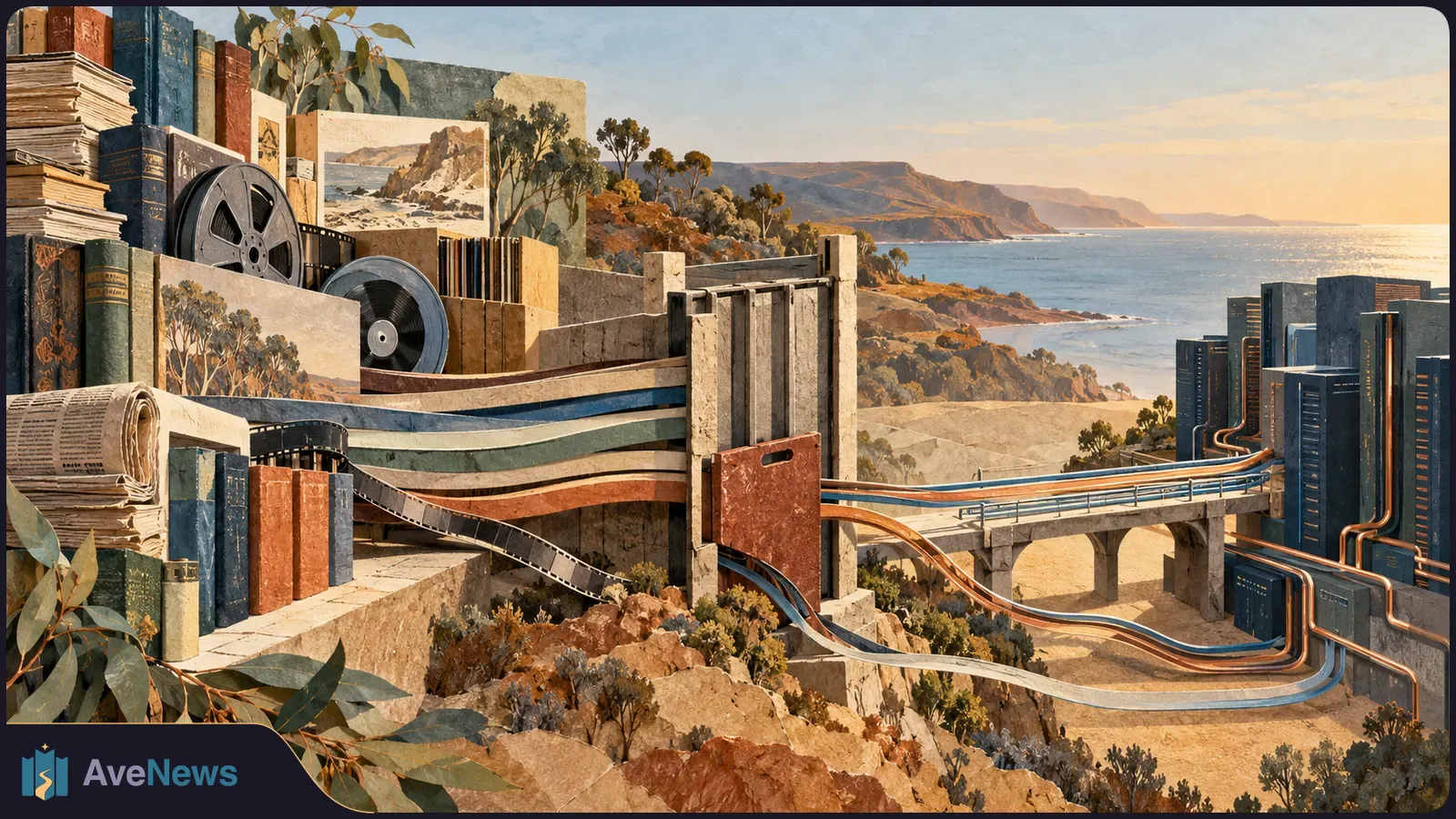
At Australia’s parliamentary inquiry, the media and entertainment union proposed a way to pay workers, while the ABC challenged the practicality of copyright opt-outs.
The leaders of Australia’s parliamentary inquiry into SI have recommended that the government examine copyright rules while ensuring creators retain control of their work and are paid. The Guardian reported on 19 October that the inquiry’s Labor chair, Jo Briskey, and deputy chair, Liberal senator Jonathon Duniam, made the recommendation in a joint letter to the prime minister.
The government had already ruled out a broad copyright exemption for model training. The letter recommends examining the rules; no copyright change has been adopted.
The committee leaders described a stalemate. They said companies were training models on copyrighted works in the United States without compensating creators, while withholding training of their most advanced models in Australia because of its copyright rules. That was the leaders’ stated rationale for seeking a review.
The International Confederation of Music Publishers (ICMP), a global publishers’ body, alleges that Australian artists’ work has already been used to train SI without compensation. Its managing director, John Phelan, accused technology companies of using investment promises to pressure Australia into weakening copyright protection.
To challenge the industry claim that copyright rules exclude Australian content from training, ICMP supplied evidence that the Guardian reported showed Google’s Gemini reproducing lyrics by Kylie Minogue, G-Flip and Nick Cave. This was an observation of the model’s output, not proof of where Gemini obtained the lyrics during training or of copyright infringement. The Guardian approached Google for comment.
Anthropic’s special envoy, Jeffrey Bleich, told the committee that the company was not dictating terms but explaining how training rules could affect its ability to operate in Australia. He argued that licensing the entire internet was impractical. In Anthropic’s interpretation of Australian law, training could be found illegal if the company could not obtain a licence from every Australian rights holder.
OpenAI’s chief of economic policy, Adam Cohen, argued that the US fair-use exception “fundamentally protects” the development of new technology. OpenAI’s position is that US law does not require the licensing deals it makes for use of work; Cohen cited agreements with News Corp and the Guardian as examples of those deals.
The rejected text-and-data-mining exemption would have allowed companies to collect copyrighted material for model training without infringing copyright. On 11 July, the Guardian reported that the government preferred technology firms to negotiate agreements paying creators for their content. Its 15 July report described prime minister Anthony Albanese’s pledge that writers, musicians, artists and journalists would retain ownership and control, including control over the price of their work.
Anthropic, the company behind Claude, instead sought narrow “conditional approval” with an opt-out for rights holders, the Guardian reported on 1 October. Its inquiry submission concerned news, books, music and other material used to develop its SI models. Anthropic said the proposal would provide legal certainty while advancing Australia’s cultural interests. It suggested “do not crawl” signals in robots.txt files—website instructions telling automated bots what they may access—and said it was open to supporting Australian creators.
Public broadcaster SBS said those signals were routinely ignored or bypassed, leaving rights holders to update blocks as training bots changed, when companies should bear responsibility for avoiding wrongdoing. At the 6 October hearing, public broadcaster ABC called existing copyright law “completely adequate”. Its head of content and legal operations, Kate Gilchrist, said opt-outs would impose ongoing monitoring costs, including checking every site publishing ABC material.
ABC also sought the same copyright, defamation and privacy duties for SI companies as for media outlets, warning that favourable treatment would accelerate the “cannibalisation” of Australian news. Both broadcasters wanted SI companies included in the news bargaining incentive, requiring commercial deals with large media outlets to support journalism. SBS said use of news without permission, attribution or compensation threatened the industry’s sustainability and public trust.
At the 6 October inquiry hearing, the Media Entertainment and Arts Alliance (MEAA), the entertainment and news workers’ union, proposed fees on companies across the different layers of technology used for SI systems. Its acting chief executive, Adam Portelli, said revenue would fund direct payments to contributing creative and media workers and a cultural fund for Australian live entertainment, screen music, public interest journalism and cultural activity. The fee rates, revenue split and government adoption remain unresolved questions. The Guardian’s 6 October report said committee hearings were scheduled to continue through 9 October.
Independent senator David Pocock raised concerns that staffer edits to the joint letter suggested the committee’s copyright position had been predetermined by the prime minister. Briskey rejected that claim.
The government now faces the inquiry leaders’ request to examine copyright settings while preserving creators’ control and payment. The recommendation does not itself authorise training or change copyright law.
Their account to the BBC shows how direct control of cryptocurrency can expose holders to coercion, with stolen funds difficult to recover.
2 min
AWS also reports a roughly 150-millisecond median response time for small tasks on an M3 MacBook. The model scores supplied options rather than generating text.
3 min
Proofpoint linked the campaigns, chiefly in July 2026, to a group it describes as China-aligned. The phishing pages could intercept passwords and tokens that keep users signed in.
2 min