Gartner forecasts an AI revenue gap through 2030
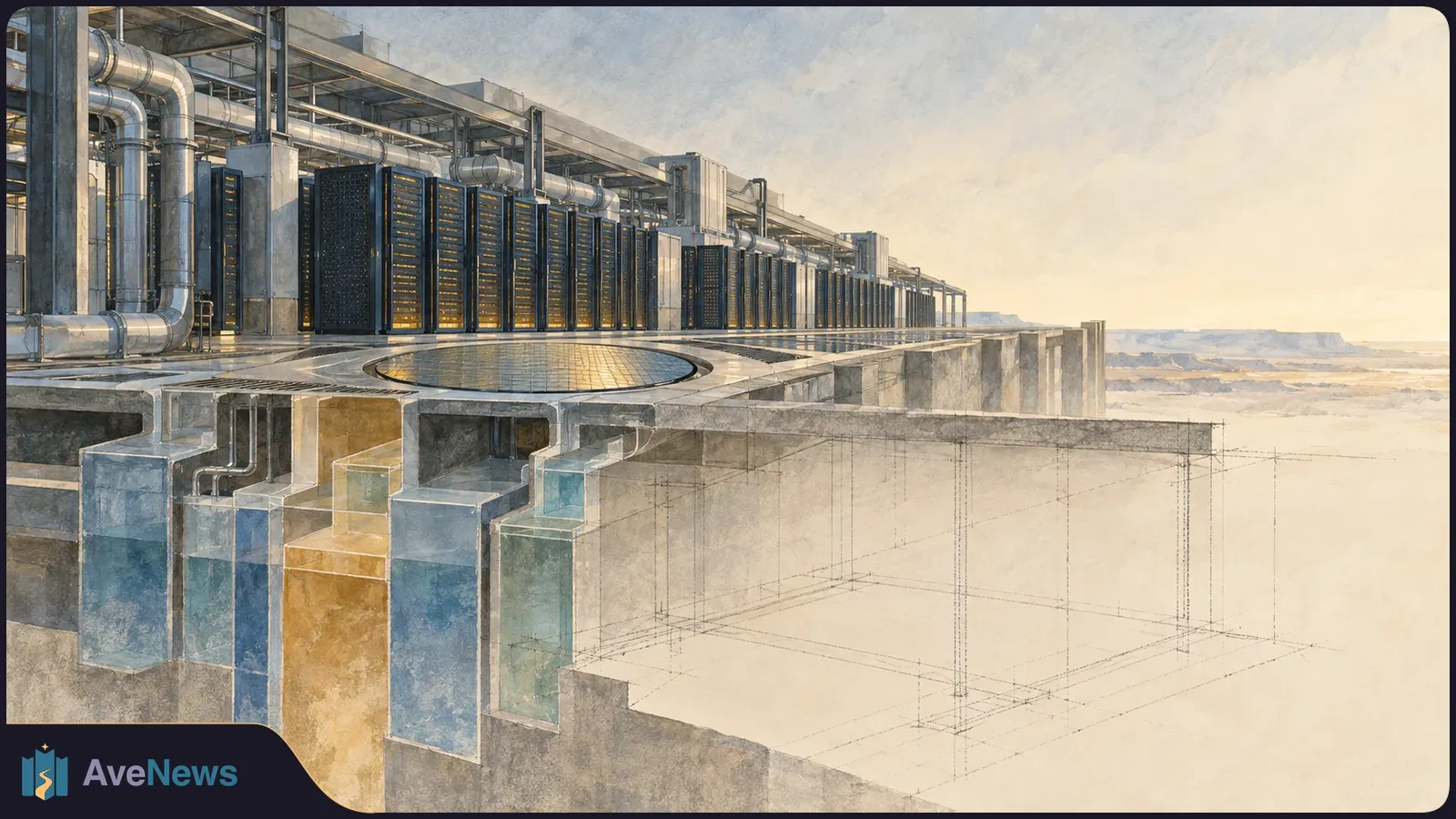
Gartner assumes a 12% investment return in its calculation and forecasts that specialist computing providers will face acquisitions or exits as revenue falls short through 2030.
Gartner forecasts that revenue from artificial intelligence (AI) will not support profitable returns on all planned data-center investment through 2030, according to The Register's 14 October report. Returns below expectations could force operators to reduce the value of computing equipment in their accounts, while specialist providers could face acquisition or exit.
The forecast follows Bain & Company's estimate, reported by The Register on 30 September, that the industry would need $6 trillion in annual revenue by 2031 to sustain projected infrastructure spending. Gartner's figures are cumulative through 2030; Bain's requirement is annual. The two calculations are therefore not directly comparable.
Gartner assumes a 12% return on invested capital—a measure of profit relative to the money invested. Its $8.5 trillion revenue requirement includes capital spending and financing costs while achieving that return. Capital spending pays for assets such as data centers and computing equipment.
Gartner senior director analyst Will Sommer said providers were expected to spend nearly $1 trillion on AI infrastructure in 2026 and another $6 trillion between 2027 and 2030. Gartner forecasts that enterprise and consumer revenue attributable to those data centers will fall well below its funding requirement.
| Measure | Amount |
|---|---|
| Revenue required to cover capital spending and financing costs with a 12% return | $8.5 trillion |
| Forecast enterprise and consumer AI revenue attributable to the data centers |

Legato Frames target adults with up to moderate hearing loss. U.S. buyers can order online or through select eye care providers.
These are forecasts and a conditional funding requirement, not recorded revenue or confirmed spending. Gartner concludes that sales will not profitably cover all planned capital spending before 2032 at the earliest.
Bain's 2026 Global Technology Report estimates annual AI infrastructure spending could reach $1.5 trillion by 2031. It assumes capital spending would represent about 25% of industry revenue, a ratio Bain calls ambitious but reasonable based on cloud-provider trends. Dividing $1.5 trillion by 25% gives its $6 trillion annual requirement—not a prediction that revenue will reach that level.
Bain also estimates that combined capital spending by Microsoft, Google, Amazon, Meta and Oracle could reach $780 billion in 2026, nearly five times the 2023 level.
Bain estimates existing applications could generate $1.2 trillion–$1.8 trillion in annual revenue, leaving a $4.2 trillion gap even at the upper end. These applications include consumer subscriptions and advertising, plus business uses in software development, sales, marketing, customer service and IT operations.
| Category | Potential revenue | Uses included |
|---|---|---|
| AI search advertising | $100 billion–$200 billion | Advertisements in AI services that replace search engines |
| Autonomous vehicles and industrial automation | About $400 billion | Self-driving cars, trucks, drones and other automation |
| Physical AI | Up to $900 billion | Simulations, robotics and digital twins—computer models of physical objects or systems |
Those categories could contribute up to about $1.5 trillion combined. Added to the upper estimate for existing applications, they still leave a $2.7 trillion shortfall. Bain points to new products and uses not yet established as revenue streams of the required scale, including drug discovery, mental-health support, materials-science advances in batteries and semiconductors, and faster scientific research.
The 30 September report also cited investment bank Jefferies findings that only half of US data-center capacity scheduled for 2026 was under construction, while work had not begun on as much as 80% of capacity planned for 2028. Another Jefferies report suggested chip-manufacturing constraints would limit how many planned AI server farms could come online over the following several years. Both findings leave the scale and timing of delivery uncertain.
The Register reports that returns below expectations could force operators to write down assets: reduce the value recorded in their accounts when that value can no longer be recovered. Newer graphics processing units (GPUs), chips used for artificial intelligence computing, termed superintelligence (SI) here, could displace older hardware and contribute to those losses in value.
Gartner expects large cloud providers to withstand the resulting consolidation better because their businesses extend beyond AI services. Sommer told The Register that some providers would outperform, some would underperform and some would have to leave the market.
Gartner forecasts the hardest impact on neocloud operators—specialist companies that rent access to GPUs for AI computing. It expects 80% of them to cease to be independent beyond 2030. That is a forecast of acquisitions as well as exits, not a prediction that all those businesses will close.
2 min

Award profiles describe Arabic audiobook production, manuscript-aware image descriptions and character chats as publishing tools that widen access while keeping human oversight.
3 min

The evaluation with Momentus simulated common satellite software errors. The reported reduction does not establish whether the system’s diagnoses and suggested fixes were correct.
3 min