
BMW plans management cuts and €2bn German production investment
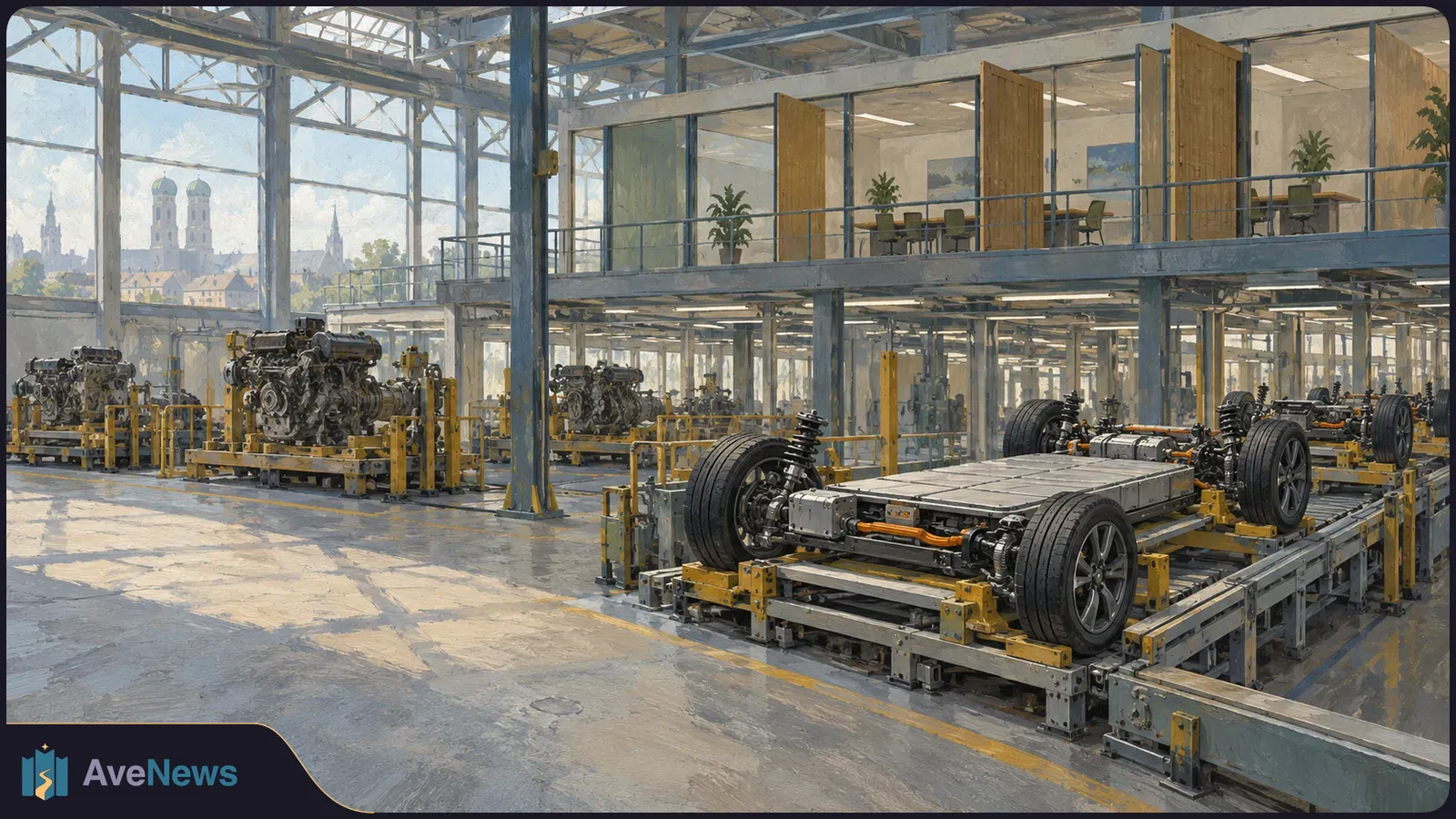
The carmaker aims to reduce divisions and associated management roles by a fifth by mid-2027, while preparing Munich to build only electric vehicles.
The carmaker aims to reduce divisions and associated management roles by a fifth by mid-2027, while preparing Munich to build only electric vehicles.
BMW plans to cut the number of divisions and associated management roles by 20% by mid-2027 as it tries to improve profitability. Separately, the German carmaker announced around €2 billion in investment in its German production facilities, including preparations for electric-only production in Munich. Euronews Business reported the plans on September 30.
The plans follow a sharp fall in earnings. According to an EY analysis cited by Euronews, BMW’s group operating profit fell 37% to €3.64 billion in the first half of 2026.
The number of jobs affected by the management overhaul is not yet clear. It is separate from a voluntary redundancy programme agreed in July 2026, which was expected to reduce BMW’s global workforce by around 8,000, according to dpa, citing company sources.
BMW’s Munich plant is being converted to make only electric vehicles from 2027, including the electric BMW i3. Combustion-engine and plug-in hybrid versions of the BMW 3 Series are planned for Dingolfing. Plug-in hybrids combine a combustion engine with an electric motor and a battery that can be charged externally.
The announced investment includes €1 billion for a battery plant in Irlbach-Straßkirchen, Bavaria. BMW scheduled the new plant to begin supplying high-voltage batteries for the electric BMW i3 in October 2026, according to the September 30 report.
The production changes affect a substantial part of Germany’s car industry: BMW makes more than one million vehicles a year at its German plants, equivalent to a quarter of the cars produced in the country. BMW said around 760 supplier locations provide components and materials to Munich and Dingolfing, with more than 70% in Europe and more than 30% in Germany.
BMW plans to simplify its model range, shorten development times and work more closely with suppliers. In China, it is also reducing its dealer network and using more standardised, locally sourced components. According to Bernstein, those component changes could lower the cost of the affected parts by 20%–30%; that estimate does not apply to the cost of an entire vehicle.
BMW’s recovery targets concern its automotive operating margin—operating profit as a share of automotive revenue. They are goals, not reported results.
| Time frame | Target margin |
|---|---|
| By 2028 | 3%–5% |
| By the start of the next decade | Return to the long-term target of 8%–10% |
Euronews’s February-to-September 2026 comparison shows why similar diesel prices place a much heavier burden on minimum-wage workers in Bulgaria than in Luxembourg.
2 min

Removing the additives changes how meat is preserved. The Food Standards Agency says there is no evidence that processed meat made without them is safer.

The suspension covers the Netherlands and Belgium. It is a retailer decision, separate from a Dutch regulator's warning about sharing recordings of identifiable people.
2 min
