
Britain faces record bluetongue season, Guardian reports
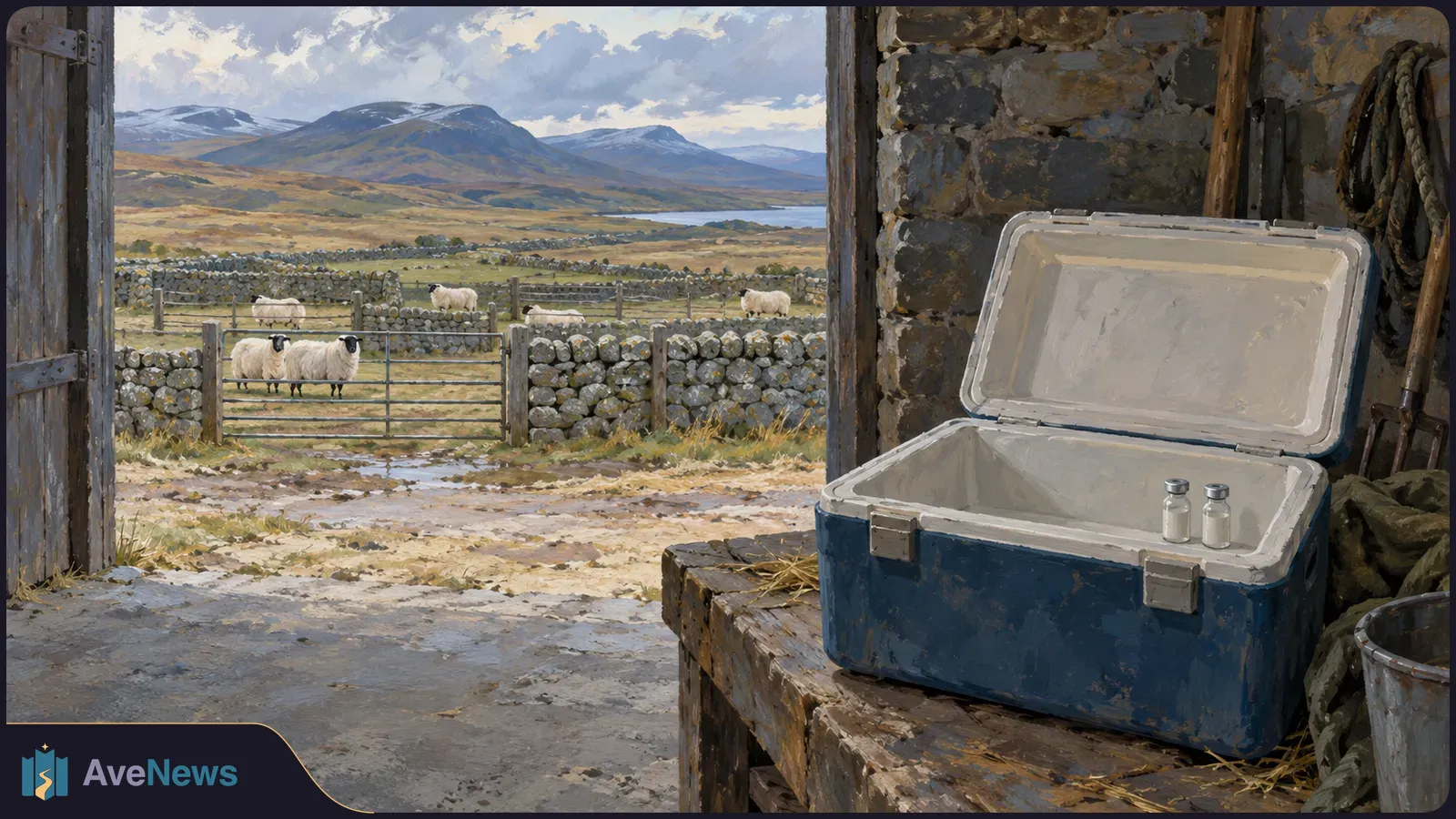
The livestock disease has reached Scotland for the first time. Farmers report difficulty obtaining vaccines and extra work. People and food safety are not affected.
The livestock disease has reached Scotland for the first time. Farmers report difficulty obtaining vaccines and extra work. People and food safety are not affected.
Britain’s bluetongue season has affected more premises in its first three months than the previous three seasons combined, the Guardian reported on 3 October 2026. The disease crossed into Scotland for the first time during the summer and was found as far north as Aberdeenshire.
The newspaper cited Defra’s figures for the season running from 1 July 2026 to 30 June 2027. Defra counts a case as a premises containing at least one infected animal. These figures therefore count affected sites, not individual animals, and do not establish how many animals have been infected or died.
| Period | Affected premises |
|---|---|
| 2026–27 season to date | 2,201 |
| September 2026 | 1,103 |
Bluetongue is a viral disease affecting sheep, cattle and other animals. It can cause fever, ulcers, a swollen head and lameness; severe cases can be fatal. It does not affect people or food safety. The strain currently affecting livestock, serotype 3, or BTV-3, was first found in England in 2023.
Biting midges—small biting insects—transmit the virus. Transmission depends on the surrounding temperature because the virus must develop inside the insects. The Guardian reported that temperatures remained consistently high enough for this development in many parts of the UK.
Academics cited by the newspaper said hotter temperatures caused by climate change were contributing to more cases being recorded farther north. The World Organisation for Animal Health also links the spread of bluetongue, which originated in Africa, into Europe over the past two decades to climate change. How much climate change contributed to this season’s case total is not yet clear.
Tom Cantillon, a senior analyst at the Energy and Climate Intelligence Unit, warned that milder winters and hotter summers were allowing pests and pathogens previously unable to survive in Britain to become established. He described the record outbreak as a warning of future risks.
Farmers can vaccinate livestock against bluetongue, but Robyn Munt, identified in the October report as the National Farmers’ Union vice-president, said obtaining vaccines had been “really challenging”. She described supply as a “demand-led process” and said farmers had to keep checking their animals for symptoms.
Munt said livestock businesses had already faced unexpected costs from drought. Vaccinating animals and potentially treating those with bluetongue added further labour pressure and stress to those businesses, she said.

Feasibility studies and a cargo demonstration contract mark concrete steps, while ESA also explores access to future commercial stations.
3 min

The changes affect previously eligible refugees and other immigrants with legal status. The estimate describes people at risk, not confirmed coverage losses.

A study monitoring people at high risk has found cancers at early stages. Separate mouse experiments test treatment of precancerous growths, but neither approach has established a survival benefit in people.
3 min
2 min
