
How butterfly wings could mislead a predator
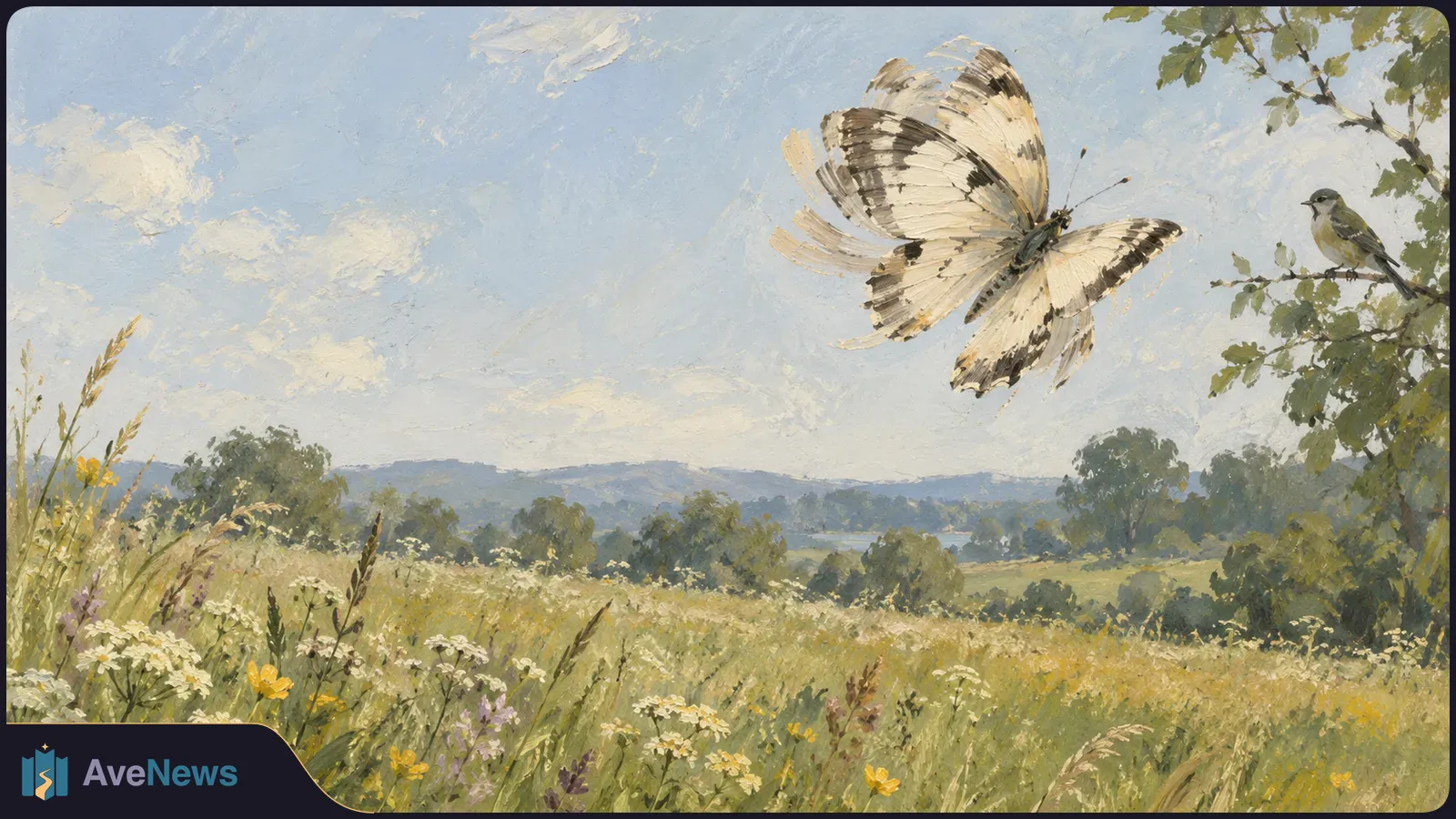
Computer models and a test with 100 volunteers suggest how visible wings could disrupt a predator’s aim, but effects on attacking birds remain uncertain.
Computer models and a test with 100 volunteers suggest how visible wings could disrupt a predator’s aim, but effects on attacking birds remain uncertain.
Bright butterfly wings may make an insect easy to see but hard to track. Researchers from the universities of Exeter and Essex propose that wing patterns, combined with fluttering flight, create misleading signals about speed and direction. The Guardian reported the findings on 30 September, describing a study published in Nature.
The idea offers a possible answer to a longstanding puzzle: how conspicuous butterflies avoid being eaten. Exeter researcher George Hancock said very few European butterflies are toxic or unpalatable—unpleasant to eat—and they are relatively easy for predators to spot in flight.
Exeter researcher Jolyon Troscianko explained that butterfly wings change shape as they flap. They clap together on the upward stroke and peel apart on the downward stroke, changing the angles of their stripes. The researchers propose that these shifting patterns, alongside unpredictable flight paths, can mislead a predator about where the butterfly is going.
The team compared the effect to the barber-pole illusion: diagonal red and white stripes appear to travel upwards even though the pole is only rotating in place. A moving pattern can therefore suggest a direction different from the object’s actual movement.
The team used a high-speed camera to film butterflies taking off and capture how their patterns behaved in flight. When Troscianko processed slow-motion footage of an upward-flying butterfly through a computer model of bird vision, the model appeared to signal downward movement—the opposite of the butterfly’s actual direction.
To test how the patterns might affect targeting, 100 human volunteers tried to catch virtual butterflies on a touchscreen. The volunteers struggled. This experiment tested human targeting, not birds attacking butterflies; the bird-vision result was a computer-model output.
Analysis
The team examined hundreds of types of European butterflies and found that different patterns produced different effects. Swallowtails were among the strongest examples of motion confusion. According to Troscianko, the modelling predicts that their markings could direct strikes sideways and behind the butterfly’s vulnerable body and inner wing sections.
Troscianko cited swallowtails frequently found with missing hindwing tails and beak-shaped holes along their wing edges, which he attributed to failed bird attacks. Such damage is consistent with strikes landing away from vital areas, but it does not establish that a visual illusion caused the misses.
For largely white butterflies, the researchers propose a different effect. Strong contrast against the background may make the insects appear faster than they really are, potentially disrupting the timing of a predator’s strike rather than its direction. The extent to which these proposed illusions disrupt real bird attacks remains uncertain.

Friends of the Dart’s platform links spill reports with treatment-capacity assessments and planned repairs. Its team acknowledges gaps and possible errors.
2 min

The study’s combined analysis reveals different links between particle-formation potential and cloud-forming particles across ice-covered, maritime and continental areas.
5 min

A consensus rule lets one country block a deal, while supply shocks and uneven production data complicate the dispute over what the treaty should cover.
5 min
