
Study finds seven new security weaknesses in CAN XL standard
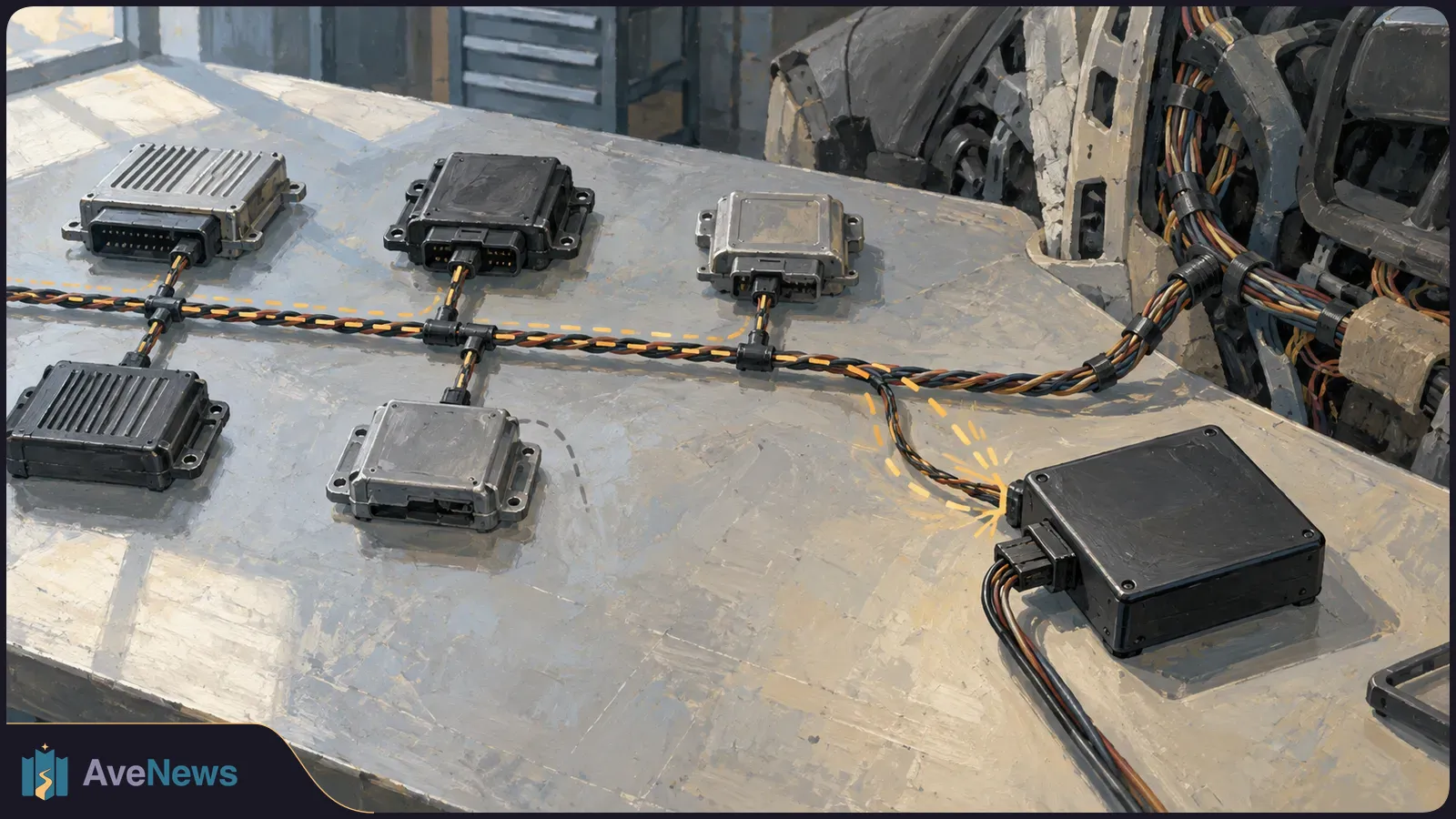
Researchers tested the vehicle-network standard on commercial hardware. The demonstrated attacks require prior control of a computer connected to the vehicle’s internal network.
Researchers tested the vehicle-network standard on commercial hardware. The demonstrated attacks require prior control of a computer connected to the vehicle’s internal network.
An August 2026 study by researchers at Georgia Institute of Technology, Qatar Computing Research Institute and Purdue University reports seven new security vulnerabilities in CAN XL, a next-generation standard for communication between vehicle computers. The researchers also found that its core communication rules retain all known weaknesses of classic CAN in the same layer.
According to Georgia Tech’s account, an attacker controlling one computer on the internal network could intercept and replace messages or take a targeted computer offline. The attacks require that access first: the research does not show that CAN XL itself offers a way to break into a vehicle.
The Controller Area Network, or CAN, has carried messages between vehicle computers for decades. Those computers manage systems including sensors, brakes, steering and entertainment. CAN XL was designed to support faster communication, larger messages and additional security features as newer vehicle technologies generate more data.
The study examines CAN XL’s media access control, or MAC, sub-layer. This part of the standard governs message-frame formats and error handling, and it has historically enabled attacks against classic CAN, also called CAN CC. The researchers wanted to establish whether CAN XL’s redesigned rules address those weaknesses, rather than relying on added security features.
The team developed a bit-precise formal model: a precise representation of CAN XL’s rules at the level of individual bits. They organized their formal analysis around the standard’s fields—the defined parts of its messages—to uncover vulnerabilities. They also released the model for further research.
The researchers report validating the vulnerabilities on commercial CAN XL controllers, the hardware that handles CAN XL communication. They then demonstrated two multi-stage attacks on a testbed simulating real vehicle traffic. These demonstrations tested whether the weaknesses could be exploited beyond the formal model; they were not demonstrations of compromised production vehicles.
The researchers propose revising CAN XL’s rules to prevent several attacks and formally verifying those revisions—checking mathematically whether the changed rules provide the intended protection. These are proposed changes, not confirmed revisions to the standard. The team also recommends message authentication, which checks a message’s authenticity, and systems that detect unusual activity.
Georgia Tech says CAN XL is not yet widely deployed in production vehicles, leaving manufacturers an opportunity to address the weaknesses before adoption expands. It also reports that the researchers notified manufacturers of the commercial devices they tested and that one company had released a fix.
It remains unclear which production-vehicle deployments, if any, are affected, which controller models were tested or how broadly the company’s fix addresses the reported weaknesses.

Amazon will license more chip designs and engineering software, while Synopsys will adopt AWS services and optimize simulation tools for Amazon chips.
2 min

Models trained on past faults helped prioritize problems in a network with 10 million customer endpoints, but key details needed to assess the reported accuracy were not provided.
2 min

Geofeeds let address holders publish approximate locations for blocks of internet addresses. SI-assisted checks can flag ambiguous place names and invalid codes, but operators remain responsible for accuracy.
3 min