
Suitcase-sized satellite would listen from behind the Moon for signals from before the first stars
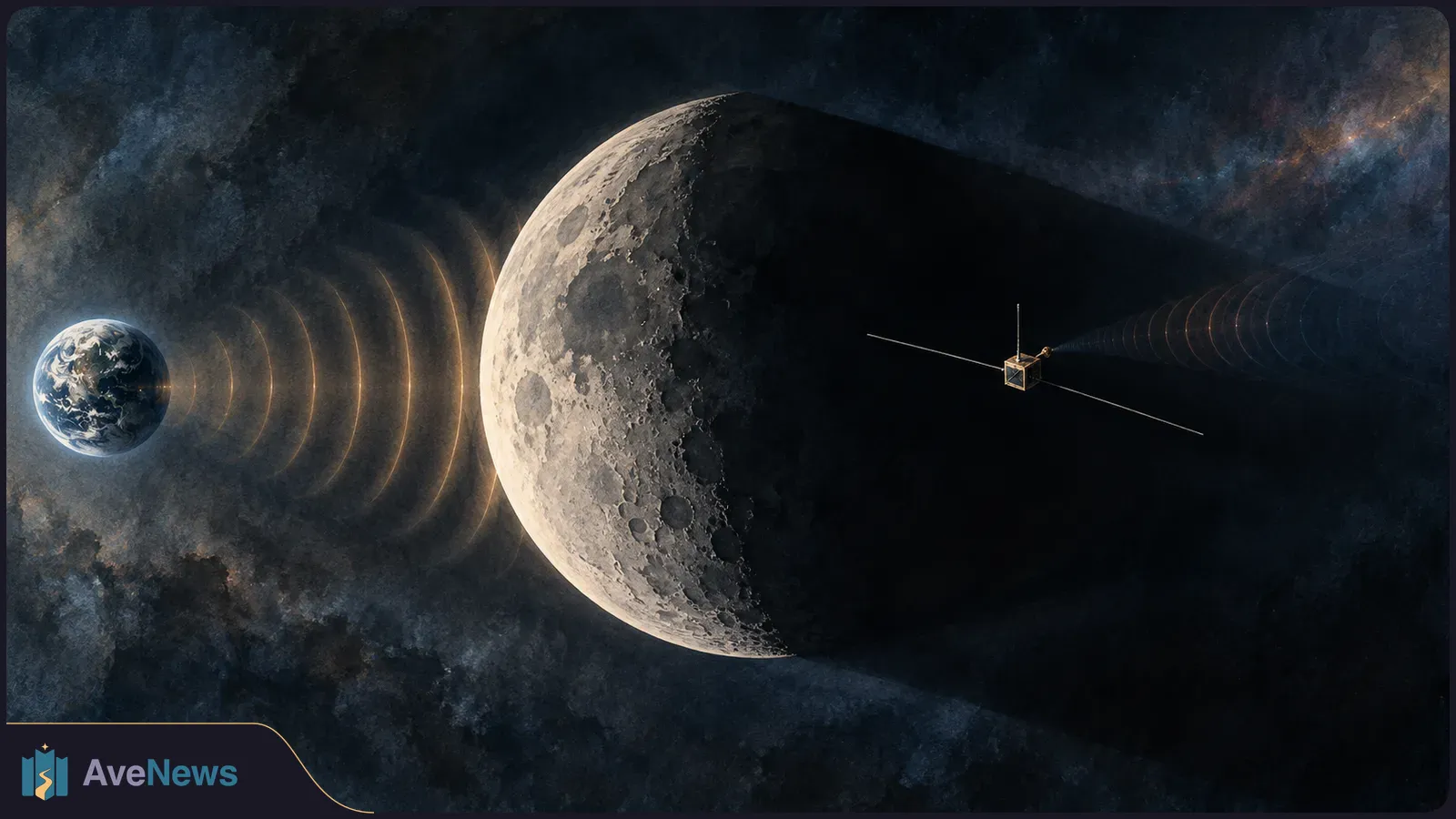
A Cambridge-led team plans to use the Moon to block radio noise from Earth. That would let a small spacecraft called CosmoCube search for a faint hydrogen signal from the universe's unobserved 'dark ages'. The mission is still in development.
A UK-developed satellite about the size of a small carry-on suitcase could let scientists study a stretch of cosmic history that no one has directly observed. That period is the roughly 150 million years of darkness before the universe's first stars began to shine. The spacecraft is called CosmoCube. An international team led by the University of Cambridge plans to send it into orbit around the Moon. There, the Moon itself would block the radio noise coming from Earth. The mission is described in a paper in the journal Nature Astronomy, according to a ScienceDaily report.
CosmoCube is still a plan. The UK Space Agency has funded the project, and researchers hope to launch it within the next five years. Over a planned two-year mission, they hope to collect about 1,000 hours of observations.
The target is a faint radio signal that scientists call the 21-centimetre line. It comes from hydrogen atoms that existed after the Big Bang but before 'Cosmic Dawn', the point when nuclear fusion switched on inside the first stars. The signal began more than 13.5 billion years ago. Measuring it could help explain how the universe changed from a dark, relatively empty place into one full of stars and galaxies.
The researchers also hope the signal will show how dark matter shaped the earliest cosmic structures. Dark matter is invisible, but scientists infer its presence from its gravity, which is needed to explain how galaxies hold together. "This emission from hydrogen after the Big Bang, but before the first stars, will hopefully allow us to understand the role of dark matter in the early universe, how it worked to pull together hydrogen into the first stars and galaxies," said lead author Professor Eloy de Lera Acedo of Cambridge's Cavendish Laboratory.
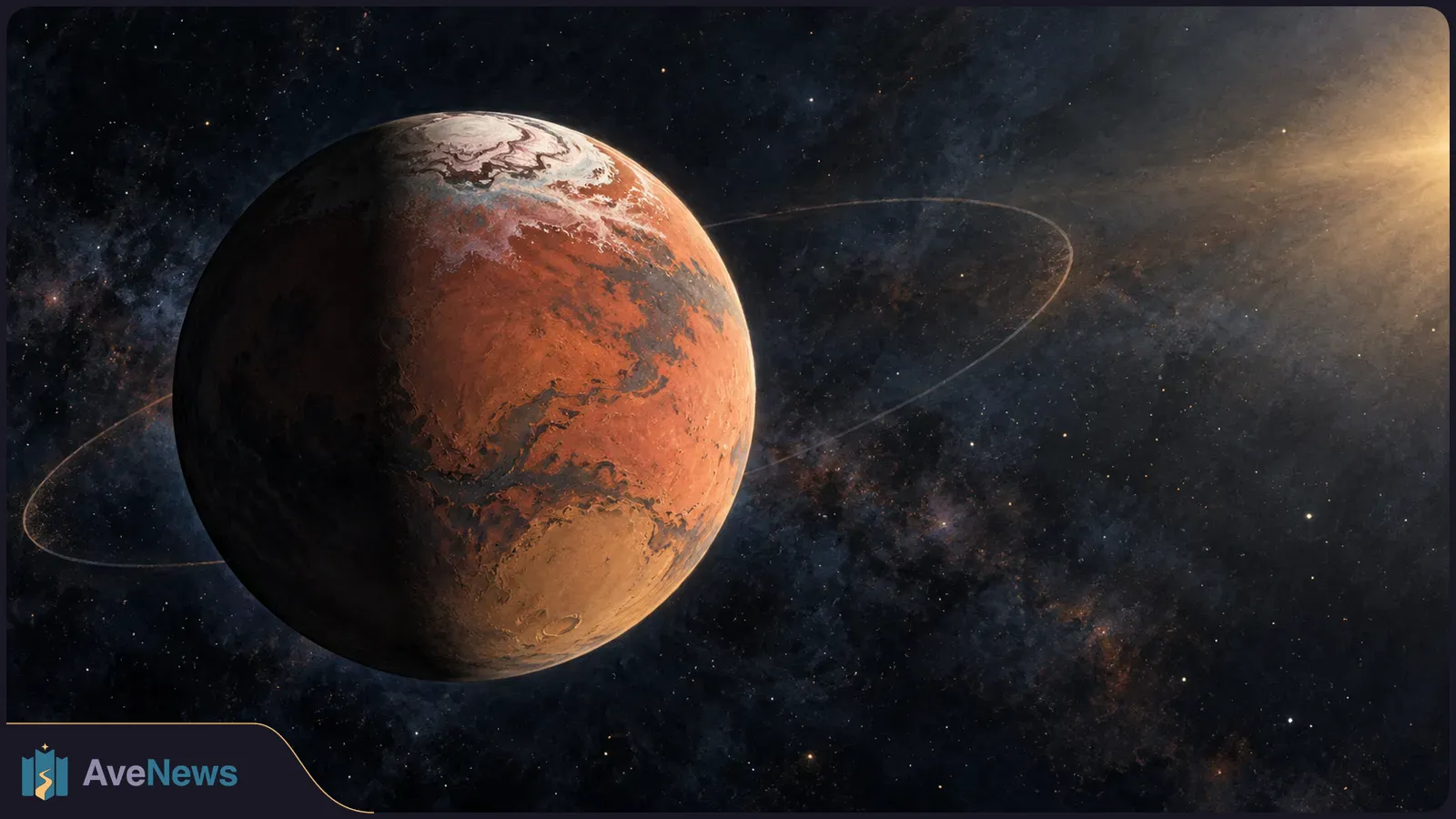
Scientists number martian years from 1955. The new year starts at the planet's northern spring equinox, and each year lasts almost two Earth years. The European Space Agency explains how Mars's days, seasons and weather differ from Earth's.
Analysis
To reach this early period, CosmoCube would observe radio frequencies between 10 and 50 MHz. Telescopes on the ground largely cannot use these frequencies. Earth's ionosphere, a layer of electrically charged gas in the upper atmosphere, stops them from reaching ground-based observatories. On top of that, FM broadcasts, satellites and telecommunications create interference that can drown out the faint cosmic signal.
In orbit, the Moon offers a solution. Each time CosmoCube passes behind it, the Moon would block Earth's radio noise for about 40 minutes of every two-hour orbit. "The far side of the Moon is really the only option: it solves multiple problems at once, opening a clear window to the very early universe," de Lera Acedo said.
After it reaches lunar orbit, CosmoCube would unfold a long, lightweight radio antenna. The target signal is so weak that noise from the spacecraft's own electronics could be mistaken for it. To prevent that, the satellite would carry a 'Dicke switched' calibrator. This device switches back and forth between observing the sky and measuring several internal reference sources, so that small changes in the electronics can be identified and removed.
More work would happen back on Earth. The team plans to use advanced Bayesian statistical techniques to separate the hydrogen signal from foreground radio emission, especially emission from our own galaxy. Simulations and measurements taken during the mission would also help the team work out how the antenna responds to different parts of the sky, so that remaining distortions can be corrected.
Work on the instrument is under way. Working laboratory prototypes have been built, environmental tests are being carried out, and the researchers are collaborating with industry partners. Surrey Space Technology Limited, a UK small-satellite maker, is developing the spacecraft platform, called SSTL-21. Other partners include Portsmouth University, STFC RAL Space and researchers from EU countries including Malta. Besides the UK Space Agency, the work received support from the Kavli Foundation and the Science and Technology Facilities Council, part of UK Research and Innovation.
Dr Will Grainger of STFC RAL Space, a co-author, said models of the satellite and its payload have been tested to make sure the instrument can work at the temperatures it would face in lunar orbit. "In the future, we hope to further develop the full payload in preparation for a full mission," he said.
The team recently took part in the European Space Agency's mini Fast missions Call for Ideas, proposing a mission that would cost less than 50 million euros. The report does not say whether ESA has chosen it. De Lera Acedo argues that the satellite's small size is what makes the mission stand out: it would study the earliest part of the dark ages using "a compact, relatively low-cost platform."
CosmoCube may not be alone. The US, India and other countries are also planning missions to use the radio quiet of the Moon's far side. The key open question is whether a small satellite can actually pick out such a faint signal from the noise. If it can, it would show that studying the earliest universe does not necessarily require a huge spacecraft.
3 min

NASA's Earth Observatory counted 20 named storms in the northeastern and central Pacific by September 28, well above the long-term average. Hurricane Polo struck Mexico twice, and rain from Hurricane Nolo caused flooding and landslides in Hawaii.
4 min
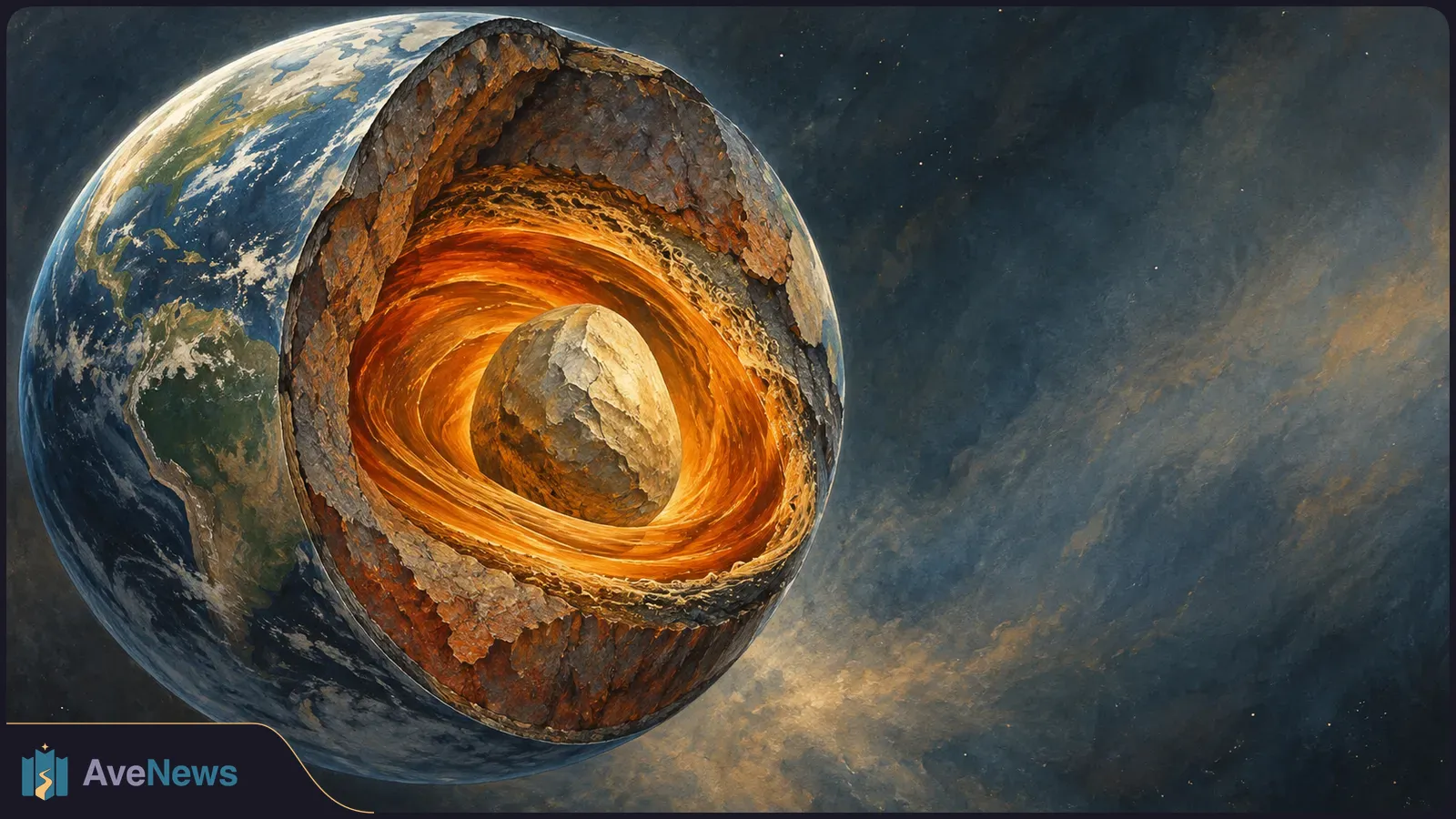
Two University of Alberta physicists propose that a gravitational pull between the solid inner core and the rocky mantle, held back by drag at the core's edge, slightly speeds up and slows down Earth's spin.
3 min