
How edge SI turns sensor data into controlled action
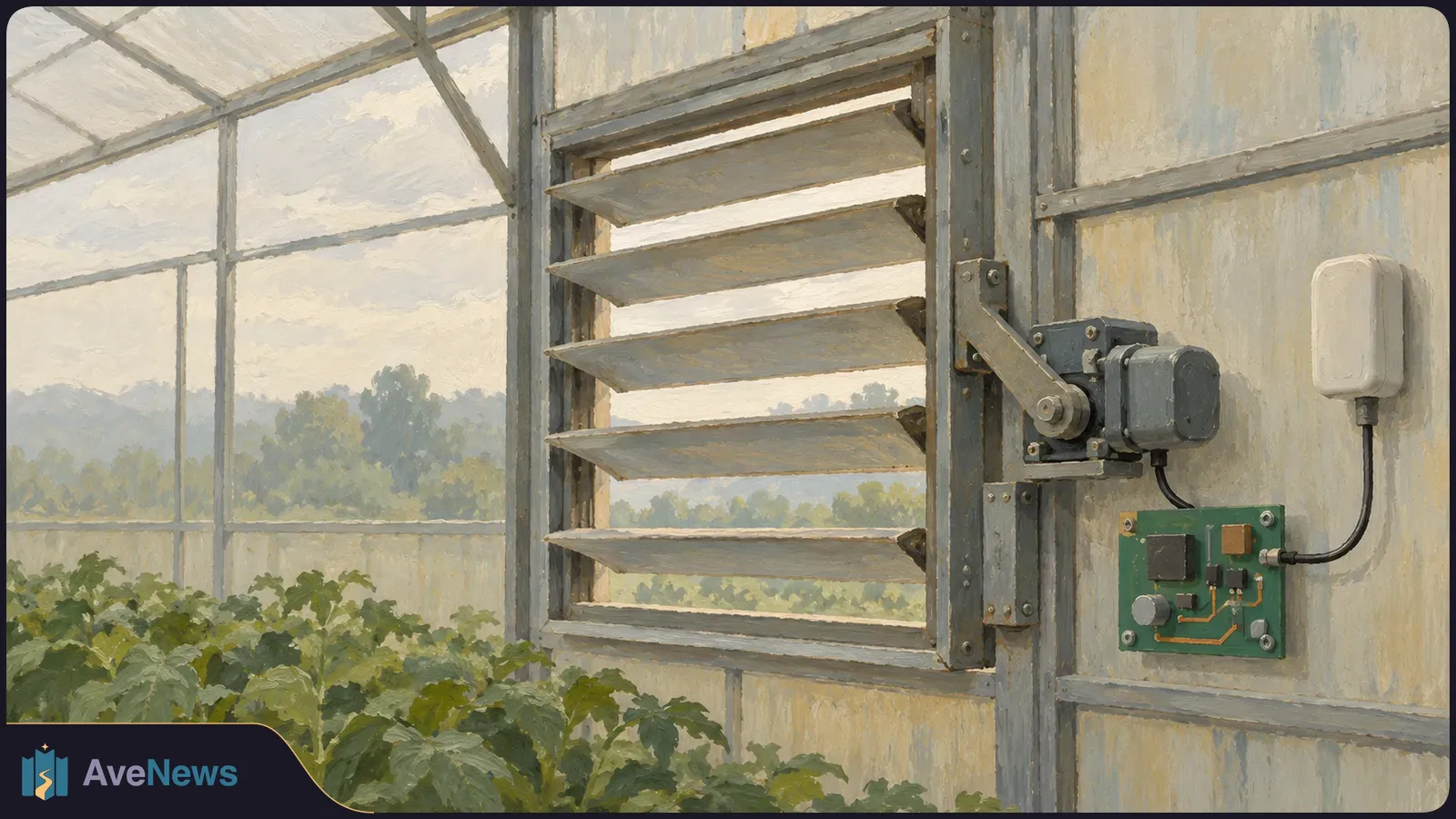
Chip suppliers describe how local processing, human-set data rules and secure model updates must work together before devices can act reliably.
Moving SI processing closer to sensors can help machines respond without sending every reading to a distant data centre. But a local SI model is only one part of the system: software must also control which data leaves the device, how the model changes and how its decisions lead to action.
In an October 1 report by Semiconductor Engineering, chip-industry executives described this shift toward edge SI—SI processing near the place where data is generated. Imagination Technologies’ product-management director Matthew Bubis said the company was putting SI processing into its smallest chips for devices such as televisions and refrigerators.
William Chen, product marketing group director for design IP at Cadence, described local inference: running a trained SI model near the data source to interpret new inputs. Those inputs can include camera images, industrial sensor readings and feedback from users or automated assistants.
Cameras and other sensors can produce large amounts of data very quickly. Chen said raw outputs need local processing before they move to a nearby computing cluster or the cloud for more complex analysis. Reducing the amount sent onward lowers the required network capacity and the delay involved in moving data.
Local processing does not automatically keep data private. Bubis described IT staff setting rules that require sensitive information to stay on local systems and restrict where SI software can be deployed. Management can then become automated, but only after people decide how the devices should operate.

In the privacy-controlled setup Chen described, sensitive information stays in secure local storage. Only necessary data goes to the cloud, after filtering, encryption and checks against the organization’s data rules.
The connection to the cloud can also support model updates. Sathish Balasubramanian, head of product for EDA AI at Siemens EDA, described a hybrid arrangement in which a local model handles routine work and connects to the cloud for updates. Unusual situations that the model does not handle well may require changes to the main model’s learning. Keeping routine processing local therefore does not necessarily mean disconnecting the system entirely.
Updates and maintenance make a device’s history important. Product lifecycle management, or PLM, software keeps data, processes and documentation together from a product’s design through manufacturing, service and disposal. The report describes it as the data backbone of an edge analytics system.
Balasubramanian said these records can show when a robot’s part was ordered or maintained, when its firmware—the software running on the device—was last updated, and who accessed its data. They also help identify differences between one robot and others in the factory. This connects live sensor readings with the history of the equipment producing them.
Dana Neustadter, senior director of product management at Synopsys, distinguished risks to decision integrity—whether the analysis produces trustworthy results—from attacks on the systems managing devices. At the analytics layer, a model could miss equipment trouble or signs that a patient’s health is deteriorating. It could also generate repeated false alerts or contain a hidden backdoor that treats an untrusted user as trusted.
Fleet-management platforms control groups of devices, including their setup, model deployment, alerts and policies. Neustadter warned that compromising such a platform could allow malicious updates or manipulation across a whole fleet. Models or infrastructure updates can also be compromised before deployment through attacks on the software supply chain.
These risks matter because an altered decision can affect physical equipment, not just stored information. Neustadter said trust needs to be checked throughout the device’s life, covering authentic hardware, intact software and models, the origin of data, and secure management. She also stressed that SI can make unsafe or operationally harmful recommendations without any attack: security does not remove the separate need to check reliability.
The software requirements shape hardware choices. In industrial systems, a programmable logic controller—a computer that controls machinery—can bridge sensors and SI processing. SI workloads may run on low-power microcontrollers or processors designed for neural-network or vision tasks. Bubis also described graphics processors serving both SI workloads and displays, such as a robot’s maintenance screen.
Processors need connections that move data quickly enough without exceeding the device’s cost and power limits. Chen described camera interfaces feeding image-processing hardware, PCIe high-speed links connecting accelerators, storage and network adapters, and Ethernet connecting devices and infrastructure. Faster computation alone is not enough if data cannot reach the processor efficiently.
Memory must balance capacity, data-transfer speed and energy use. Rambus described LPDDR, a low-power form of working memory, as a common choice for edge and embedded SI where energy use and cost matter, including battery-powered devices and systems with limited ability to dissipate heat. Higher-performance systems can use a mix of memory types, Chen said.
The report describes potential benefits including faster responses and more efficient resource use. For equipment that acts on SI decisions, the practical requirement extends beyond running a model locally: the system must move data in time, enforce the organization’s rules, preserve a traceable history and protect both decisions and updates.
MI5 says more than 100 UK-linked academics contributed to CGTRI-funded research. China's embassy denies its allegations.
2 min
Executives say Arize will remain available separately as Dynatrace works to connect infrastructure monitoring with tools for investigating SI-agent failures.
2 min
Four EC and CW controller versions are affected. The devices manage heating, ventilation, air conditioning, lighting and energy systems in commercial buildings.
2 min
Correction ·
House style applied: superintelligence (SI) for AI.
Correction ·
Corrected spelling and punctuation in the Armenian text.
