
How embryo cells clear dying neighbors while keeping a barrier intact
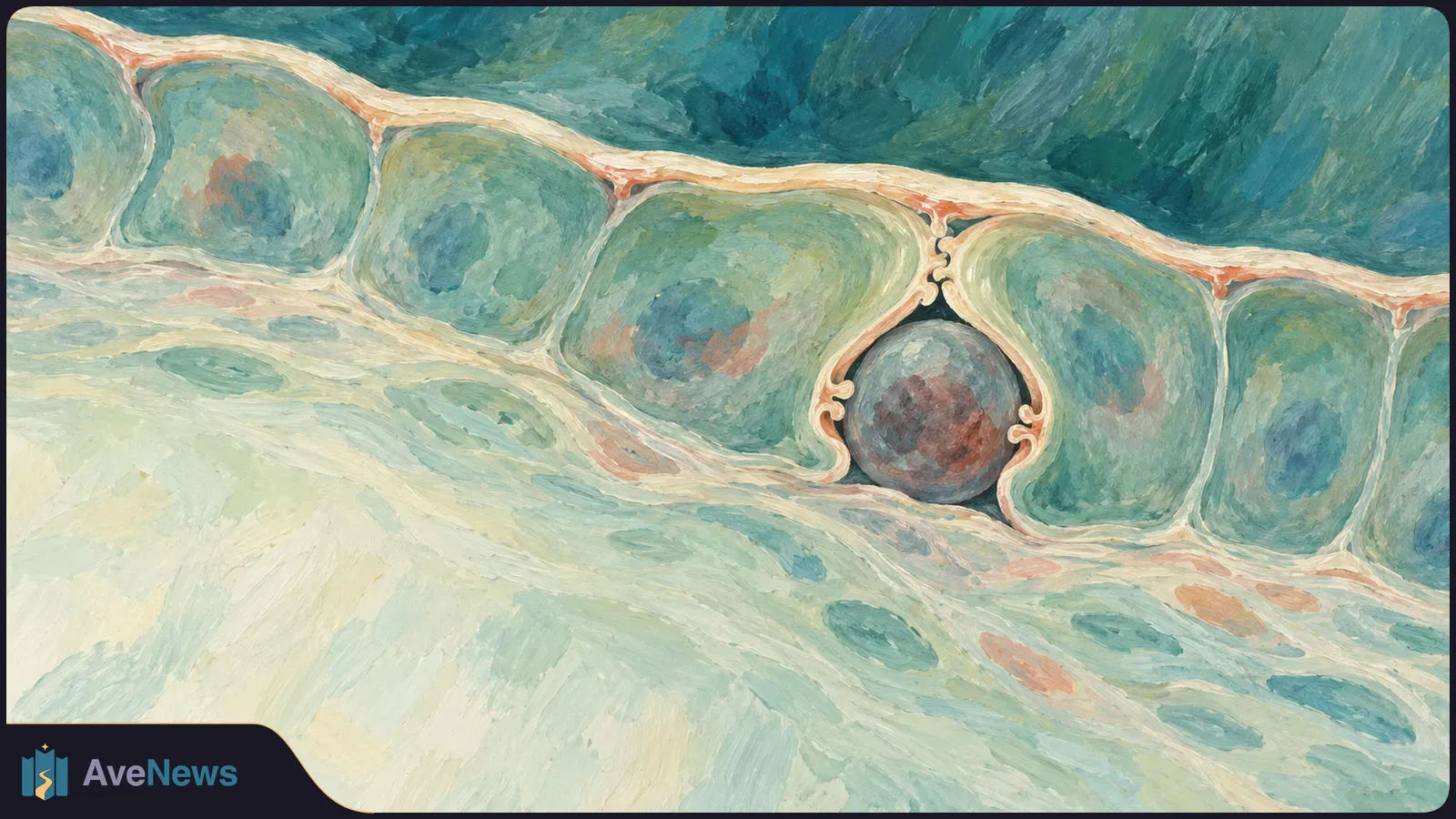
Researchers found that proteins used to join cells also help them engulf dying cells. Experiments in zebrafish and mouse embryos reveal a role for both force and flexibility.
Researchers found that proteins used to join cells also help them engulf dying cells. Experiments in zebrafish and mouse embryos reveal a role for both force and flexibility.
Cells in living embryos can use the same protein machinery that joins them together to engulf nearby dying cells, a team led by Verena Ruprecht reports. The study, published in Nature Communications and described by ScienceDaily, examines how epithelial cells remove dead material while maintaining a continuous tissue barrier.
Epithelial cells form tightly packed layers, including those lining the skin, gut and airways. Engulfing an object roughly the size of another cell requires a large change in shape, yet these layers often need to remain sealed. The researchers investigated how cells meet both demands in zebrafish and mouse embryos.
Live imaging showed that the upper and lower surfaces of an epithelial cell behave differently during engulfment. The lower surface stretches and bends around the dead cell. The upper surface, which can face the outside environment or the hollow interior of a tissue, remains relatively unchanged and continues maintaining the barrier.
Measurements before, during and after engulfment found little change in the upper surface's area, while the lower surface changed shape substantially. The cell therefore does not have to reshape both sides equally to wrap around dying material.
The researchers focused on the E-cadherin complex: E-cadherin and three partner proteins that work together to connect neighboring epithelial cells. This machinery gathered where a dying cell touched the tissue. The team then tested whether it was attaching to E-cadherin on the dying cell, as it normally does between living neighbors.
Dying cells stripped of E-cadherin were removed just as effectively as ordinary dying cells, the researchers reported. Epithelial cells also engulfed fat droplets containing no protein at all, provided the droplets carried a signal normally displayed on dying cells. These tests indicated that ordinary E-cadherin attachment to the object being engulfed was not required.
One protein in the complex connected the assembly to the cell's internal skeleton, allowing force to pass across the surface of the material being engulfed. Removing that protein, or just the region that binds it to the skeleton, prevented cells from engulfing dead cells.
Another component restrained the machinery that makes the cell contract. Removing this restraint did not improve removal: it made the cell too stiff to remove dying cells properly. Together, the experiments distinguish two requirements—transmitting force and remaining flexible enough to change shape.
In early mouse embryos, blocking E-cadherin left dying cells uncleared. The researchers interpreted the agreement with the zebrafish findings as suggesting a mechanism shared among vertebrates—animals with backbones. Researchers do not yet know whether this same E-cadherin-dependent mechanism operates in adult zebrafish, adult mice or any human tissue.
Adult epithelial tissues are already known to remove dying cells in places including the retina, colon, airways and mammary gland. Understanding how that removal works could matter because uncleared dying cells can eventually rupture and release contents that contribute to chronic inflammation. Whether the mechanism found in embryos also supports removal in those adult tissues remains an open question.

NASASpaceflight attributes the choice to payload mass and the required trajectory. The payload’s mass, identity and exact orbit remain classified.
2 min

A 16-hour observation of BP Crucis let researchers infer how gas from a giant companion star moves close to a neutron star.
3 min

The thinktank compares a three-bedroom home using only a gas boiler with one using heat pumps and solar panels. Scrapping the standard remains an opposition proposal.