
Study finds slow, coordinated electron behavior in Fe5GeTe2
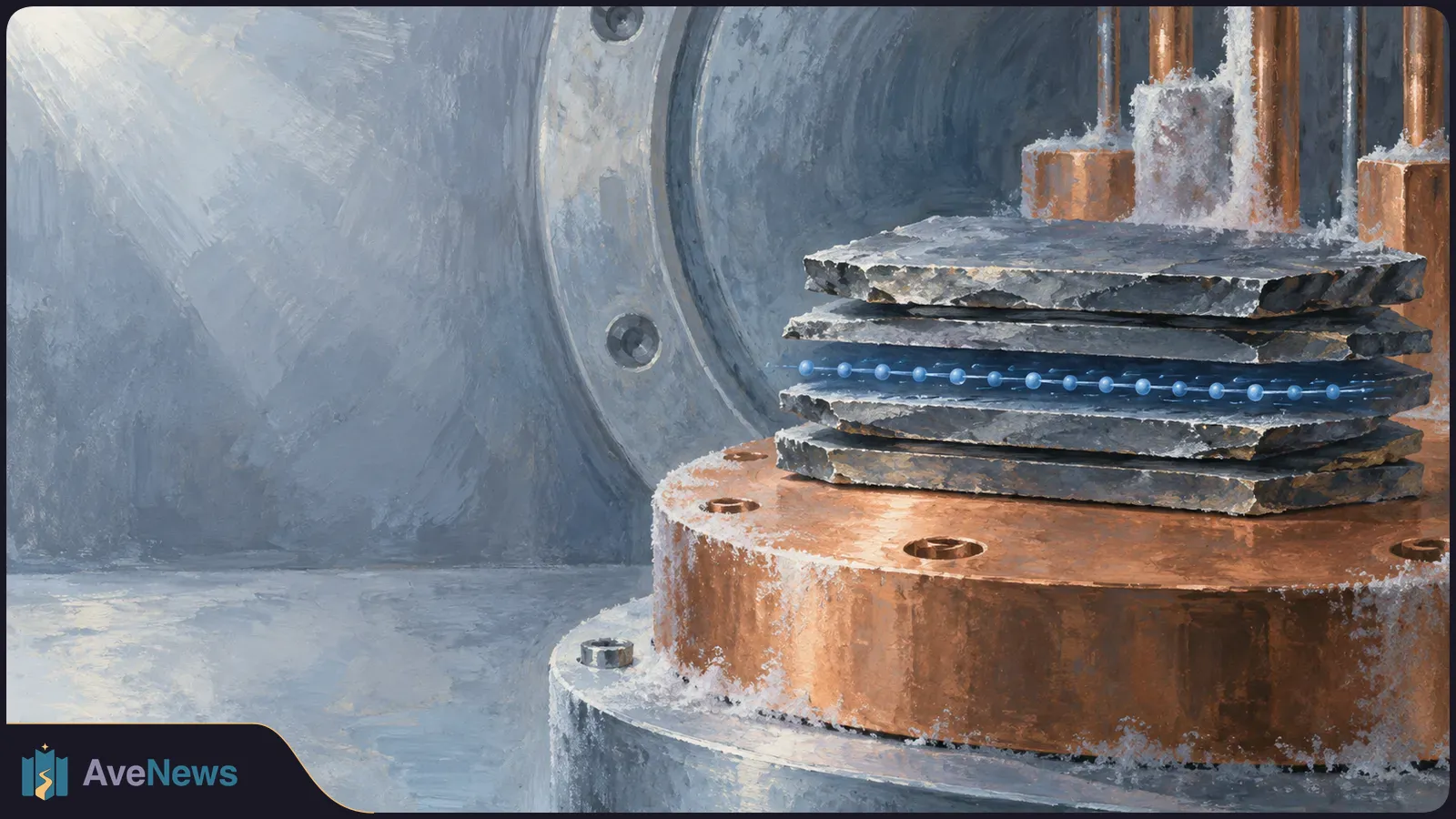
The observed quantum behavior persisted to about 100 kelvin. Researchers are exploring memory uses, but room-temperature operation remains unestablished.
The observed quantum behavior persisted to about 100 kelvin. Researchers are exploring memory uses, but room-temperature operation remains unestablished.
Researchers at the University of Chicago Pritzker School of Molecular Engineering reported that large numbers of electrons in the magnetic material Fe5GeTe2 can move extremely slowly together while retaining quantum coherence—a coordinated quantum state. ScienceDaily described the findings, published in Science Advances, in an October 2 report.
The team described a charge-ordered state, in which electrons settle into organized patterns rather than moving freely. The result could change researchers’ understanding of the material: team member Gabriele Berruto said it suggests that magnetic interactions within Fe5GeTe2 differ substantially from theoretical predictions.
The researchers used angle-resolved photoemission spectroscopy, or ARPES. This technique shines light onto a material and ejects electrons from its surface, allowing researchers to map its electronic structure and magnetic states. The team focused an ultraviolet laser onto an area just 10 micrometers across.
The researchers observed a flat electronic band: the electron energies associated with electrical conduction varied very little. They linked this flat band to electrons moving much more slowly and behaving collectively. Study leader Shuolong Yang explained that the measurement concerns interactions among thousands or millions of electrons, not the motion of one electron in isolation.
Fe5GeTe2 belongs to a family called van der Waals magnets, whose materials can be formed into atomically thin layers. Its different magnetic states could potentially represent and store information. That makes memory storage a proposed application, not a demonstrated device.
According to the October 2 report, the team is investigating whether a tightly focused laser can switch the material between the collective quantum state and other states. The researchers’ work indicates that such switching is possible, but incorporating the effect into a memory device remains an eventual possibility.
The researchers found that coherent behavior persisted up to approximately 100 kelvin—100 degrees above absolute zero, still far below room temperature. Team member Qiang Gao said eventual memory-device use would require room-temperature operation, which remains unestablished. The team’s next goal is to test whether the same properties survive when Fe5GeTe2 is peeled down to a single atomic layer.

Annual monitoring puts the loss since 2021 at 19.4%, while scientists describe glaciers breaking apart from within.
2 min

The galaxies appear as they were about 500 million years after the Big Bang, suggesting that stars’ chemical products were already spreading into surrounding space.

The proposal would affect about 70% of CTIS functionality, requiring investment in the current system alongside plans for a new platform.
3 min