
France allows stun grenades for ‘urban violence’, minister says
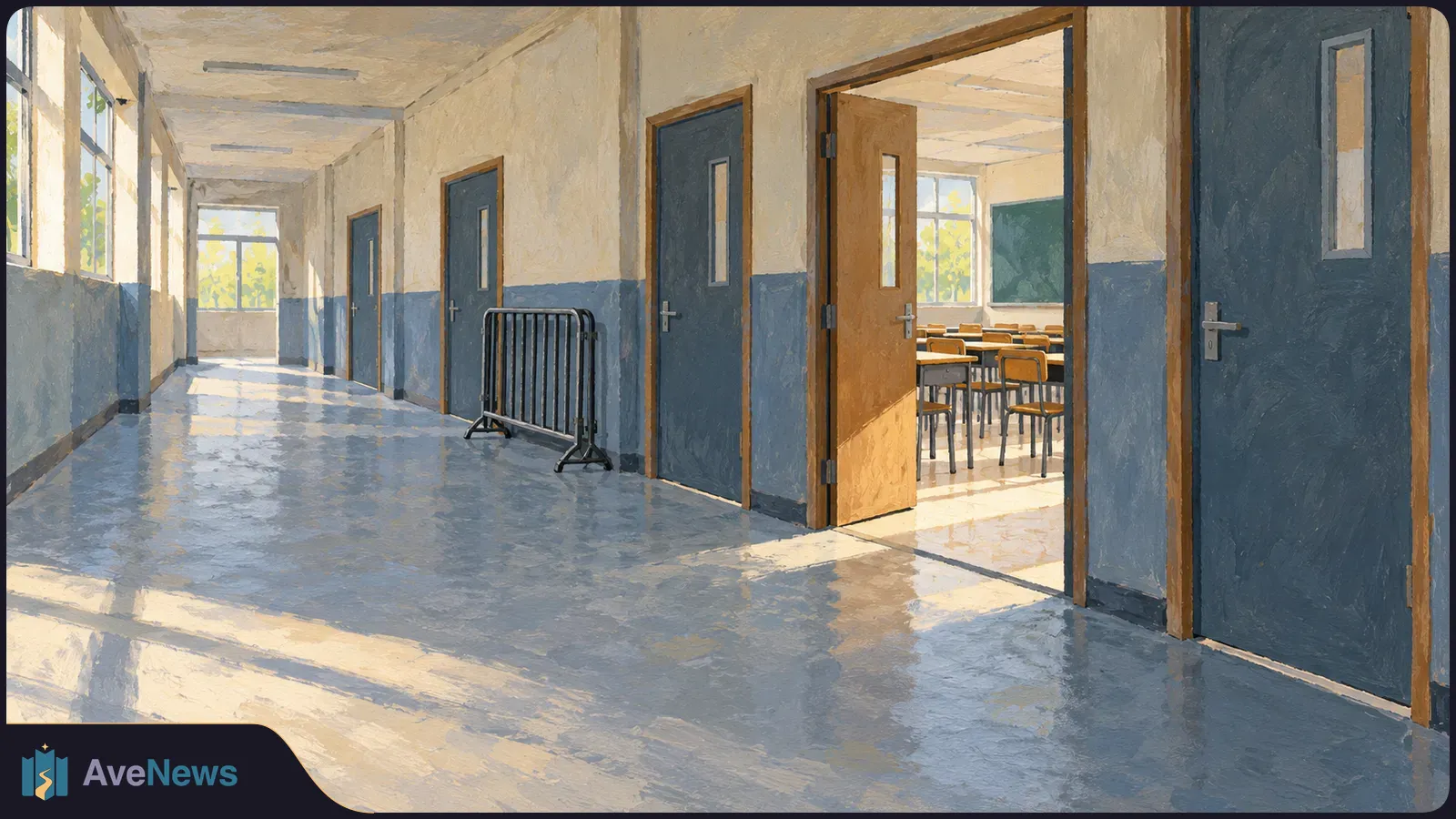
Interior Minister Laurent Nuñez says the pause allows an exception for urban violence, while Al Jazeera reports 36 inquiries into alleged police misconduct.
France’s interior minister, Laurent Nuñez, said police could use stun grenades during “urban violence”, qualifying a pause announced after a 15-year-old lost his hand, Al Jazeera reported on 21 October. DW reported on 22 October that France’s internal police inspectorate said it had opened at least 40 cases since the protests began, a higher reported count than the 36 inquiries cited by Al Jazeera.
The pause followed a grenade incident near Auguste Béhal high school in Lens, near Lille, on 5 October. BBC reporting carried by Armenpress on 7 October said Nuñez suspended stun-grenade use during student protests until the circumstances were clarified. Authorities said the pupil picked up an anti-encirclement grenade, a type of stun grenade used by police, before it exploded; students alleged that an officer fired it and hit him directly. The local prefect said police faced 200–250 students throwing stones and fireworks.
The General Inspectorate of the National Police, known as IGPN, is an internal police division, not an independent watchdog. According to DW’s 22 October report, the inspectorate said it had opened at least 40 cases during the latest protests. These are investigations into alleged misconduct, not findings that officers committed wrongdoing.
Al Jazeera’s 21 October report had put the number of misconduct inquiries at 36. It also cited Interior Ministry figures showing nearly 6,900 people placed in police custody since the protests began, 86 percent of them minors.
Nuñez maintained that officers had largely respected the requirement to use proportionate force—no more than necessary to achieve their objective—DW reported. Speaking in Marseille on 20 October, he said containing the different groups had been difficult and that police had prevented many crimes.
Nuñez described the urban-violence exception before the marches on 17 October, saying stun grenades were “never used when things are going well”, according to Al Jazeera. Its journalists witnessed police repeatedly firing tear gas and stun grenades that day, well before the Paris march began.
Al Jazeera also reported that police blocked most exits from a Paris square on 17 October, leaving thousands of people compressed together and causing fainting and panic attacks. This tactic, known as kettling, involves officers surrounding and containing demonstrators. The report described groups ransacking, burning and looting shops during riots on 17 and 18 October.
Enzo, 17, told Al Jazeera that one officer grabbed his arm while another struck him from behind with a baton. He was hospitalised and needed stitches, the outlet reported. Videos it verified show teachers peacefully forming a chain in front of students, followed by officers breaking through and using batons and pepper spray at close range.
Eden, 14, suffered a broken jaw in Saint-Ouen-l’Aumone. Al Jazeera said videos appear to show an officer striking him with a baton before another fired a tear-gas grenade into his face. His lawyer, Elsa Marcel, said he had been sitting alone on a low wall looking at his phone, a few metres from the school protest, when three officers approached.
Marcel alleged that the grenade was fired from about 1.5 metres away and that officers left Eden on the ground without calling emergency services. His family filed a complaint alleging attempted murder; that allegation is not a court finding.
Another pupil, Mael, 16, lost sight in the right eye after being struck by a rubber-bullet launcher, Al Jazeera reported on 20 October. That account also described accusations of excessive force from protesters and rights groups.
French authorities denied that police were engaging in repression and pointed to hundreds of injured law-enforcement personnel, according to Al Jazeera’s 21 October report. Nuñez said in early October that officers had received “no instructions for restraint”, while stressing that force had to remain proportionate.
Al Jazeera’s 21 October account dated the movement’s start to mid-September. Public Radio of Armenia’s 5 October report, citing the BBC, described thousands protesting over teacher shortages, overcrowded classrooms and run-down buildings, with demonstrations spreading from Paris to Montpellier, Nantes and Marseille. Parents, university students and unions had joined by 7 October, according to BBC reporting carried by Armenpress.
Inside Climate News reported on 17 October that students sought more investment in public education, more teachers, smaller classes, a shorter school day and changes to the application system for study after high school. Al Jazeera’s 20 October account also described demands for a more equal education system.
France’s education minister, Édouard Geffray, announced on 4 October that lessons would be suspended at hundreds of high schools after clashes between riot police and protesters. He said security conditions had not been met.
| Date | Number | Status |
|---|---|---|
| 5 October | 400–500 high schools | Partial or total lesson suspensions announced by Geffray, as reported by Public Radio of Armenia citing the BBC. |
| 7 October | More than 500 schools | Fully or partially shut, according to BBC reporting carried by Armenpress. |
In the 5 October account, Geffray said 24 schools had been “burned or ransacked” since the protests began. France’s justice minister, Gérald Darmanin, said on 2 October that violent protests had affected 735 schools “one way or another”. Geffray warned that a comparable number could be affected on 5 October; he was not forecasting 735 closures.
Inside Climate News’s 17 October report described how heat had added to students’ grievances. Cléo, 16, recalled turning pale in class during a June heat wave at her high school on Paris’s eastern edge, then experiencing nausea and intense thirst the next day. A nurse recognised signs of heat exhaustion and sent her home.
Other pupils described falling ceilings, moldy walls, unusable bathrooms, chair shortages and pest infestations. The report also described spring classroom temperatures above 100 degrees Fahrenheit and school reports of fainting and nosebleeds.
Many French schools have large windows that admit sunlight and heavy structures that absorb, store and release heat. These features help retain warmth in winter but can leave classrooms hotter than the outdoor air on very hot days. Air conditioning is rare.
Marie-Hélène Azam, identified in the report as an engineering science professor at the National Institute of Applied Sciences, leads research on adapting primary-school buildings to heat waves. She explained that longer, more intense hot spells leave too little time for buildings to cool overnight or between heat waves.
A spokesperson for Île-de-France, the regional government responsible for public high-school infrastructure around Paris, told Inside Climate News that its 2026 construction and renovation allocation included roof and window upgrades. The region also reported spending on temporary heat-wave measures.
| Purpose | Amount | Reported status |
|---|---|---|
| School construction and renovations, including roofs and windows | $1.2 billion | Allocated for 2026, according to the regional spokesperson. |
| Additional exam centers, misting devices and fans | $1.1 million | Spent during the heat waves. |
The report listed exterior shutters, ceiling fans and evaporative cooling—which uses water to remove heat—as possible responses, not a newly adopted national policy. It described air conditioning as a last resort in France because of energy costs and concerns that units release heat outdoors and raise street temperatures.
In the 5 October account, Geffray promised a “partial, progressive return to lessons”. Police conduct remains subject to the inspectorate’s investigations and the complaint filed by Eden’s family alleging attempted murder.
DW’s 22 October report said further protests were planned for the weekend of 24–25 October and that the French government said it would also deploy military forces.
The rival broadband provider alleges preferential treatment and says it will take its concerns to government and regulators. BT says the acquired businesses will compete separately during review.
3 min

A Guardian feature reports steep fuel-price rises, while limited storage leaves farmers such as Joe Hamilton needing more diesel during the harvest.
3 min
The funding announcement comes amid increased Russian drone attacks on electricity and other infrastructure. Project allocations and the payment timetable remain unclear.
1 min


